This website contains affiliate links. As an Amazon Associate, I earn from qualifying purchases.
Wind-down routines for caregivers can’t be aspirational. They have to work when you’re overstimulated, emotionally wrung out, and still half-listening for someone who might need you. The end of the day doesn’t flip a switch. Your nervous system stays on high alert because caregiving trains it that way.
So we’re not talking about “self-care.”
We’re talking about decompression.
We’re talking about routines that signal “nothing else is required of you right now.”
These seven wind-down routines are built for real caregivers:
- low energy
- minimal prep
- sensory relief
- escapism without guilt
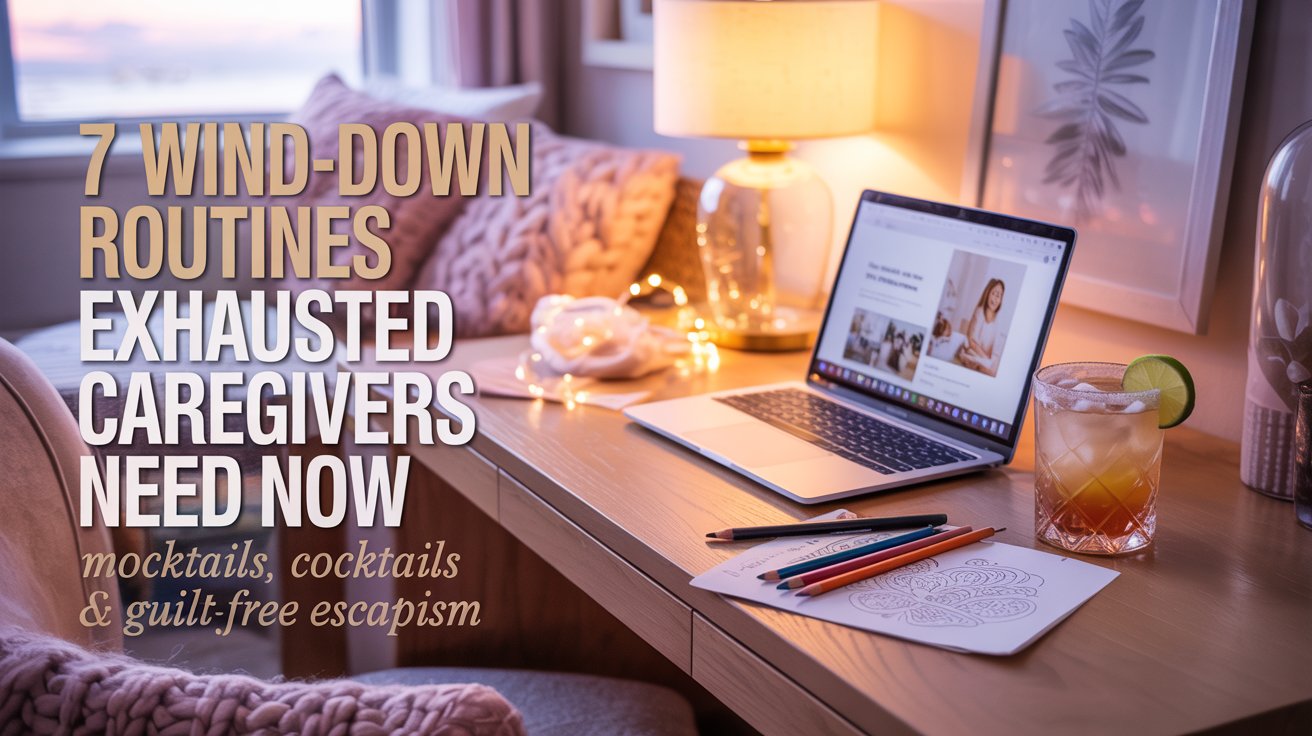
Mocktails if you want them. Cocktails if you don’t. Both are valid.
1. The Drink-in-a-Real-Glass Reset (Mocktail or Cocktail)
This routine works because it marks a clear transition. The glass matters. The pause matters. The drink itself is secondary.
Why caregivers need this:
Your day is full of utilitarian cups, medications, refills, reminders. Using a real glass tells your brain the role has shifted.
Simple options (no effort):
Mocktail
- Sparkling water + lime + salt rim
- Cranberry juice + ice + splash of ginger beer
Cocktail
- Vodka soda with citrus
- Whiskey + ice + orange peel
- Wine, poured and sat with (not chugged)
Sit down. No scrolling. No multitasking. Five to ten minutes.
Why it works:
Cold + carbonation + intentional pause activates the parasympathetic nervous system. This is one of the fastest ways to downshift without meditation.
Caregiver rule:
If you drink it while standing and doing dishes, it doesn’t count.

Shop the Look:
- Real glass tumblers weighted mocktail cocktail caregiver reset
- Sparkling water lime salt rim kit low effort drink pause
- Vodka soda whiskey glasses ice carbonation nervous system
- Cranberry ginger beer splash glasses no multitasking caregiver
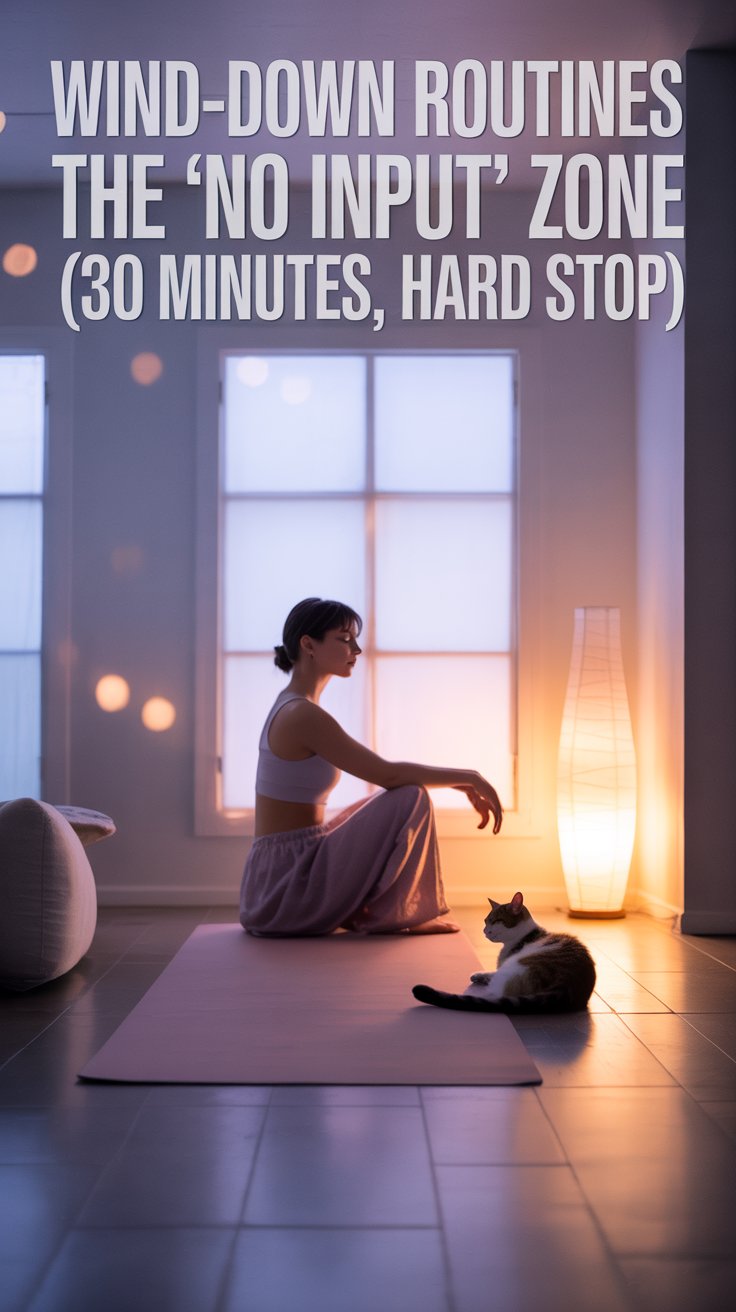
2. The “No Input” Zone (30 Minutes, Hard Stop)
Caregivers absorb input all day: talking, listening, monitoring, explaining, anticipating. This routine removes incoming information entirely.
No podcasts.
No TV.
No phone.
Just low-level presence.
What to do instead:
- Sit in dim lighting
- Stretch lightly
- Look out a window
- Pet an animal
- Lay on the floor (yes, really)
Why it works:
Your nervous system cannot relax if it’s still processing new data. Silence is not emptiness—it’s recovery.
This is spicy because:
It feels uncomfortable at first. Caregivers are used to distraction. Silence makes fatigue obvious. That’s part of the reset.
Shop the Look:
- 30 minute silent timer no input zone low level presence
- Dim lighting lamps sit stretch window view caregiver rest
- Floor mat lay down pet animal silence recovery exhausted
- No phone screen blocker quiet zone nervous system downshift
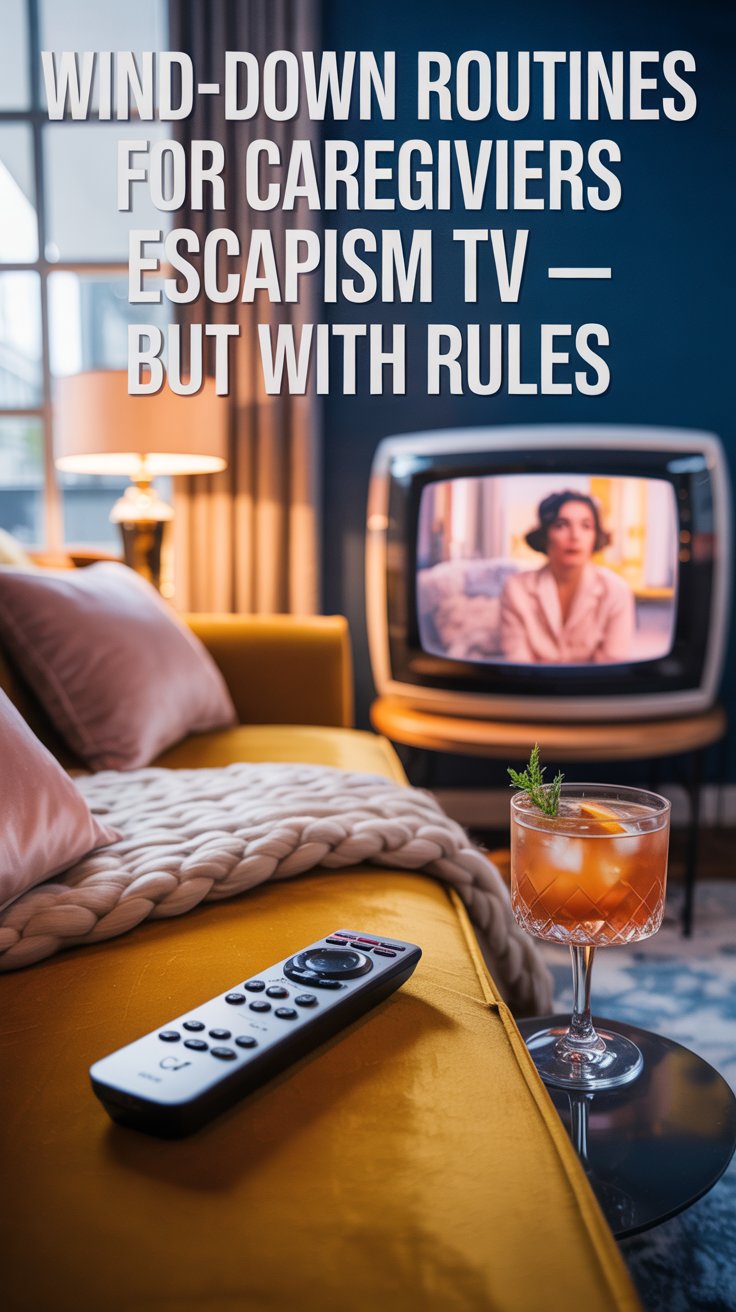
3. Escapism TV — But With Rules
Most caregivers binge-watch because they’re exhausted. The problem isn’t TV. It’s overstimulation without closure.
This routine turns TV into intentional escapism instead of numbing out.
The rules:
- One show
- One episode (maybe two, max)
- No scrolling while watching
Pair it with a drink from Routine #1.
Best genres for tired brains:
- Light drama (not trauma-heavy)
- Nostalgic comfort shows
- Foreign shows (forces focus, reduces multitasking)
Why it works:
Boundaries prevent dissociation. You get mental escape without frying your nervous system.
Caregiver truth:
Autoplay is the enemy of rest.
Shop the Look:
- Nostalgic comfort show DVDs light drama one episode caregiver
- TV remote timer one episode max no autoplay boundary
- Foreign show DVDs focus no scroll escapism tired brain
- TV tray drink holder rules based escapism no dissociation
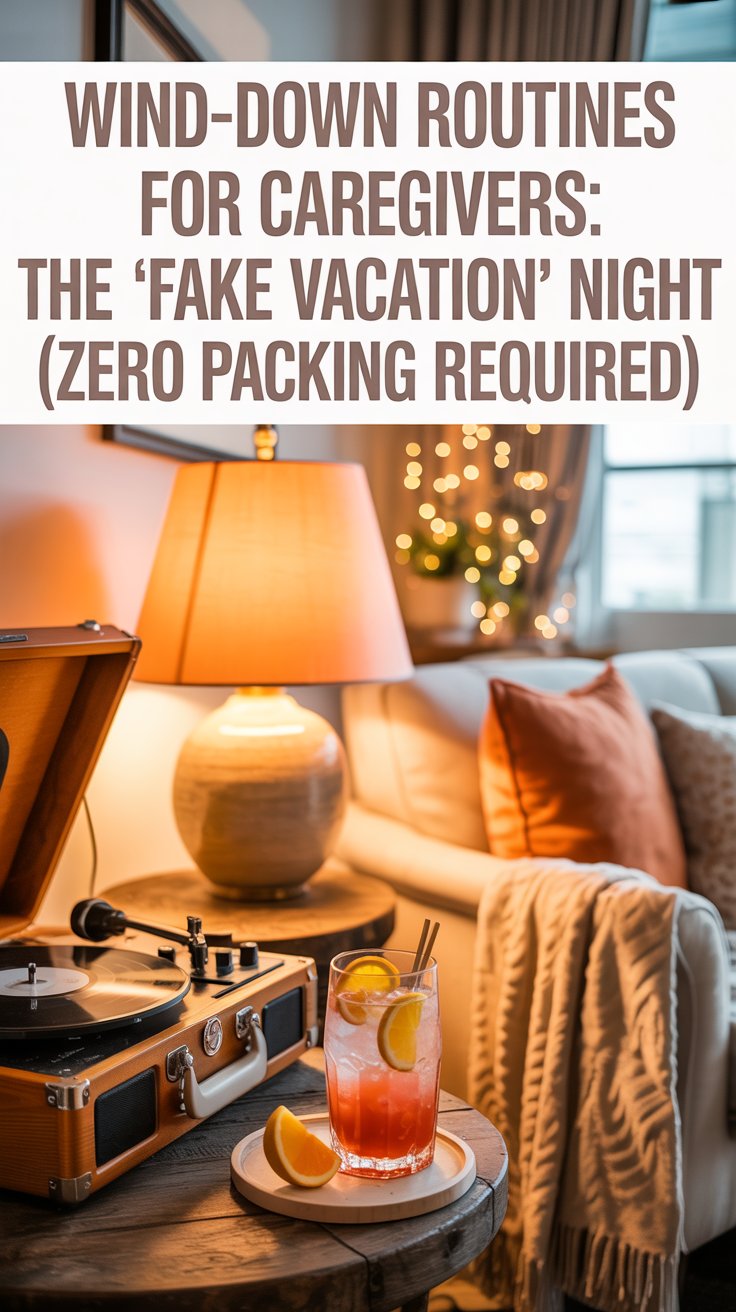
4. The “Fake Vacation” Night (Zero Packing Required)
This is escapism done right. You’re not pretending life is perfect—you’re temporarily relocating mentally.
How to do it:
- Change the lighting (lamps only)
- Change the sound (music from another country, decade, or vibe)
- Change the drink (mocktail or cocktail that fits the theme)
Examples:
- Italian night: sparkling water, citrus, soft jazz
- Cozy cabin night: whiskey or tea, warm lighting, instrumental music
- 90s nostalgia: soda, comfort snacks, familiar movies
Why it works:
Your brain associates environments with roles. When the environment changes, the role loosens.
Important:
Do NOT clean or prep excessively. Escapism dies when it turns into a project.
Shop the Look:
- Lamps only lighting change fake vacation low prep caregiver
- Bluetooth speaker music another country decade vibe escapism
- Italian night sparkling citrus jazz glasses themed mocktail
- Cozy cabin whiskey tea warm lights instrumental no project
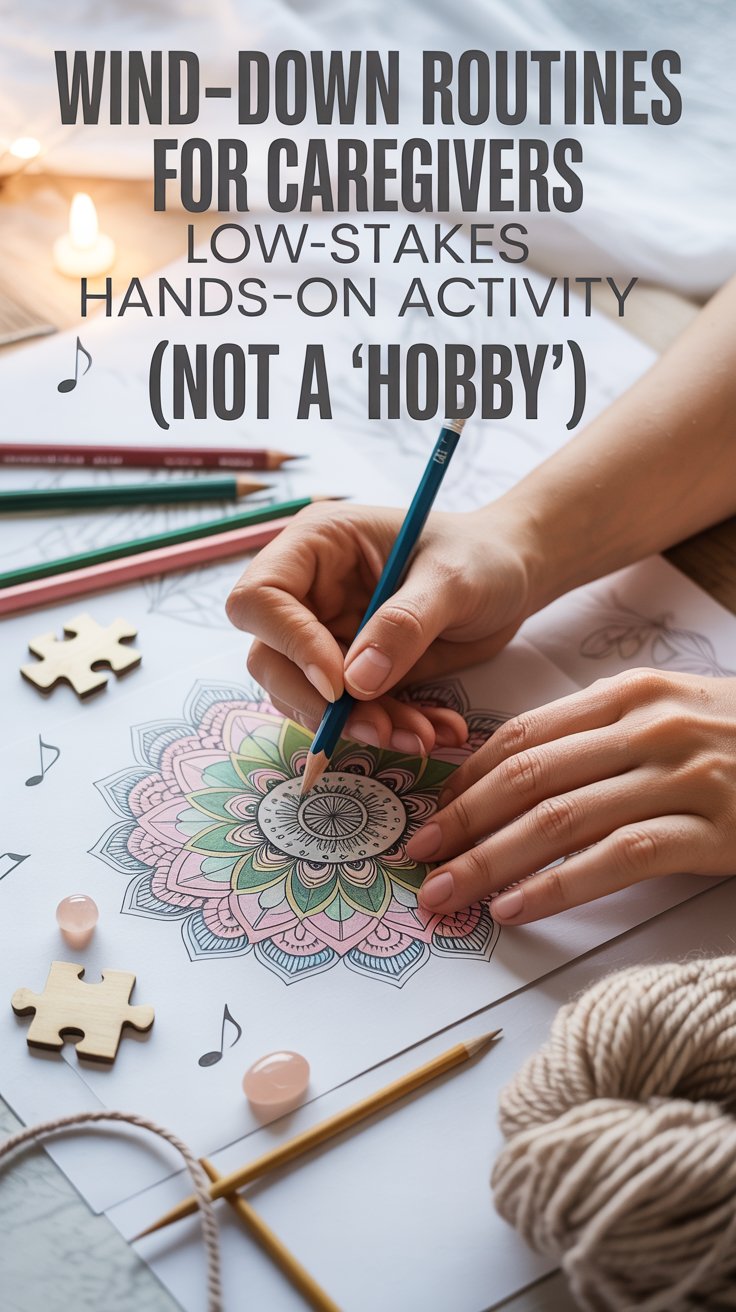
5. Low-Stakes Hands-On Activity (Not a “Hobby”)
Caregivers often think they don’t have hobbies. That’s because hobbies usually demand progress. This routine is about occupying your hands without demanding your brain.
Good options:
- Coloring
- Simple puzzles
- Knitting one row (not finishing anything)
- Lego kits
- Sorting beads or cards
Do it while listening to music or in silence.
Why it works:
Repetitive hand movements regulate the nervous system and interrupt rumination. This is science, not aesthetics.
Spicy reminder:
If you feel guilty for “doing nothing productive,” this routine is especially for you.
Shop the Look:
- Adult coloring books simple patterns repetitive hands caregiver
- Easy puzzles knitting one row no progress low stakes
- Lego kits small sorting beads cards nervous regulation
- Hand occupy music silence rumination interrupt tired brain
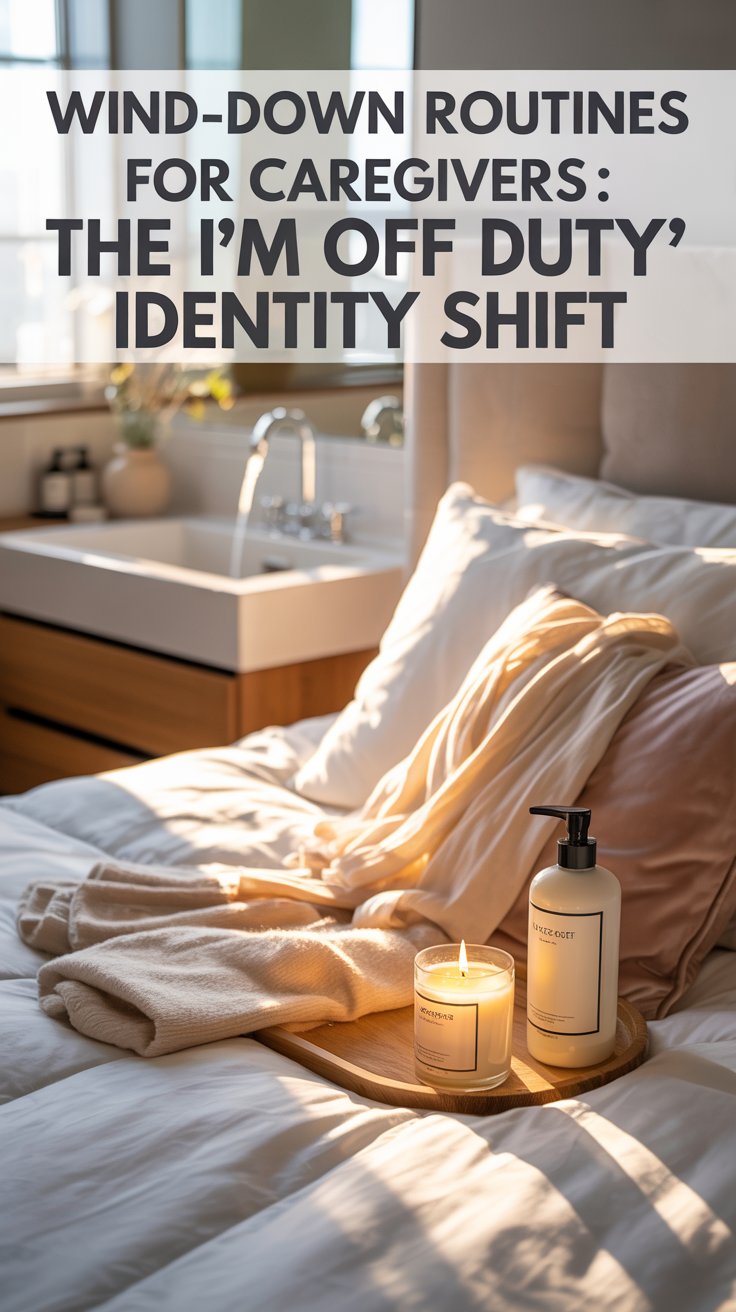
6. The “I’m Off Duty” Identity Shift
This is one of the most important wind-down routines for caregivers, and most people skip it.
Caregiving blurs identity. If you don’t intentionally exit the role, your body never rests.
The ritual:
- Change clothes immediately after duties end
- Wash hands and face (symbolic reset)
- Use a different scent at night than during caregiving
Then do something that has nothing to do with being helpful.
Why it works:
Your brain needs clear cues. Clothing, scent, and routine are powerful signals.
Caregiver reality:
Staying in caregiving clothes keeps your nervous system on call.
Shop the Look:
- Loungewear change clothes immediate off duty caregiver reset
- Face wash hands symbolic scent shift night different
- Evening scent spray no caregiving clothes nervous cue
- Identity exit ritual non helpful activity exhausted role
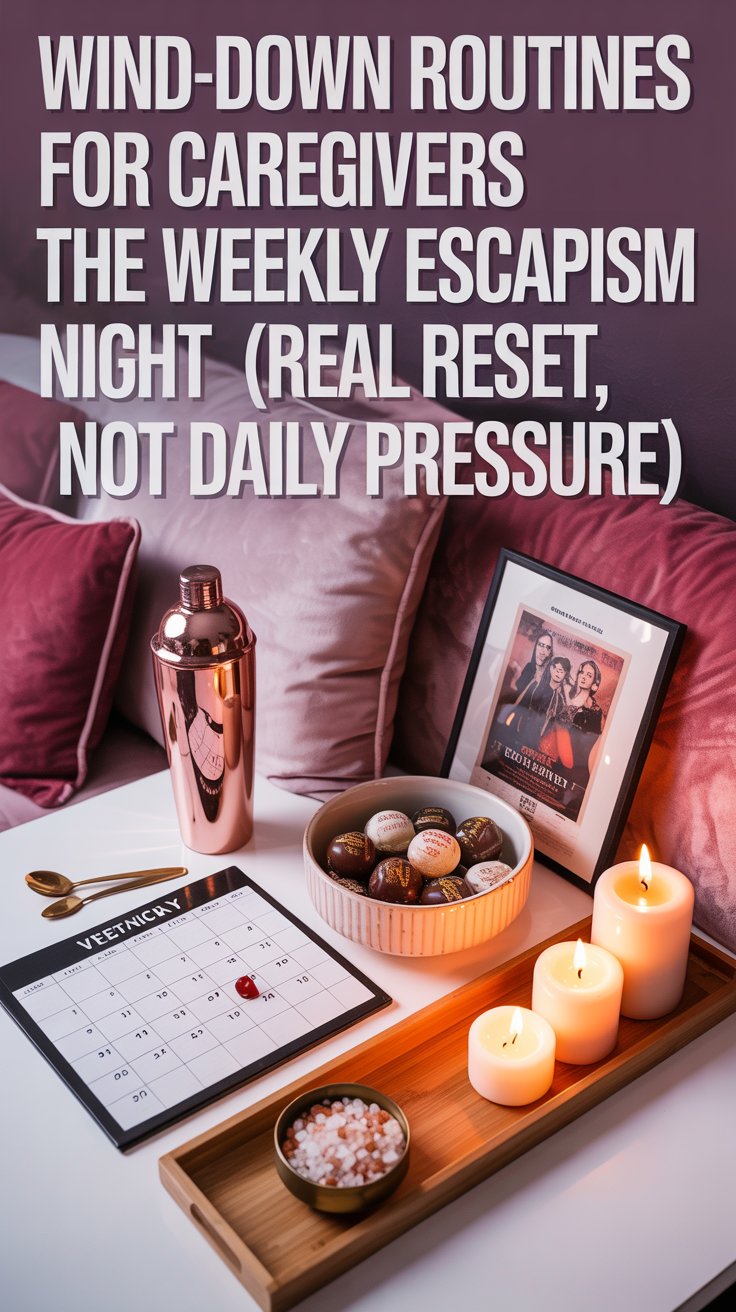
7. The Weekly Escapism Night (Real Reset, Not Daily Pressure)
This is the routine that keeps burnout from stacking week after week.
Once a week, you plan a low-effort night you actually look forward to.
What it can include:
- A themed drink (mocktail or cocktail)
- A movie or series you save only for this night
- Comfort food (no cooking marathon)
Minimal prep. No expectations.
Why it works:
Anticipation itself is regulating. Knowing relief is coming changes how you experience the week.
Rule:
This is not the night to catch up on life admin.
Shop the Look:
- Themed drink kit mocktail cocktail weekly low effort caregiver
- Saved movie series DVDs anticipation relief no admin
- Comfort food no cook marathon escapism night boundary
- Minimal prep weekly reset burnout prevent nervous calm
About Alcohol (Let’s Be Honest)
Alcohol can be relaxing or dysregulating. For caregivers, moderation and intention matter more than the drink itself.
Use alcohol when:
- You’re not emotionally raw
- You can stop after one
- It enhances calm, not escape
Skip alcohol when:
- You’re overwhelmed
- You’re using it to shut down feelings
- It disrupts sleep
Mocktails aren’t “less than.” Cocktails aren’t shameful. The goal is nervous system relief, not rules.
Final Word (Read This Twice)
The best wind-down routines for caregivers don’t make you better, calmer, or more productive.
They make you off duty.
You don’t need to optimize your evenings.
You need to stop being needed.
That’s not selfish.
That’s survival.