
This website contains affiliate links. As an Amazon Associate, I earn from qualifying purchases.
Caregiver evenings are not cozy by default. They’re awkward. You’re technically done, but your nervous system didn’t get the memo. Your body is tired, your brain is still alert, and every suggestion to “relax” feels like another assignment.
That’s why low-effort evening rituals for caregivers have to meet a very specific standard: they must work when you have no energy, no patience, and no interest in becoming a better person tonight. These rituals aren’t about rest, sleep, or self-care glow-ups. They’re about resetting your system just enough so the day doesn’t follow you into tomorrow.
No candles. No journaling homework. No pretending you’re not exhausted.
1. The “Off-Duty Clothes” Swap

Shop the Look:
- Plus size soft loungewear loose off duty clothes caregiver
- Rayon modal pajamas stretch no bra tops bottoms curvy
- Loose fit lounge pants jersey knit plus size easy change
- Soft oversized tees pull on shorts caregiver evening swap
This is the fastest reset on the list, and it works even when everything else fails.
As soon as caregiving duties end, you change clothes. Not into pajamas necessarily. Just out of whatever you wore while you were responsible for other people.
How to do it
- Take off caregiving clothes
- Put on something soft, loose, and clearly “not for helping”
- Sit down
That’s the whole ritual.
Why it works
Your brain associates clothing with roles. Staying in caregiving clothes keeps your nervous system alert. Changing clothes gives your body a physical cue that the shift is over.
Comforting truth
You don’t need to shower first. You don’t need a “night routine.” The clothes change is the ritual.
2. The One-Glass Reset

Shop the Look:
- Glass tumblers weighted real glass drinkware caregiver
- Insulated glass cups no bottle mocktail water evening
- Pretty drinking glasses set simple pour sit reset
- Durable glassware low effort one glass ritual caregiver
This ritual isn’t about what you drink. It’s about how you drink it.
You pour one drink—water, mocktail, cocktail, tea—into a real glass. Not a bottle. Not a travel mug. A glass.
How to do it
- Pick a glass you like
- Pour one drink
- Sit down while you drink it
No scrolling. No multitasking. Five minutes is enough.
Why it works
Sitting with a drink marks a transition. It tells your nervous system, “We are not moving on to the next task.”
Comforting reminder
If all you can manage is water in a cup you like, that still counts.
3. The Light Change (The Lazy Way)

Shop the Look:
- Dimmer table lamps bedside soft glow no overhead
- String lights battery operated low effort evening lamps
- Plug in dimmable night lights caregiver lazy light change
- Warm tone floor lamps adjustable one light reset
Lighting resets your nervous system faster than most people realize, and it requires almost no effort.
How to do it
- Turn off overhead lights
- Use lamps, string lights, or one dim light
- Don’t add anything else
That’s it.
Why it works
Bright overhead lighting keeps your brain in daytime mode. Softer lighting signals safety and closure.
Caregiver win
This works even if the house is messy, loud, or unfinished. Light alone can shift the tone.
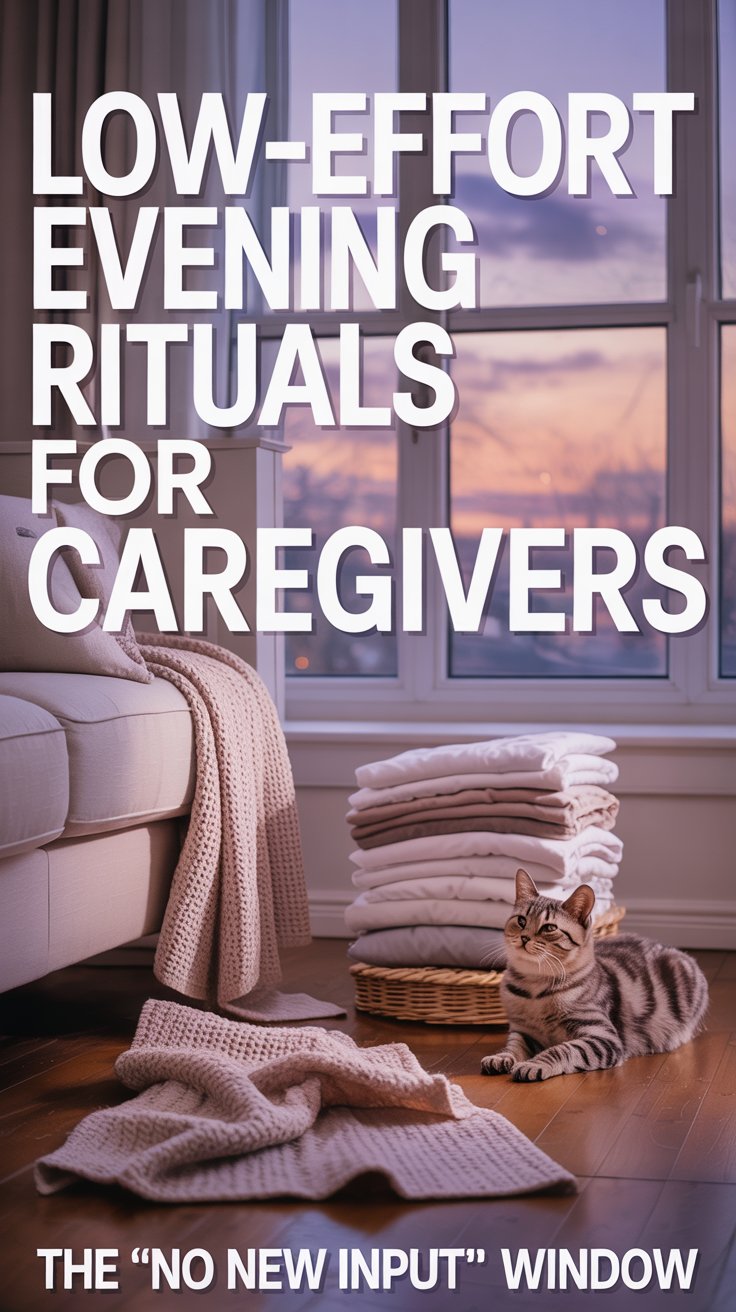
4. The “No New Input” Window
Shop the Look:
- Kitchen timer 20 minute no input window caregiver
- Silent analog timer quiet activity window low effort
- Simple phone stand no scroll window folding minimal
- Blank timer clock 30 minute reset boundary caregiver
Caregivers absorb information all day. Resetting means stopping the flow, not replacing it with “relaxing content.”
How to do it
- Pick a 20–30 minute window
- No podcasts, no news, no social media
- Quiet activity only
You can fold laundry, pet an animal, stare out a window, or lie on the floor.
Why it works
Your nervous system cannot reset while still processing new information.
Gentle honesty
If even calm content feels irritating tonight, your system is done. Listen to that.
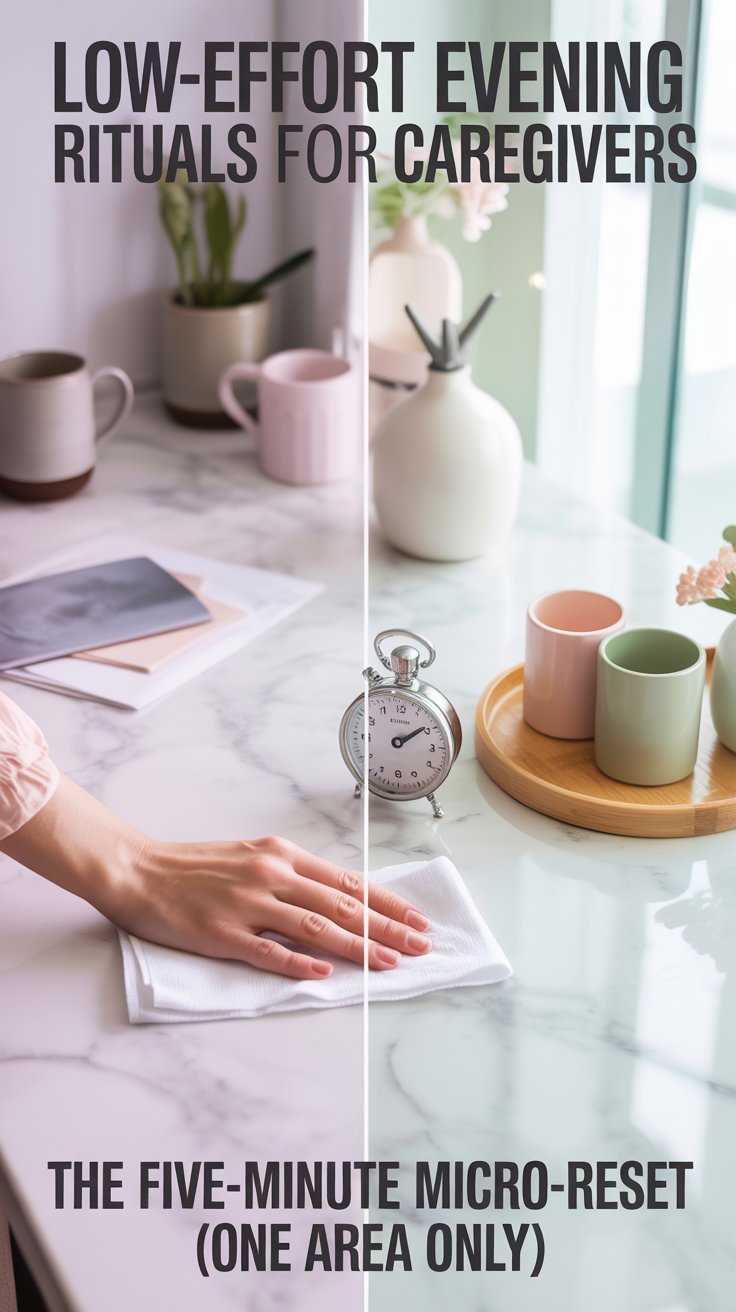
5. The Five-Minute Micro-Reset (One Area Only)
Shop the Look:
- Kitchen timer five minute micro reset surface clear
- Small storage bins one area containment no expand
- Counter tray organizer five minute stop timer caregiver
- Table caddy single surface reset low effort visual
This is not cleaning. This is containment.
You reset one small space so your brain stops scanning for chaos.
How to do it
- Choose one surface (table, counter, chair)
- Set a five-minute timer
- Stop when the timer ends
No expanding the task. No bonus organizing.
Why it works
Visual clutter keeps your nervous system alert. One clear space gives your brain somewhere to rest.
Comforting rule
If it turns into cleaning, you went too far. You’re allowed to stop.
6. The “I’m Not Explaining Tonight” Boundary

Shop the Look:
- Noise cancelling earbuds minimal answer boundary caregiver
- Signage door hanger do not disturb evening quiet
- Wireless headphones low verbal night boundary set
- Quiet zone sign boundary no explaining caregiver
Caregivers explain everything all day—what’s happening, why it matters, what comes next. This ritual removes that demand.
How to do it
- Decide you’re done explaining for the night
- Answer minimally if needed
- Do not justify your choices
Silence is a complete sentence.
Why it works
Language is cognitively expensive. Reducing verbal output lowers mental fatigue.
Comforting reassurance
This is not being rude. It’s conserving energy.
7. The Body Drop

Shop the Look:
- Soft body pillow wedge sit lie drop shoulders
- Neck support cushion jaw unclench gravity low effort
- Floor cushion comfortable body drop heavy relax
- Recliner pillow shoulders drop no stretch caregiver
This ritual resets your body without stretching, breathing techniques, or effort.
How to do it
- Sit or lie somewhere comfortable
- Let your shoulders drop
- Let your jaw unclench
- Let gravity do the work
Even three to five minutes helps.
Why it works
Muscle tension keeps your nervous system alert. Letting your body go heavy signals that vigilance is no longer required.
Important
You don’t have to “feel relaxed” for this to work. The body goes first. The mind follows later.
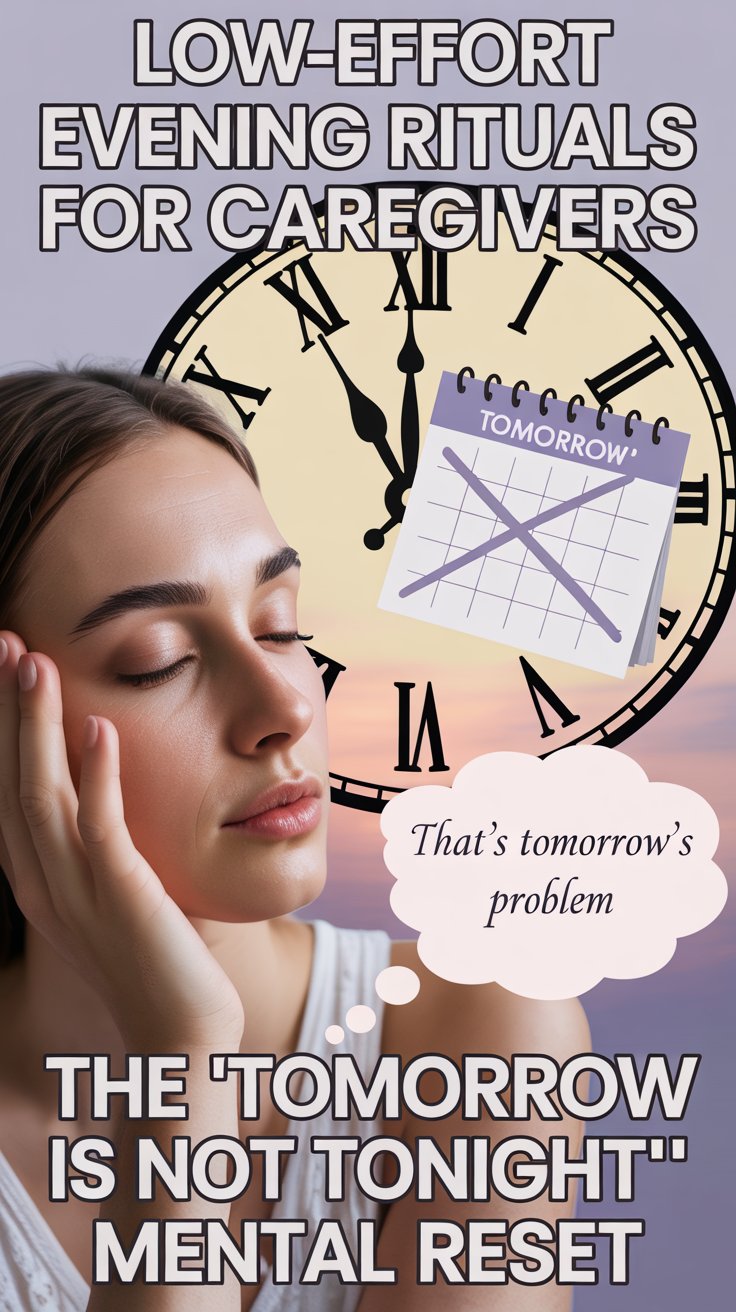
8. The “Tomorrow Is Not Tonight” Mental Reset
Shop the Look:
- Wall clock simple no plan tomorrow visual boundary
- Bedside timer evening mental reset thought pass
- Calm sticky notes tomorrow problem no organize
- Nightstand sign tonight only low effort mental
This is one of the most effective low-effort evening rituals for caregivers, and it happens entirely in your head.
How to do it
- When tomorrow thoughts show up, say:
“That’s tomorrow’s problem.” - Don’t plan. Don’t fix. Don’t organize.
- Let the thought pass.
Repeat as needed.
Why it works
Your brain relaxes when it knows it’s not responsible for future outcomes right now.
Comforting truth
Thinking ahead feels responsible, but it steals your evening.
How These Rituals Are Different (And Why That Matters)
These low-effort evening rituals for caregivers are not:
- bedtime routines
- self-care projects
- habits you need to maintain
- things you must do every night
They are reset switches.
You pull one when the day won’t let go.
How to Use This Without Turning It Into Another Job
Here’s the rule that keeps this helpful instead of overwhelming:
Pick one. Stop there.
You do not stack rituals.
You do not optimize.
You do not aim for consistency.
One ritual is enough to change the tone of the evening.
If Tonight Is Especially Hard
On the hardest nights, here’s the simplest version of all of this:
- Change clothes
- Turn off overhead lights
- Sit down
That alone is a reset.
You don’t need to do more to deserve peace.
Final Word
Caregivers don’t need perfect evenings.
They need clear endings.
The day doesn’t end when the work stops.
It ends when your body believes it’s safe to stand down.
These low-effort evening rituals for caregivers don’t ask you to be calm, productive, or grateful. They simply give your nervous system permission to unclench.
Tonight, that’s enough.