This website contains affiliate links. As an Amazon Associate, I earn from qualifying purchases.
If you’re a caregiver, your living room isn’t just a place to sit. It’s where you decompress after lifting, cleaning, organizing, managing medications, handling emotions, and being “on” all day.
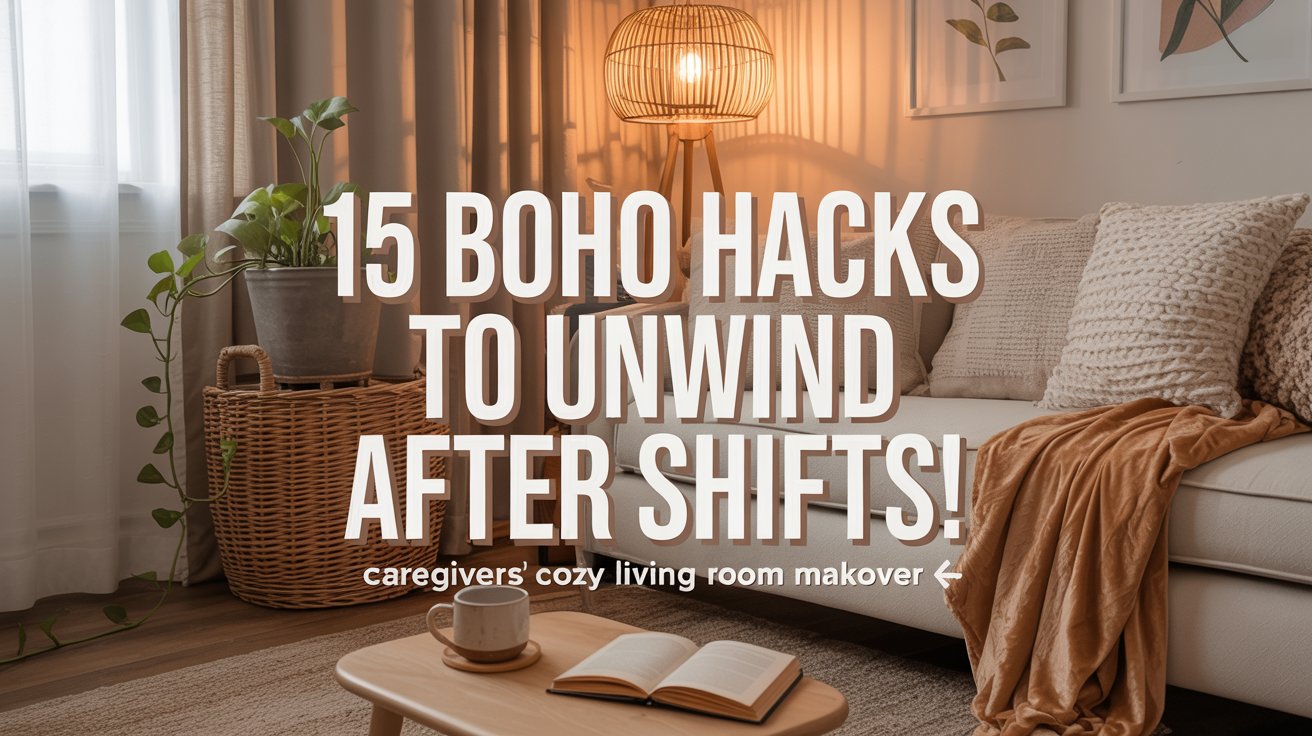
Boho Living Room Ideas for Caregivers aren’t about decorating for trends — they’re about creating a calm, supportive space after long, exhausting shifts.
If you’re a caregiver, your living room isn’t just a place to sit. It’s where you decompress after lifting, organizing, managing medications, solving problems, and being “on” all day. The right space can actually help your body relax.
These Boho Living Room Ideas for Caregivers focus on warmth, comfort, hidden storage, soft lighting, and easy maintenance — because your home should lower stress, not add to it.
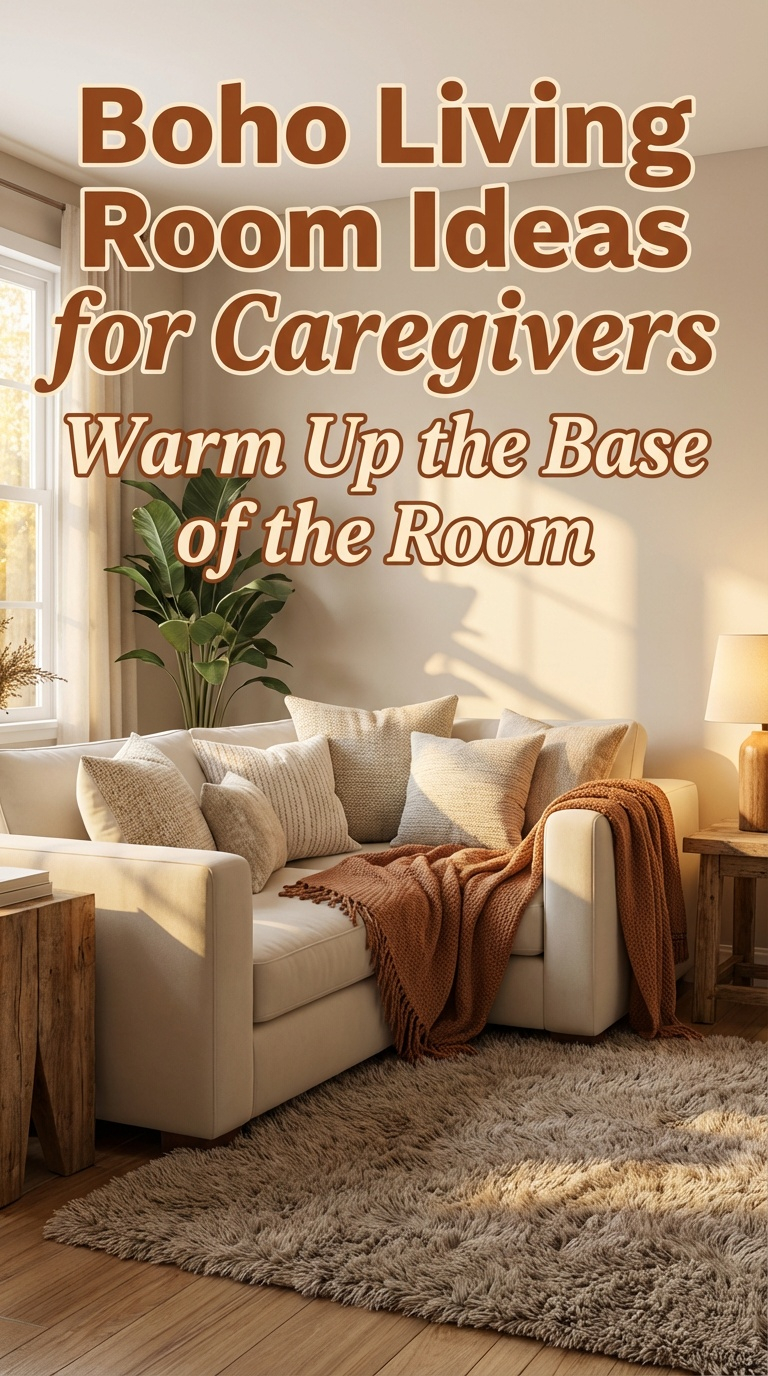
1. Warm Up the Base of the Room
Shop the Look:
- Boho cream beige pillow covers
- Taupe sand soft brown boho rug
- Muted rust olive boho throw blanket
- Warm neutral boho textiles set
If your walls are bright white or cool gray, your room may feel sharper than you realize.
Instead of repainting, start with textiles.
Add:
- Cream or beige pillow covers
- A warm-toned rug (taupe, sand, soft brown)
- A throw in muted rust or olive
Warm neutrals help your eyes relax. After a long shift, high contrast (black and white, bright white walls) can feel overstimulating.
You don’t need dramatic color. You need warmth.
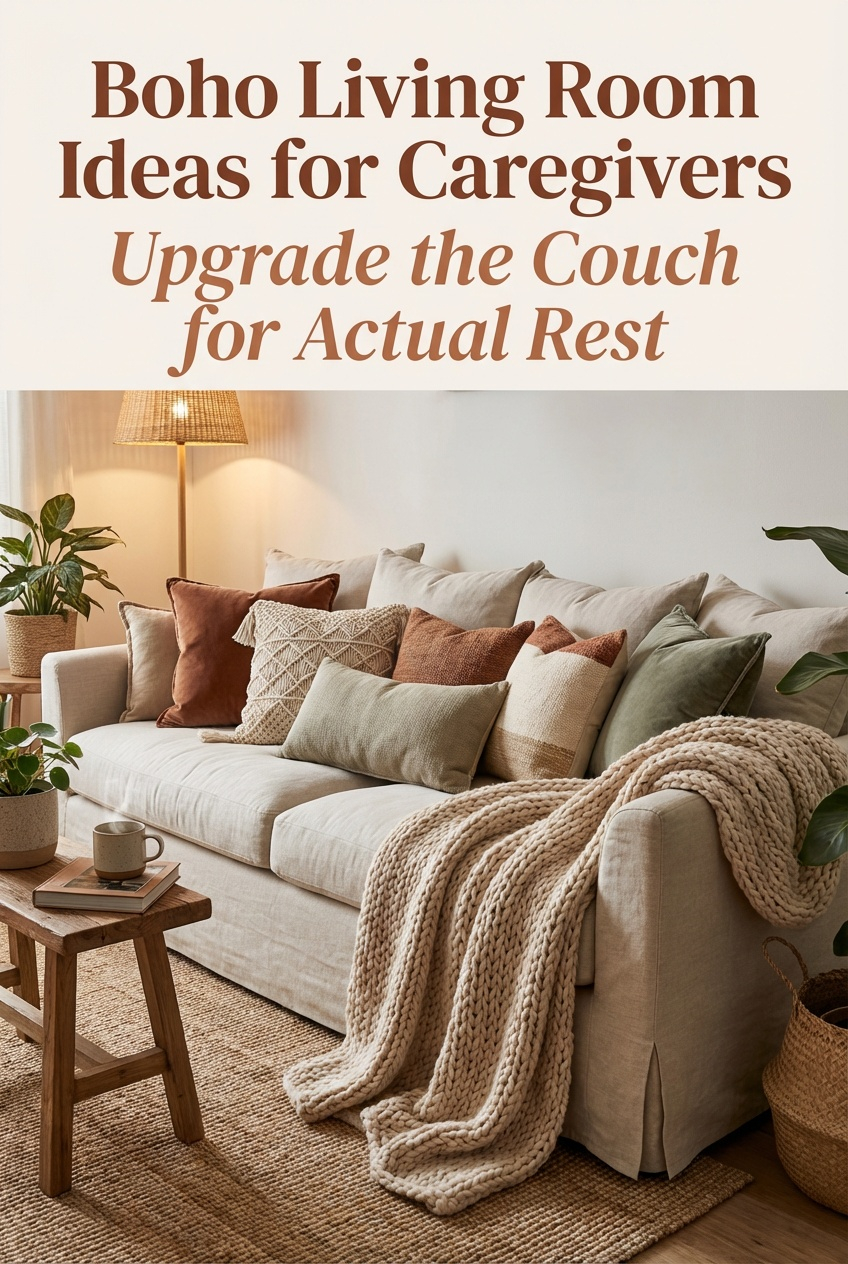
2. Upgrade the Couch for Actual Rest
Shop the Look:
- Deep seat boho couch slipcover
- Oversized lumbar support pillows boho
- Soft thick boho throw for couch
- Washable boho couch cushions
Your couch matters more than your decor.
If it’s shallow or stiff, no amount of boho styling will fix that.
Look for:
- Deeper seat depth
- Softer cushions
- Slipcovers you can wash
If replacing it isn’t possible, add:
- Two oversized pillows
- A lumbar pillow for lower back support
- A thick throw you can lean into
After lifting and moving all day, your body needs softness — not structure.
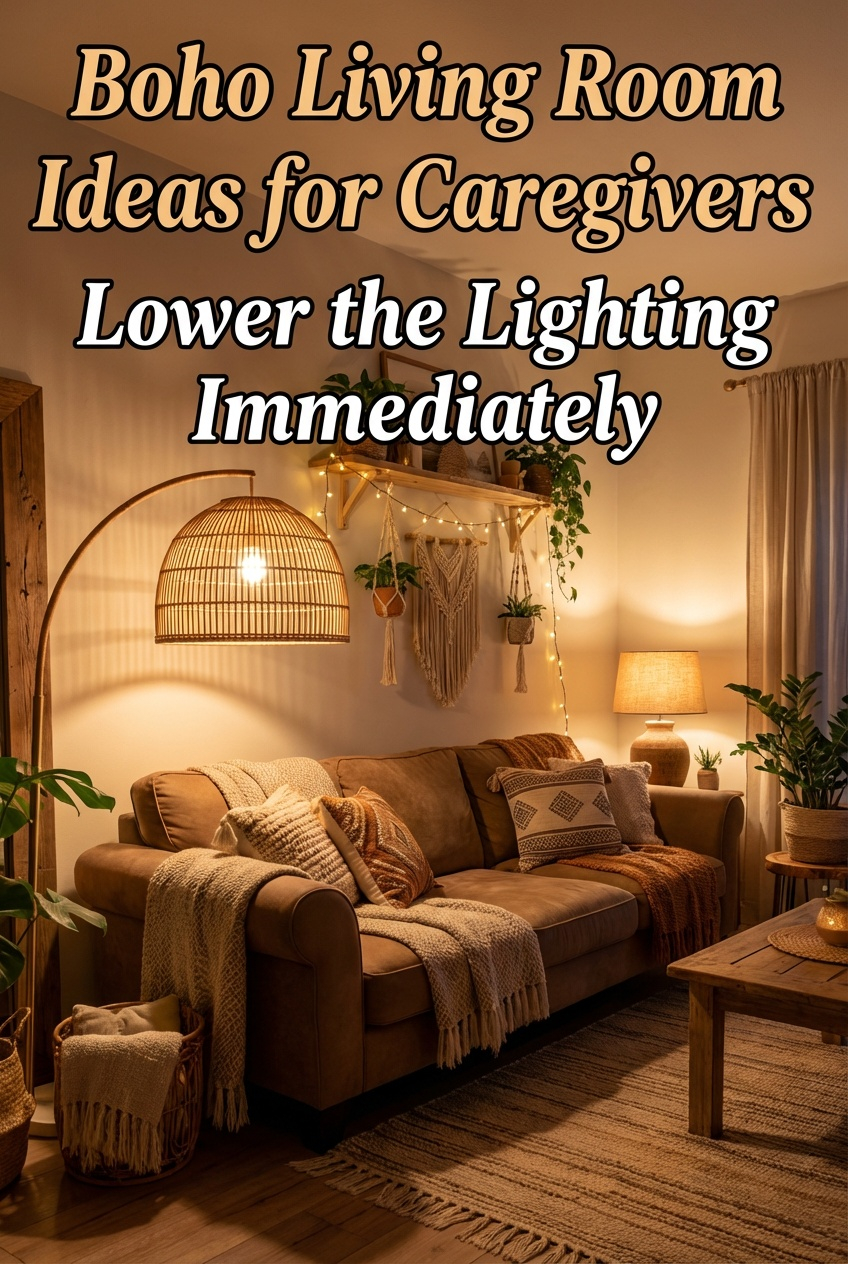
3. Lower the Lighting Immediately
Shop the Look:
- 2700K warm floor lamp boho rattan
- Boho table lamp warm glow
- Soft string lights boho shelf
- Warm LED bulbs 2700K boho shade
Most caregiver homes rely on overhead lighting. That’s the fastest way to keep your nervous system in alert mode.
Replace harsh bulbs with warm-toned ones (2700K range).
Add:
- One floor lamp near the couch
- One table lamp in a corner
- Optional: soft string lights along a shelf
Turn off the overhead light at night.
Lighting alone can completely change how a room feels.
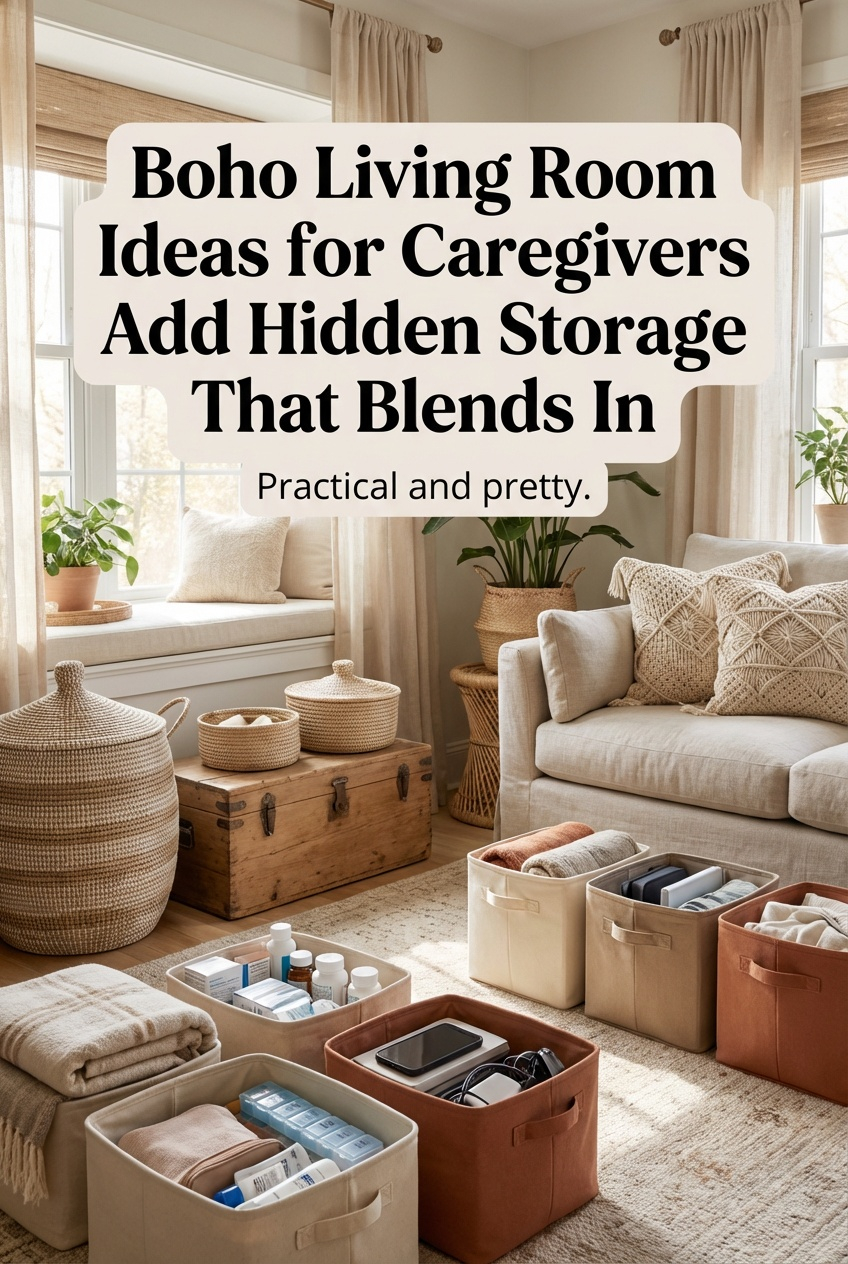
4. Add Hidden Storage That Blends In
Shop the Look:
- Woven boho storage baskets neutral
- Wooden boho storage trunk
- Neutral fabric storage bins boho
- Boho baskets for blankets supplies
You likely have items that don’t belong in a “styled” living room — supplies, paperwork, daily-use items.
Boho storage solutions:
- Woven baskets
- Wooden storage trunks
- Fabric bins in neutral tones
Use baskets to store:
- Extra blankets
- Care supplies
- Electronics
- Random daily clutter
The goal is not minimalism. It’s containment.
When visual clutter is reduced, your brain relaxes faster.
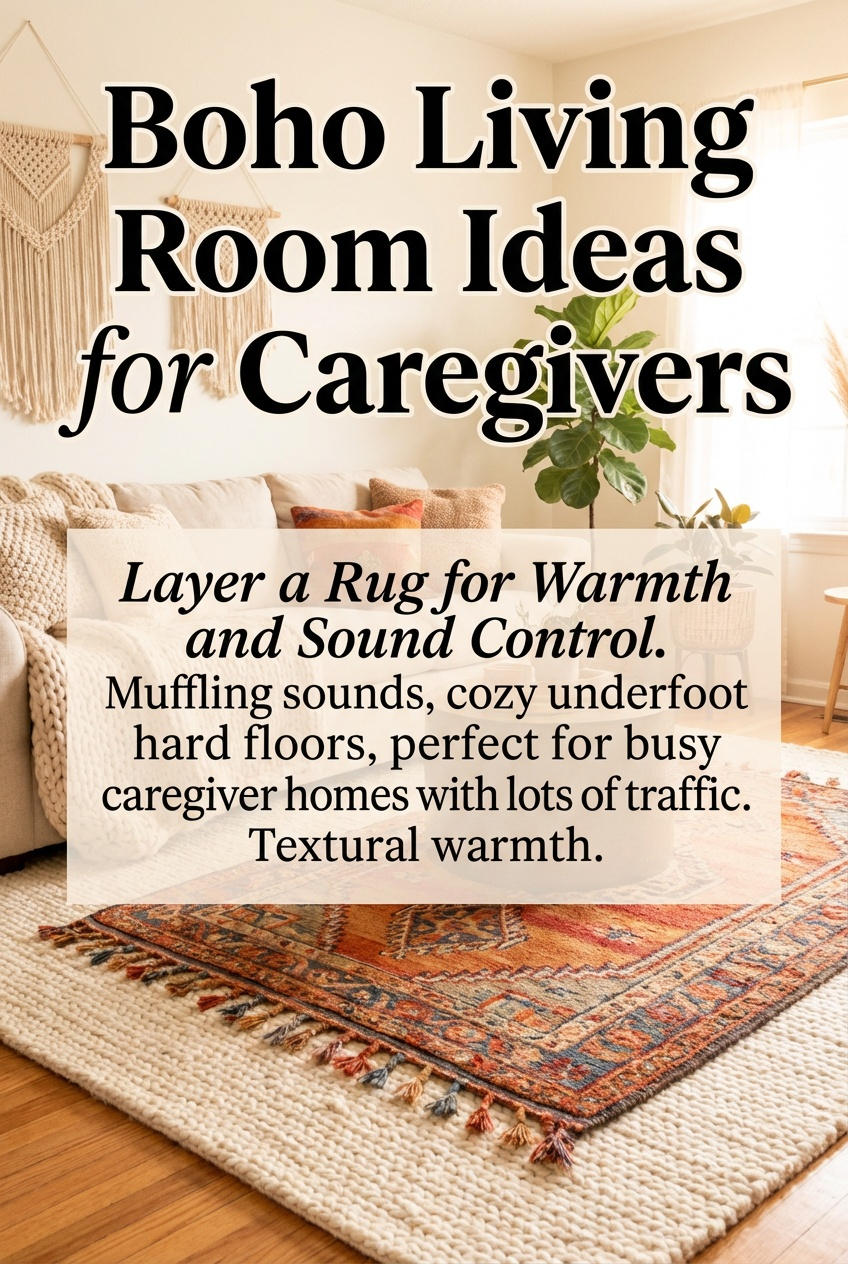
5. Layer a Rug for Warmth and Sound Control
Shop the Look:
- Large neutral boho base rug taupe
- Small patterned textured boho rug
- Layered boho rugs warm earth tones
- Durable boho rug for high traffic
Layered rugs are not just aesthetic.
They:
- Soften sound
- Warm hard flooring
- Add physical comfort underfoot
Use a larger neutral rug as a base. Add a smaller patterned or textured rug on top.
This also hides wear and tear from heavy foot traffic — which caregiver homes usually have.
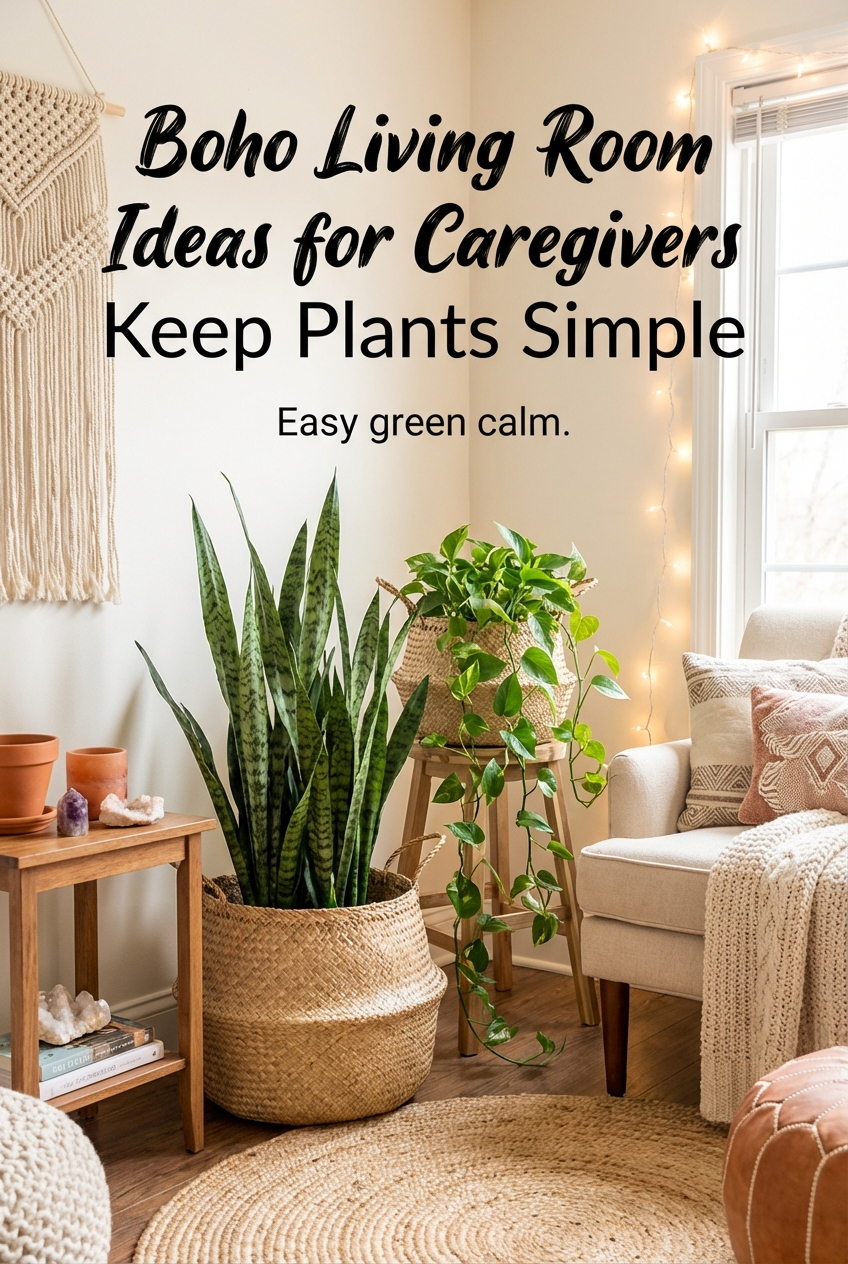
6. Keep Plants Simple
Shop the Look:
- Low maintenance snake plant faux boho
- Pothos ZZ plant boho woven basket
- Faux boho floor plant realistic
- Woven basket for plants boho neutral
Plants reduce visual harshness and make a room feel calmer.
Low-maintenance options:
- Snake plant
- Pothos
- ZZ plant
If plant care feels like another responsibility, use high-quality faux plants.
You only need one or two. A single floor plant in a woven basket can change the tone of the room.
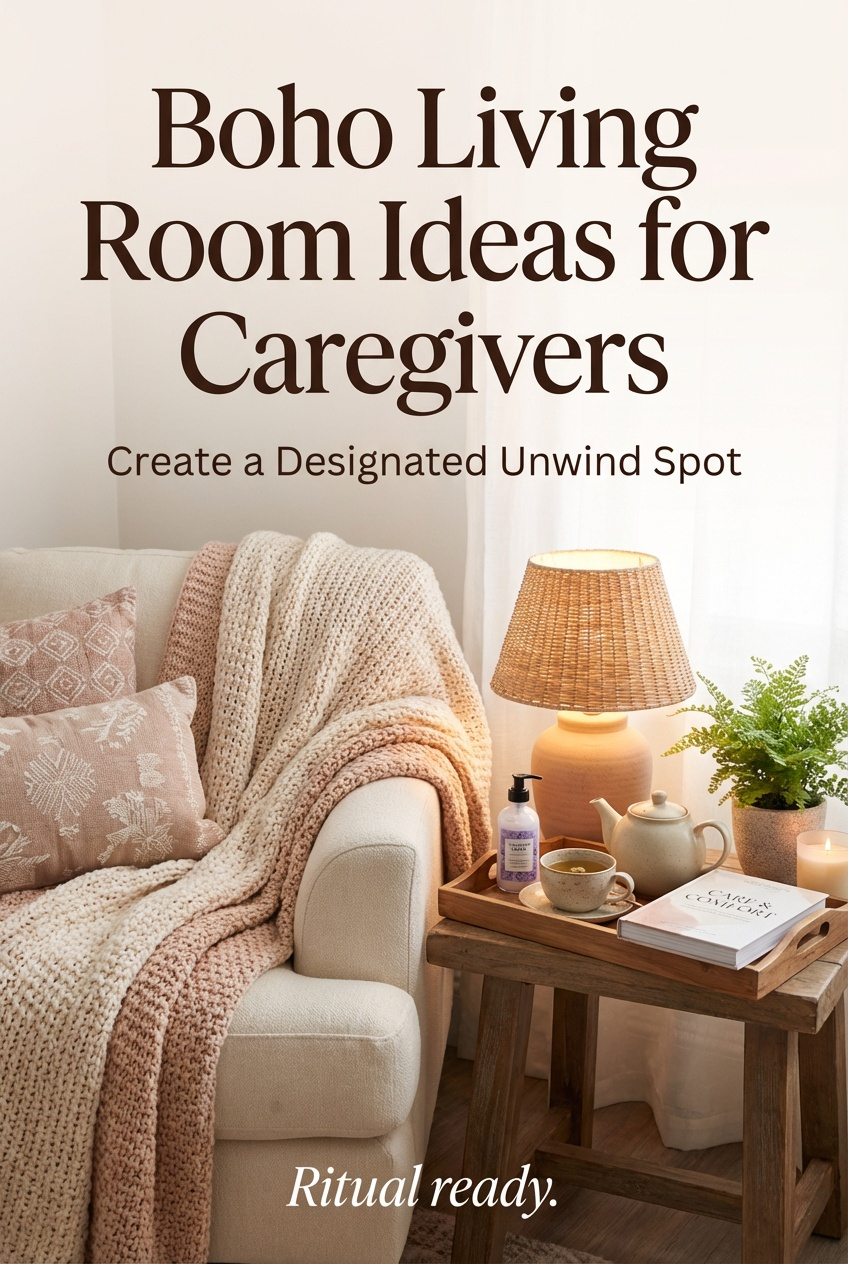
7. Create a Designated Unwind Spot
Shop the Look:
- Soft boho throw blanket neutral
- Small boho bedside lamp warm
- Boho side table wooden rattan
- Decorative tray for tea lotion boho
This doesn’t require a full room makeover.
Pick one chair or one end of the couch.
Add:
- A soft throw
- A small lamp
- A side table
- A tray with tea, lotion, or a book
This becomes your “shift transition” space.
Even psychologically, having a consistent unwind spot helps your brain shift out of work mode.
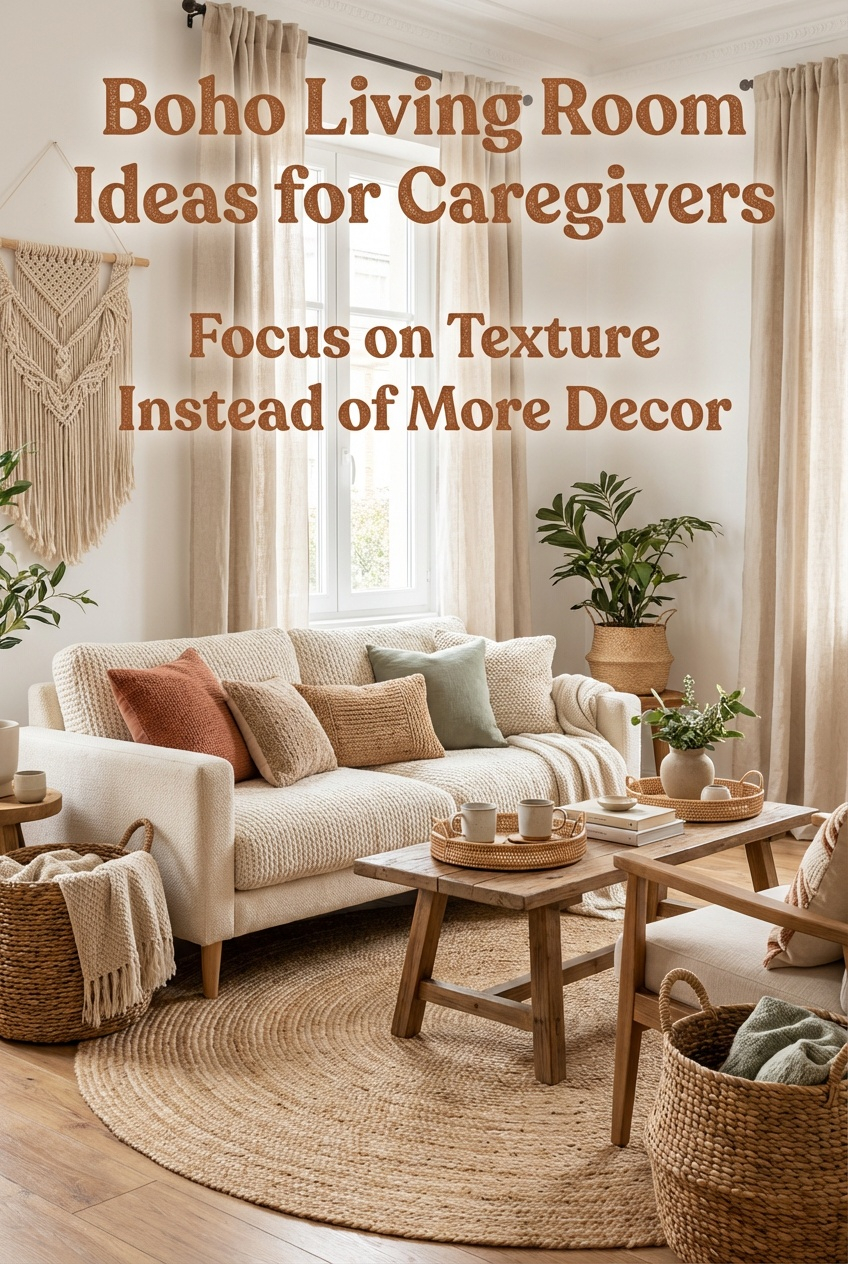
8. Focus on Texture Instead of More Decor
Shop the Look:
- Knit boho pillows neutral tones
- Linen boho curtains sheer neutral
- Rattan boho trays woven
- Wooden boho coffee table small
Boho style is about materials more than objects.
Instead of buying more decor pieces, layer textures:
- Knit pillows
- Linen curtains
- Rattan trays
- Wooden tables
- Woven baskets
When texture is varied but colors stay neutral, the room feels rich without feeling busy.
Avoid filling every surface. Leave some breathing room.
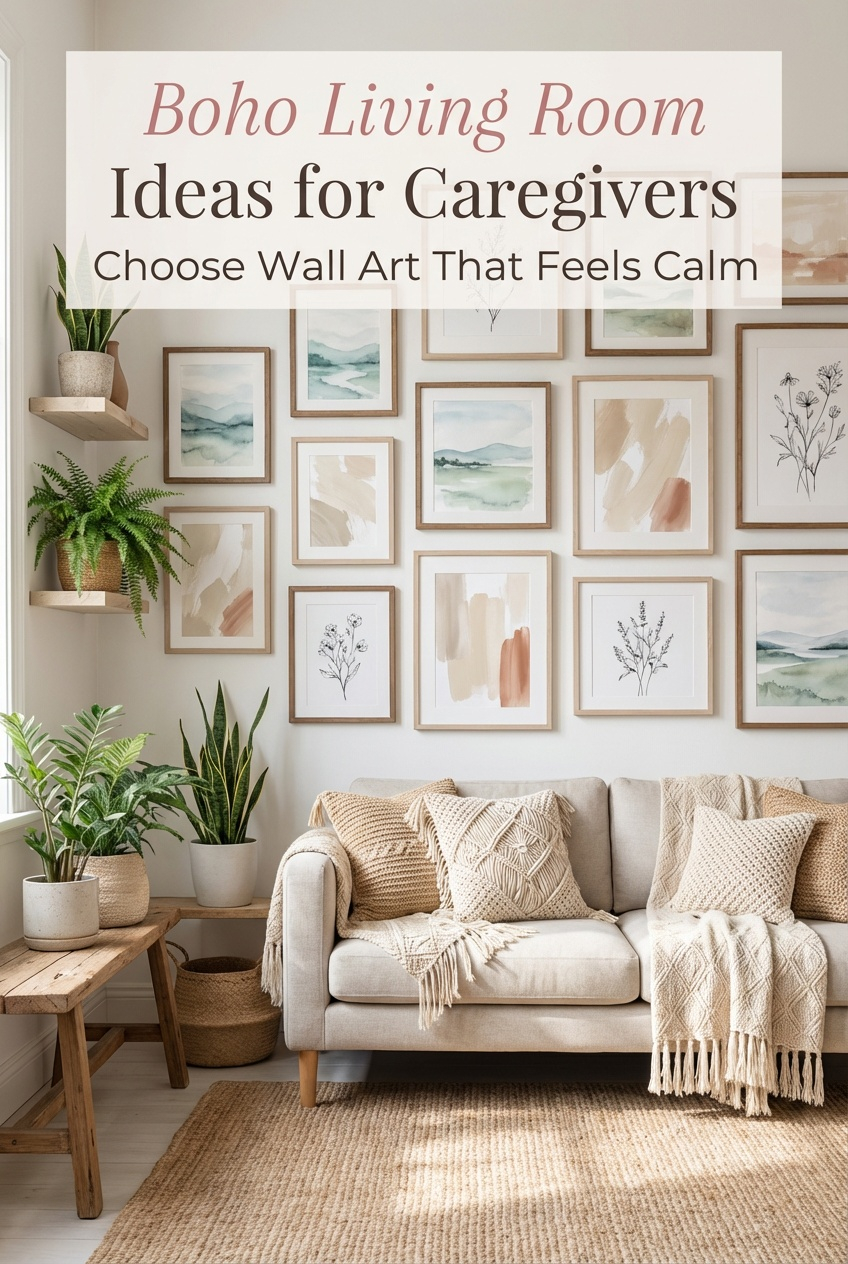
9. Choose Wall Art That Feels Calm
Shop the Look:
- Soft landscape boho wall art print
- Neutral abstract boho wall art
- Botanical sketches boho framed
- Vintage style boho picture frames
Skip overly bold art.
Choose:
- Soft landscapes
- Neutral abstract prints
- Botanical sketches
- Vintage-style frames
Your walls should not compete for attention.
After a long day, your eyes need somewhere neutral to land.
10. Introduce One Vintage or Imperfect Piece
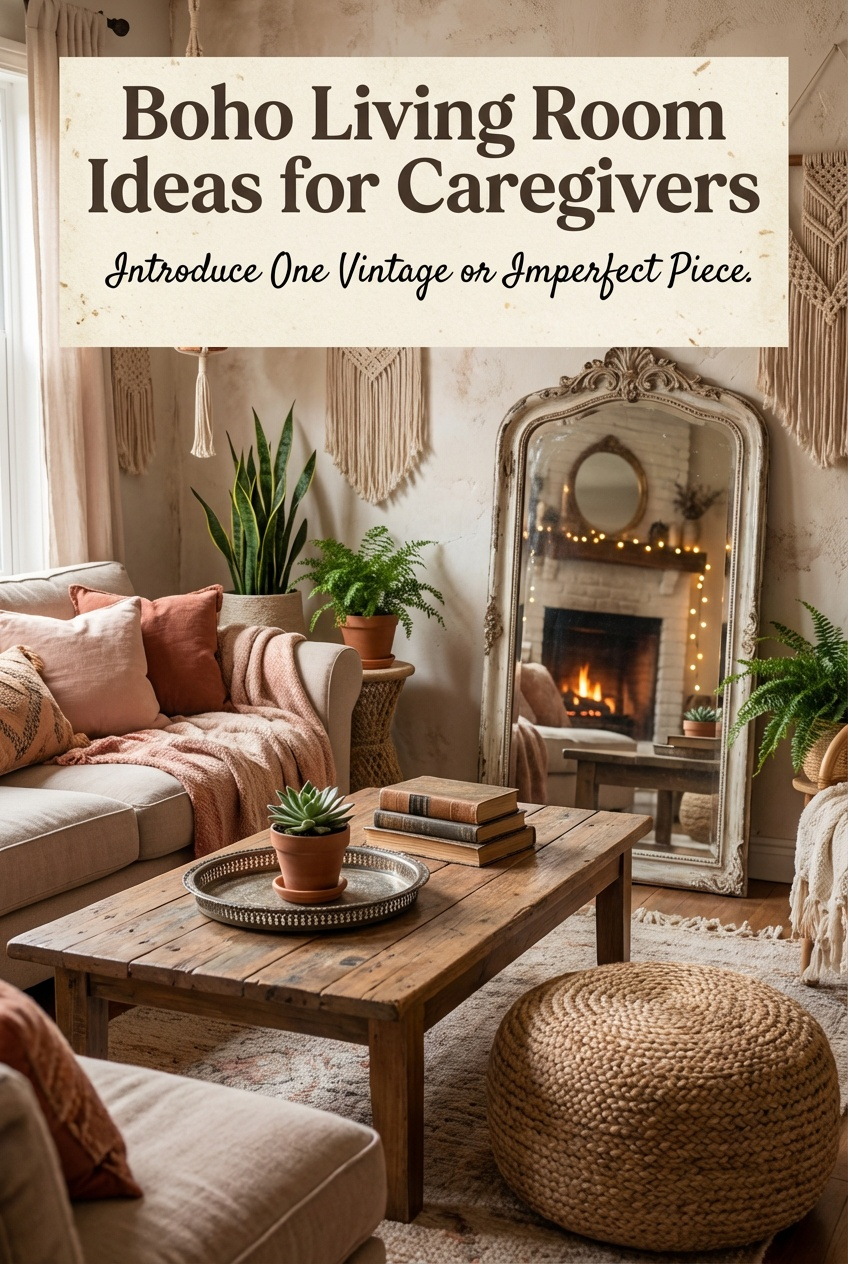
Shop the Look:
- Thrifted style wooden boho table
- Vintage boho mirror distressed
- Woven boho pouf ottoman
- Vintage boho serving tray
Boho rooms feel relaxed because they aren’t overly polished.
Add:
- A thrifted wood table
- An older mirror with character
- A woven pouf
- A vintage tray
Imperfect pieces feel lived-in and grounding.
You don’t need all new furniture to create a peaceful space.
11. Reduce Visual Noise
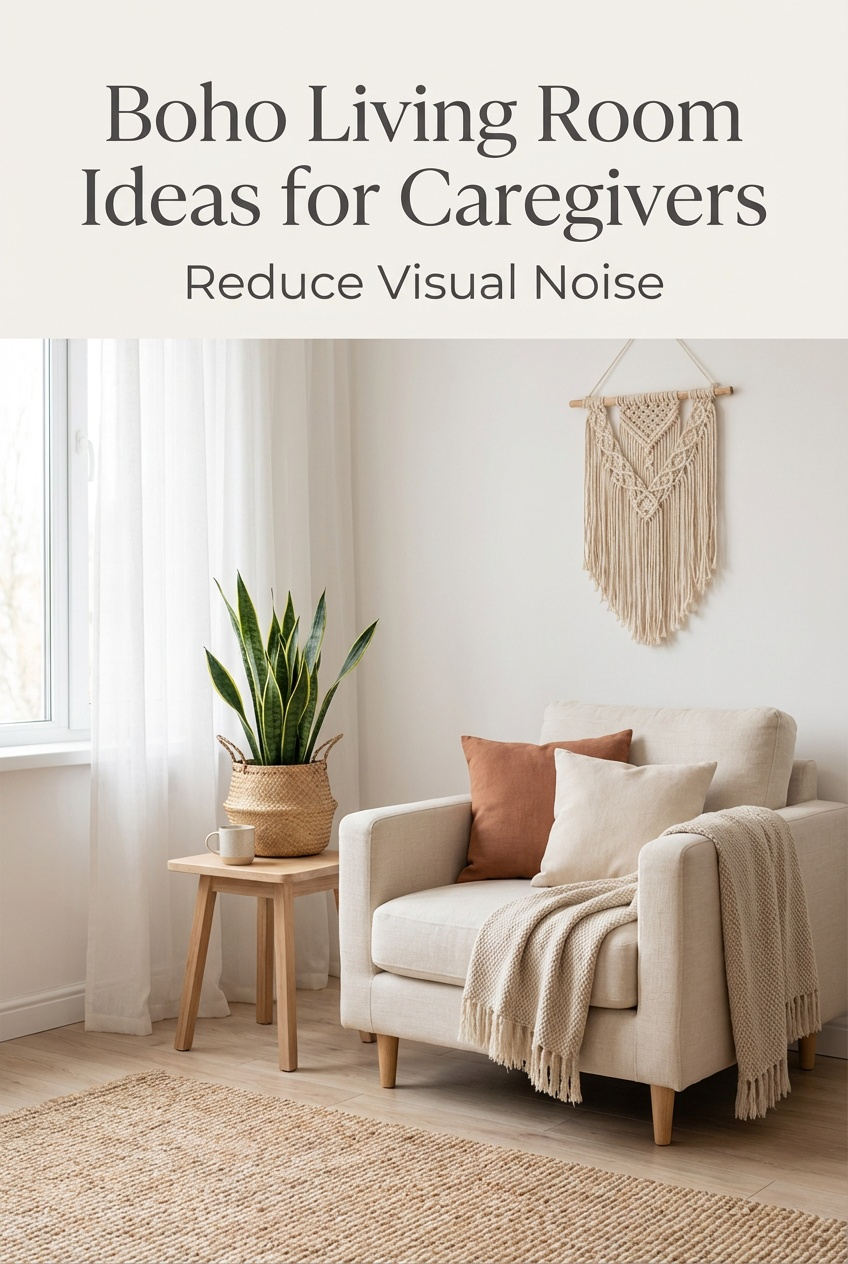
Shop the Look:
- Boho woven storage baskets clutter
- Neutral fabric bins simple storage
- Minimal boho wall shelves
- Clear acrylic organizers hidden
Caregiver homes accumulate “stuff.”
Look around your living room and remove:
- Extra decorative objects
- Small scattered items
- Anything that doesn’t serve a purpose
Keep surfaces simple.
Less visual clutter = less mental noise.
12. Add Earth-Toned Accent Colors Carefully
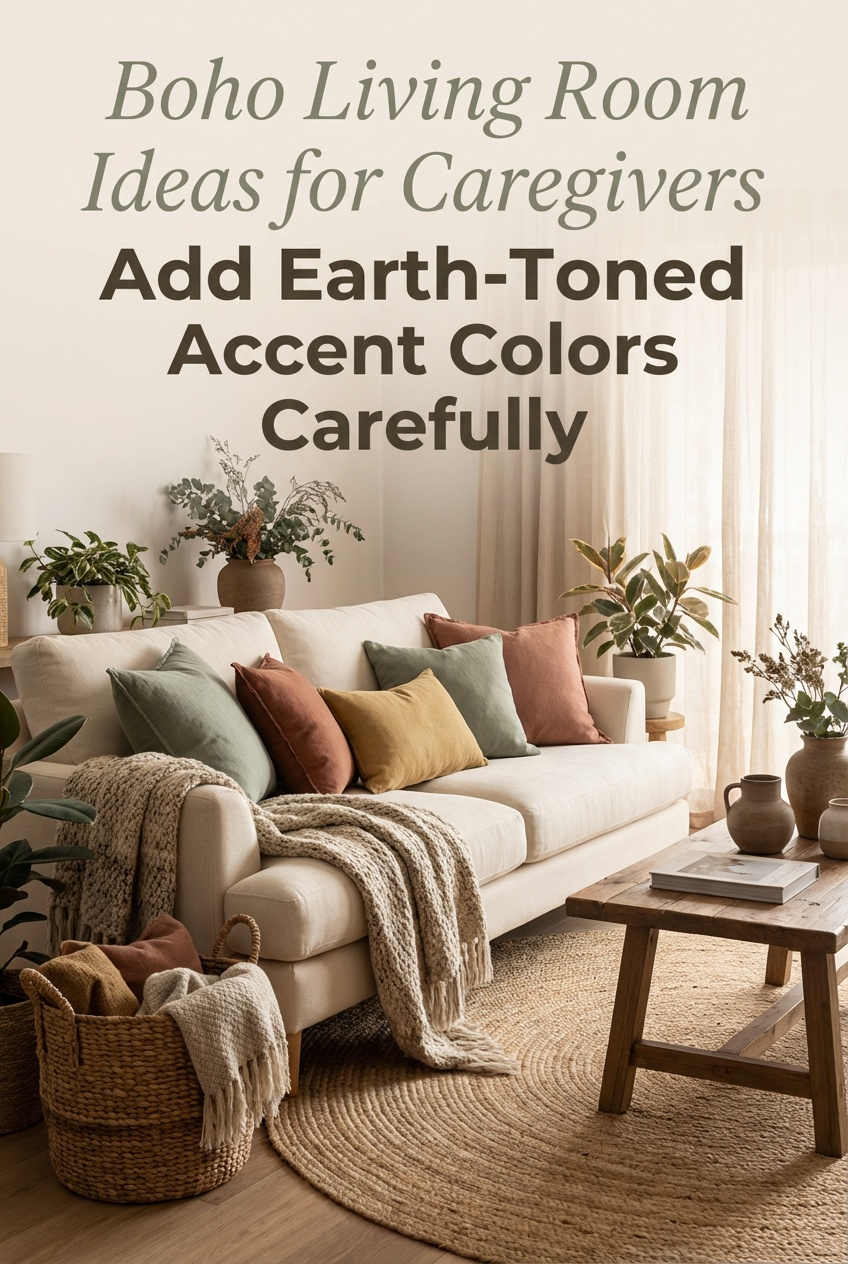
Shop the Look:
- Sage green boho pillows muted
- Rust terracotta boho throw
- Muted mustard boho cushions
- Dusty terracotta boho vase decor
If you want color, stick to muted shades:
- Sage
- Rust
- Muted mustard
- Dusty terracotta
Avoid neon or overly bright colors in your main living area. Those energize instead of calm.
Color should feel grounding, not stimulating.
13. Build a Small Evening Ritual Setup
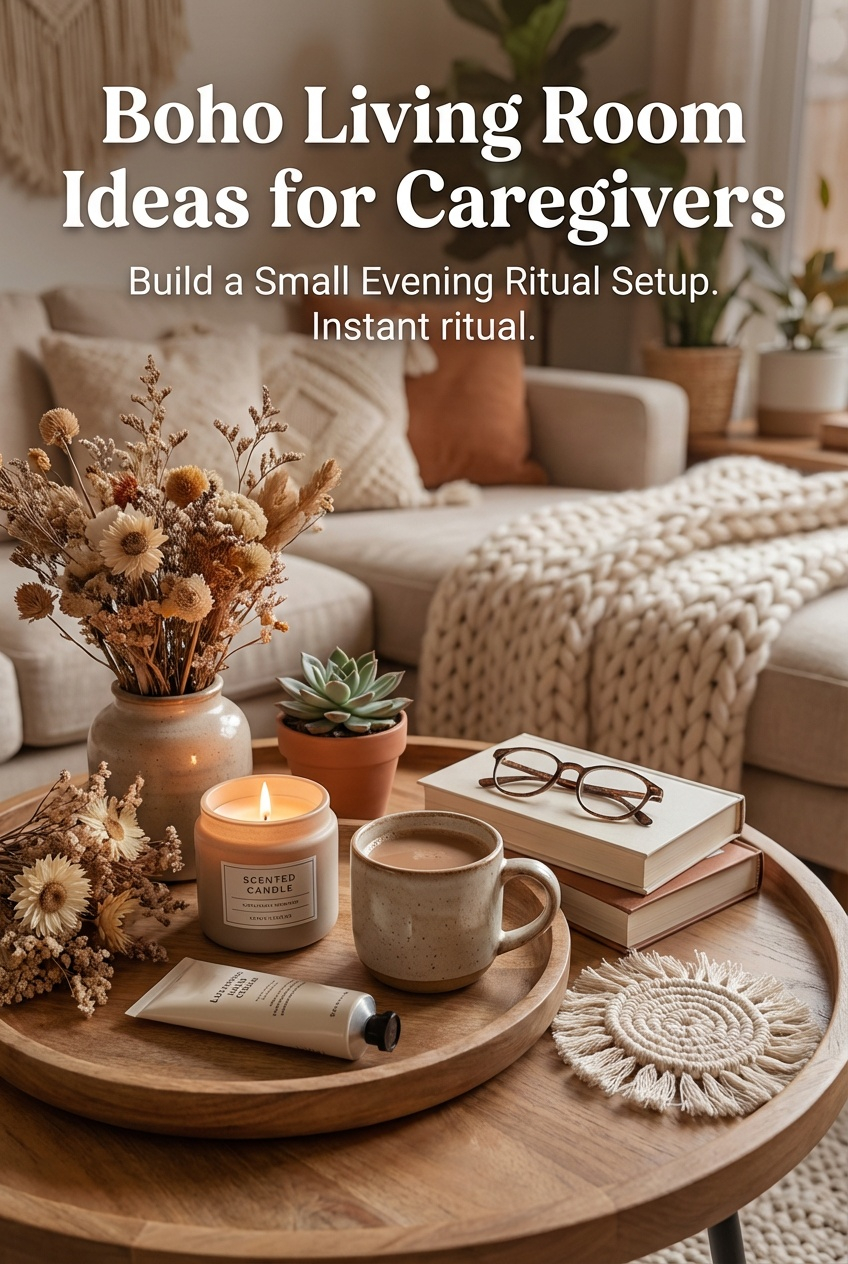
Shop the Look:
- Boho wooden tray for candle mug
- Scented candle boho neutral jar
- Hand cream lotion boho packaging
- Cozy mug ceramic boho earth tones
Keep a tray on your coffee table with:
- A candle
- A mug
- Hand cream
- A book
When everything is already there, you don’t have to decide how to unwind.
That small cue helps your brain shift from “care mode” to “rest mode.”
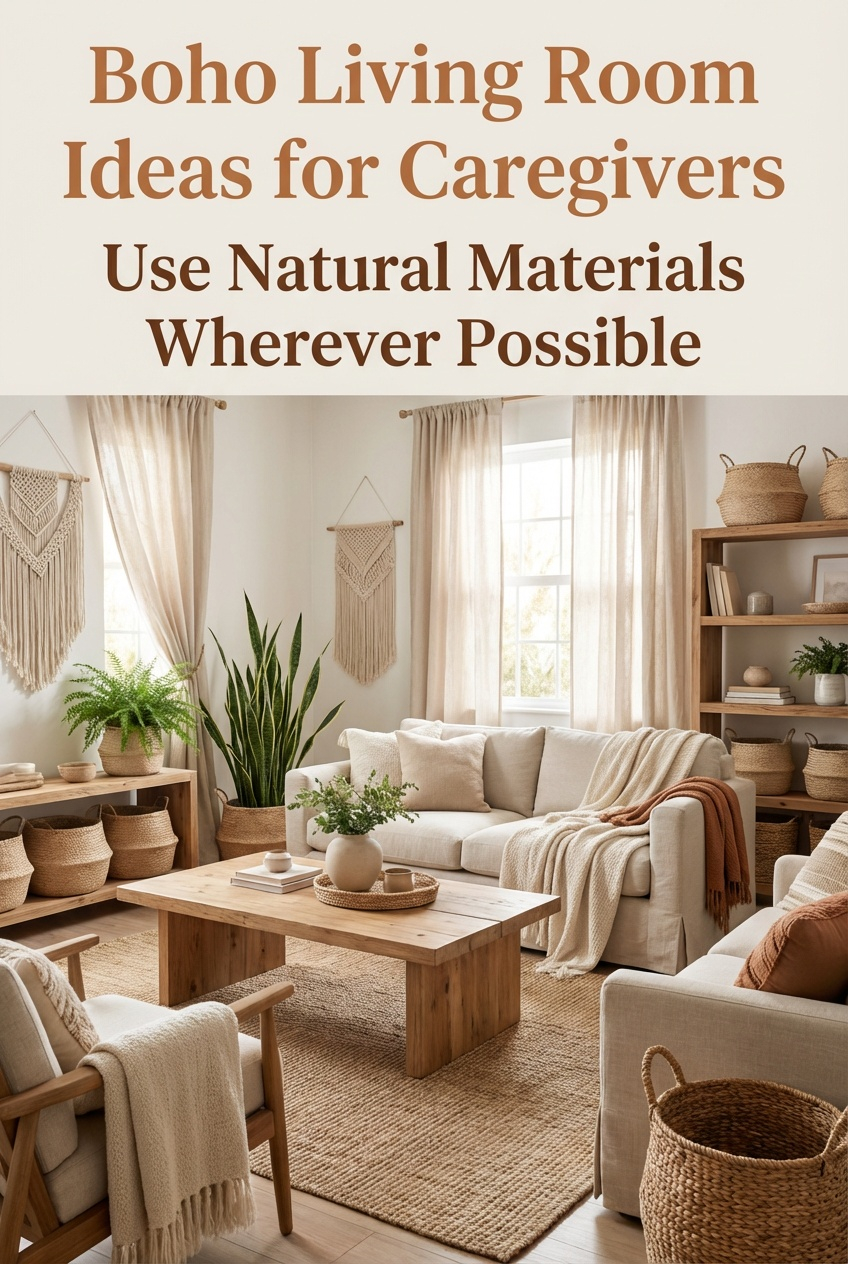
14. Use Natural Materials Wherever Possible
Shop the Look:
- Woven fabric lamp shades boho
- Cotton knit boho throws natural
- Linen boho curtains natural fibers
- Wood rattan boho storage baskets
Wood, linen, woven fibers, and cotton reduce visual harshness.
Swap:
- Metal lamps → woven or fabric shades
- Synthetic throws → cotton or knit
- Plastic storage → woven baskets
Natural materials absorb light differently and feel softer visually.
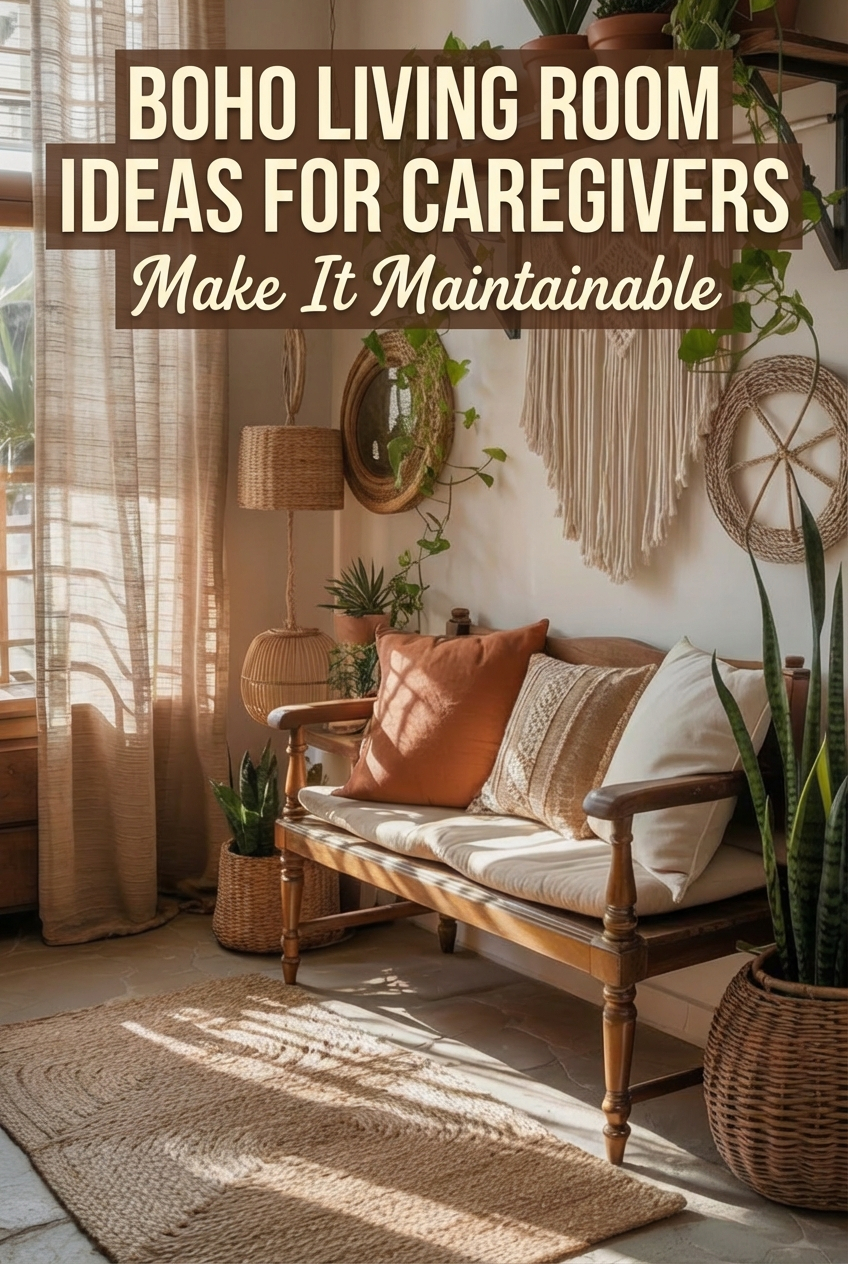
15. Make It Maintainable
Shop the Look:
- Washable boho slipcovers fabrics
- Durable boho area rugs machine wash
- Neutral boho pillows stain resistant
- Low maintenance faux plants boho
The most important rule:
If your decor requires constant adjusting, you won’t enjoy it.
Choose:
- Washable fabrics
- Durable rugs
- Fewer fragile items
- Neutral base pieces
Your living room should reduce work, not create more of it.
A Simple Boho Reset Plan (If You’re Overwhelmed)
If this feels like too much, start here:
- Turn off overhead lights and add one warm lamp.
- Add one thick, washable throw.
- Hide clutter in one woven basket.
- Remove three decorative items you don’t love.
- Add one plant (real or faux).
That alone can shift the room’s energy.
Why This Matters for Caregivers
Caregiving keeps your nervous system in alert mode.
You’re:
- Listening constantly
- Anticipating needs
- Moving quickly
- Solving problems
Your home should do the opposite.
It should:
- Feel soft
- Feel warm
- Feel stable
- Feel easy
Boho works because it allows imperfection. It welcomes layered living. It doesn’t demand sharp lines or spotless surfaces.
And that makes it realistic for your life.
Final Thought
You don’t need a full renovation.
You need a few intentional changes that make your living room feel like a landing pad.
A warm lamp.
A softer couch.
Hidden clutter.
A small unwind corner.
You spend your days holding everything together.
Your space should hold you back.