This post contains affiliate links. As an Amazon Associate, I earn from qualifying purchases at no extra cost to you.
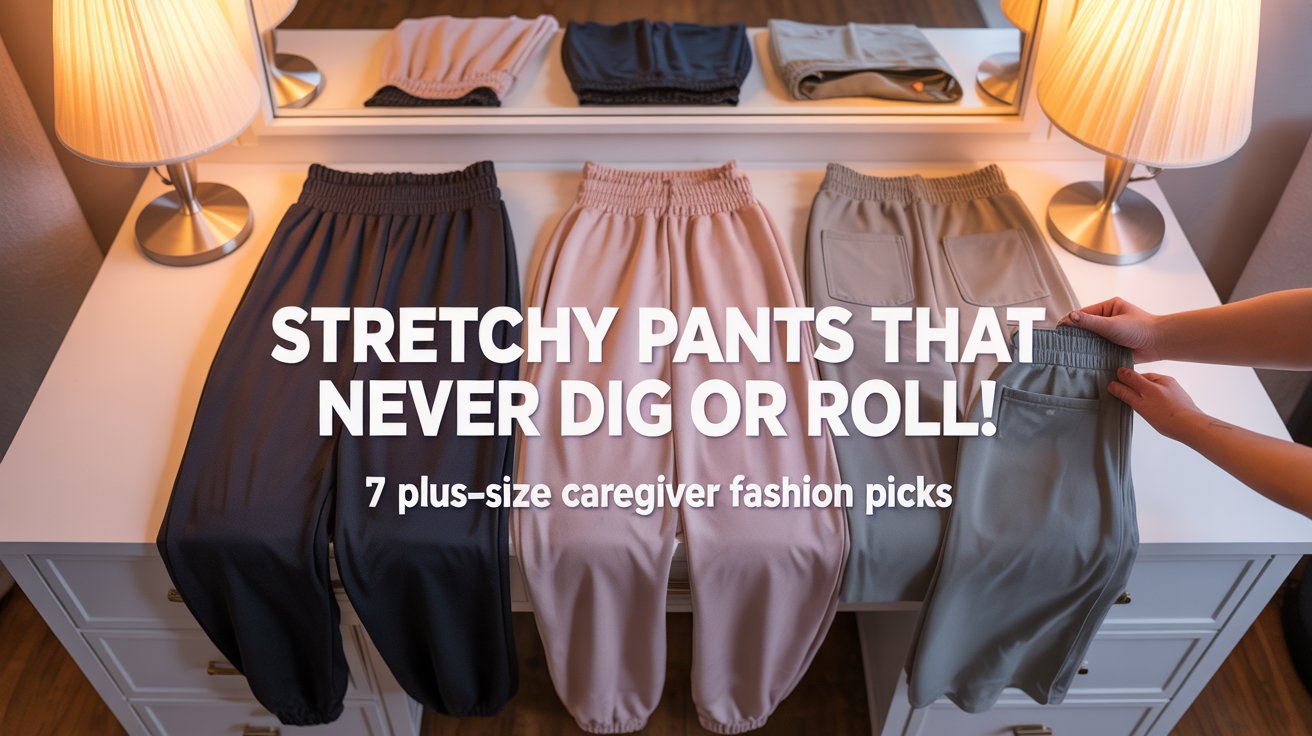
If you’re a caregiver, uncomfortable pants don’t just annoy you — they drain you. Waistbands that dig, roll, twist, or tighten throughout the day create constant low-grade stress. Over time, that discomfort adds up and affects your focus, patience, and energy.
That’s why these plus-size caregiver fashion picks are not about trends, aesthetics, or “looking put together.” They are about reducing physical friction during long caregiving days. Every option below is chosen for one goal: pants you can forget you’re wearing.
These picks prioritize:
- even pressure distribution
- stretch with recovery
- waistbands that stay flat
- fabrics that breathe and move
- silhouettes that work when sitting, standing, bending, and walking
No shapewear. No tolerance training. Just comfort that lasts.
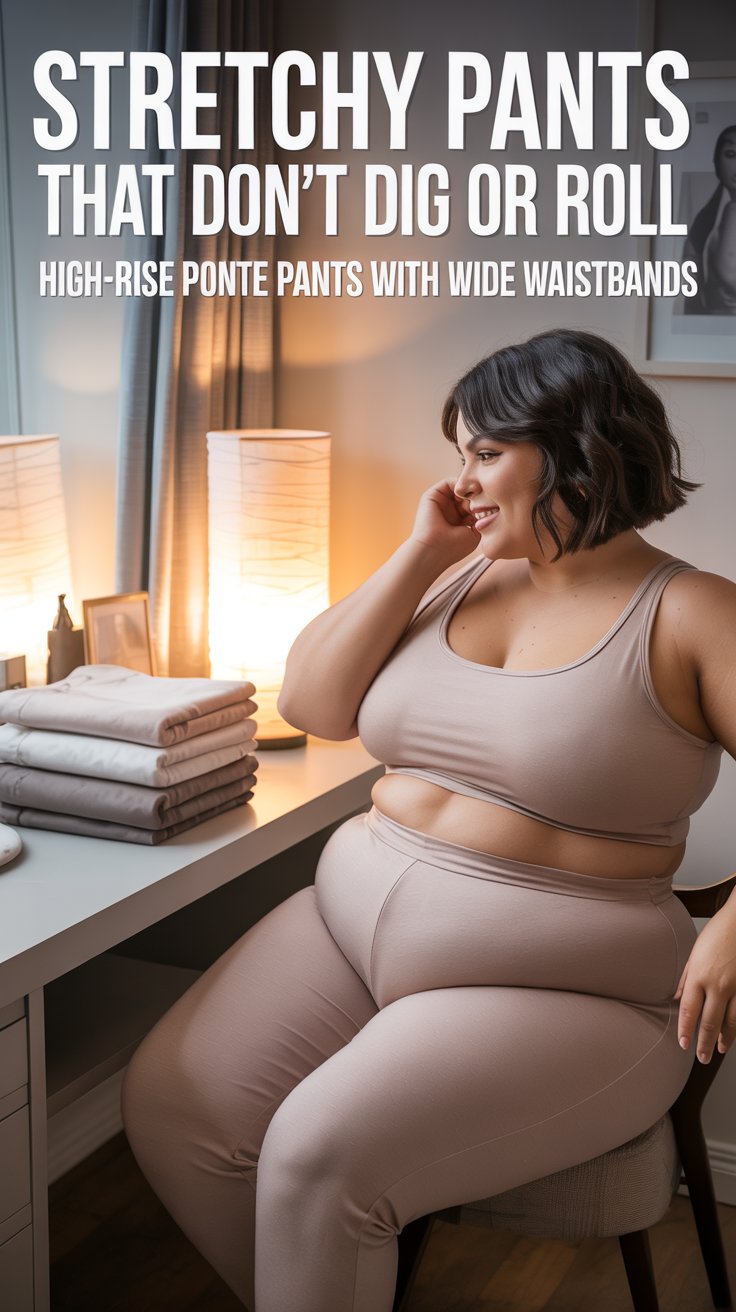
1. High-Rise Pull-On Ponte Pants with Wide Waistbands
Shop the Look:
- Plus size high rise pull on ponte pants wide waistband
- Ponte knit pants plus size stretch recovery no dig
- Wide waistband ponte leggings pants curvy caregiver
- High rise stretch ponte pants plus size flat waist
This is the most reliable option for caregivers who want support without restriction.
Why they’re comfortable
Ponte fabric stretches in multiple directions while maintaining structure. A wide waistband spreads pressure across the torso instead of concentrating it at one point.
Waistband design that matters
- flat, smooth waistband
- at least 2–3 inches wide
- no exposed elastic
What this prevents
- digging at the stomach
- rolling when seated
- pinching during bending
Caregiver reality
You can sit for extended periods without pressure buildup and stand without adjusting.
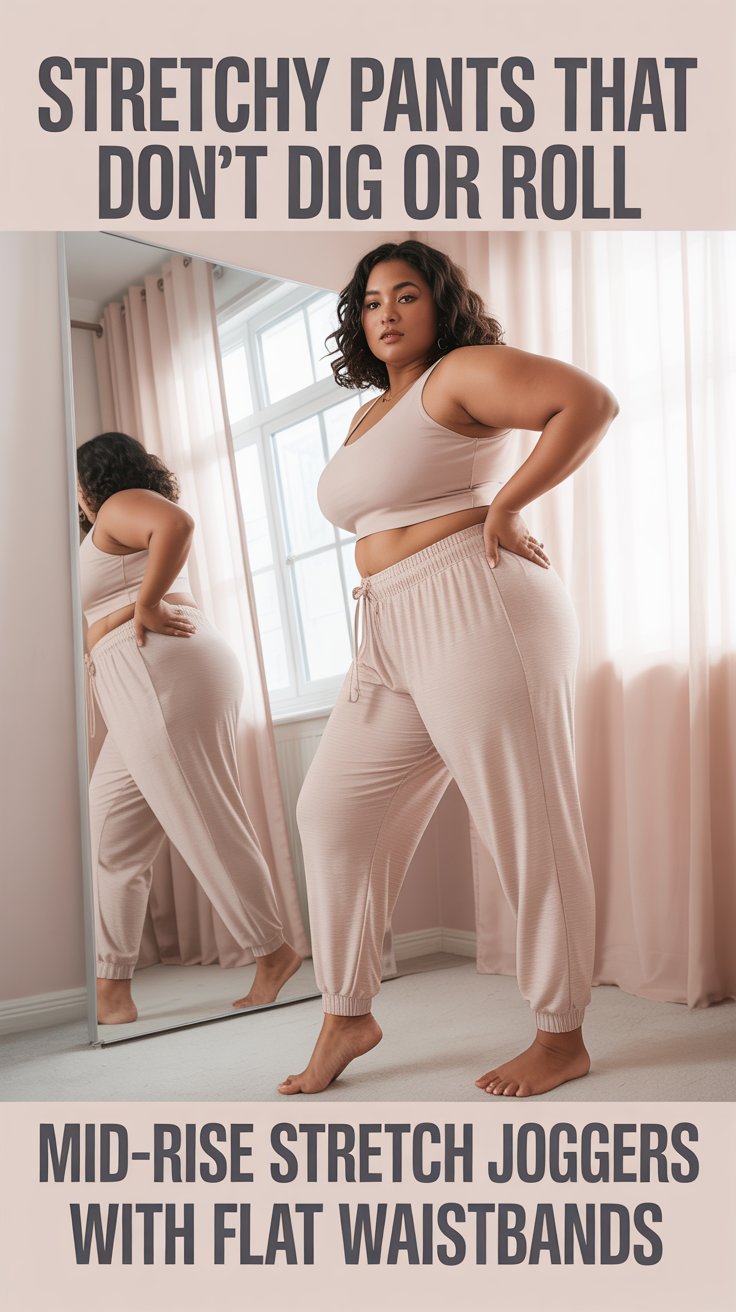
2. Mid-Rise Stretch Joggers with Flat Waistbands
Shop the Look:
- Plus size mid rise stretch joggers flat waistband
- Lightweight knit joggers plus size breathable no roll
- Flat waistband joggers curvy caregiver movement
- Mid rise stretch joggers plus size soft interior
Joggers only work when the waistband is designed for movement.
Why they’re comfortable
Mid-rise joggers sit below the most sensitive part of the stomach while still staying secure. Flat waistbands avoid twisting and pressure points.
Fabric matters
- lightweight stretch knit
- breathable fibers
- soft interior finish
What to avoid
- thick drawstrings tied tightly
- narrow elastic
- heavy fleece that traps heat
Caregiver benefit
These move easily with your body and don’t tighten as the day goes on.
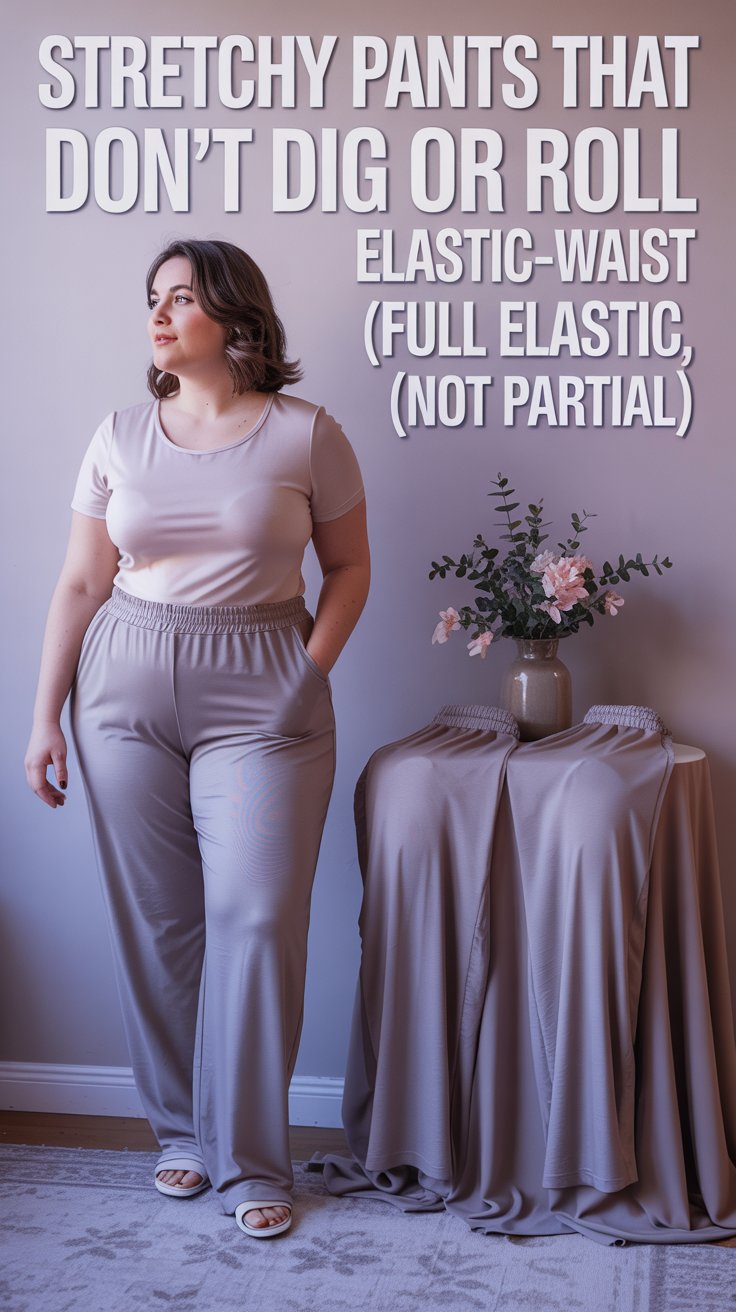
3. Elastic-Waist Straight-Leg Pants (Full Elastic, Not Partial)
Shop the Look:
- Plus size full elastic waist straight leg pants
- Stretch woven straight leg pants plus size relaxed thigh
- Full elastic waistband pants curvy no pinch caregiver
- Straight leg pull on pants plus size stretch stable
Straight-leg pants provide balanced comfort across hips and thighs.
Why they’re comfortable
A full elastic waistband adjusts naturally as your body changes throughout the day. Straight legs prevent fabric from pulling across the thighs when sitting.
Comfort checklist
- full elastic waistband
- stretch woven fabric
- relaxed thigh fit
What this solves
- pressure spikes after meals
- waistband fatigue
- constant repositioning
Caregiver benefit
They feel stable without feeling tight.
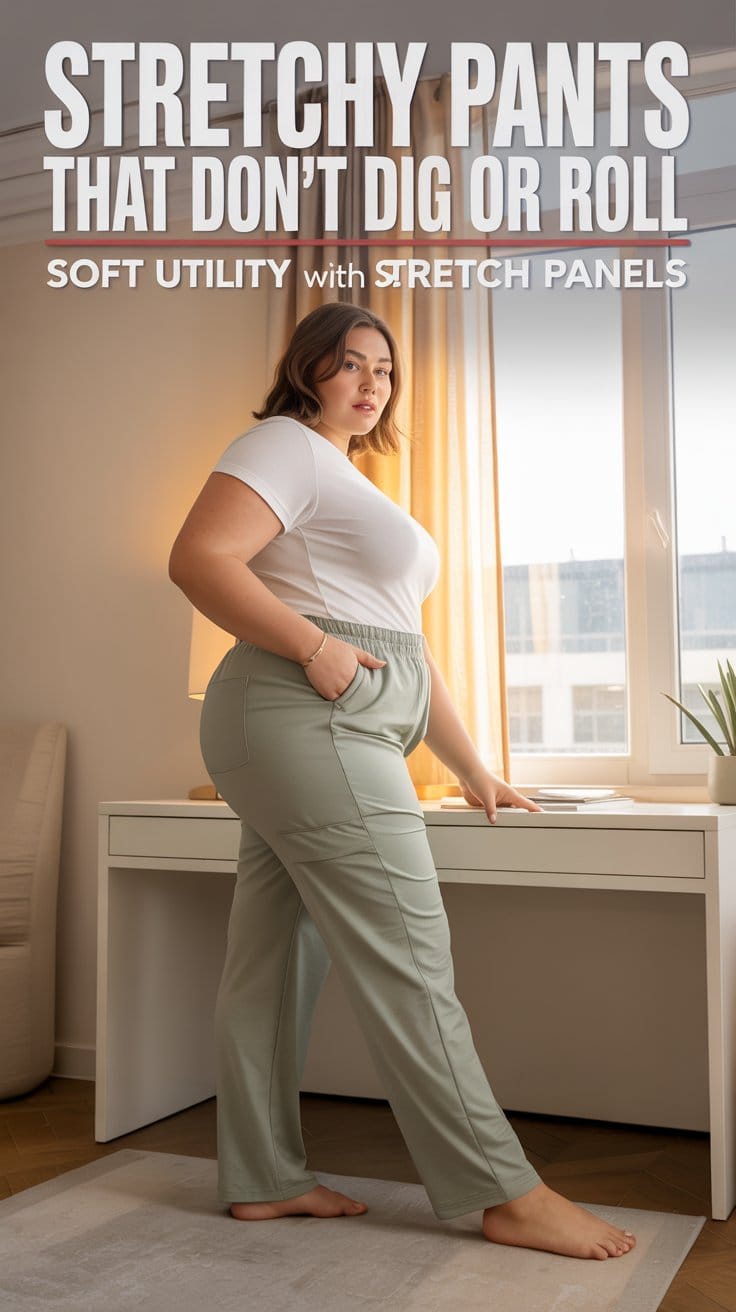
4. Soft Utility Pants with Stretch Panels
Shop the Look:
- Plus size soft utility pants stretch panels tencel
- Cotton blend utility pants plus size flexible pockets
- Stretch panel utility pants curvy caregiver minimal hardware
- Soft relaxed utility pants plus size movement friendly
Utility pants are comfortable when they’re designed for movement, not structure.
Why they’re comfortable
Soft utility pants use flexible fabrics and relaxed cuts that allow bending and lifting without resistance.
Comfort features to look for
- cotton or tencel blends
- stretch panels at hips or waist
- minimal hardware
What to avoid
- stiff canvas
- low-rise cuts
- heavy seams at the waistband
Caregiver bonus
Functional pockets reduce the need for extra carrying, which lowers physical strain.
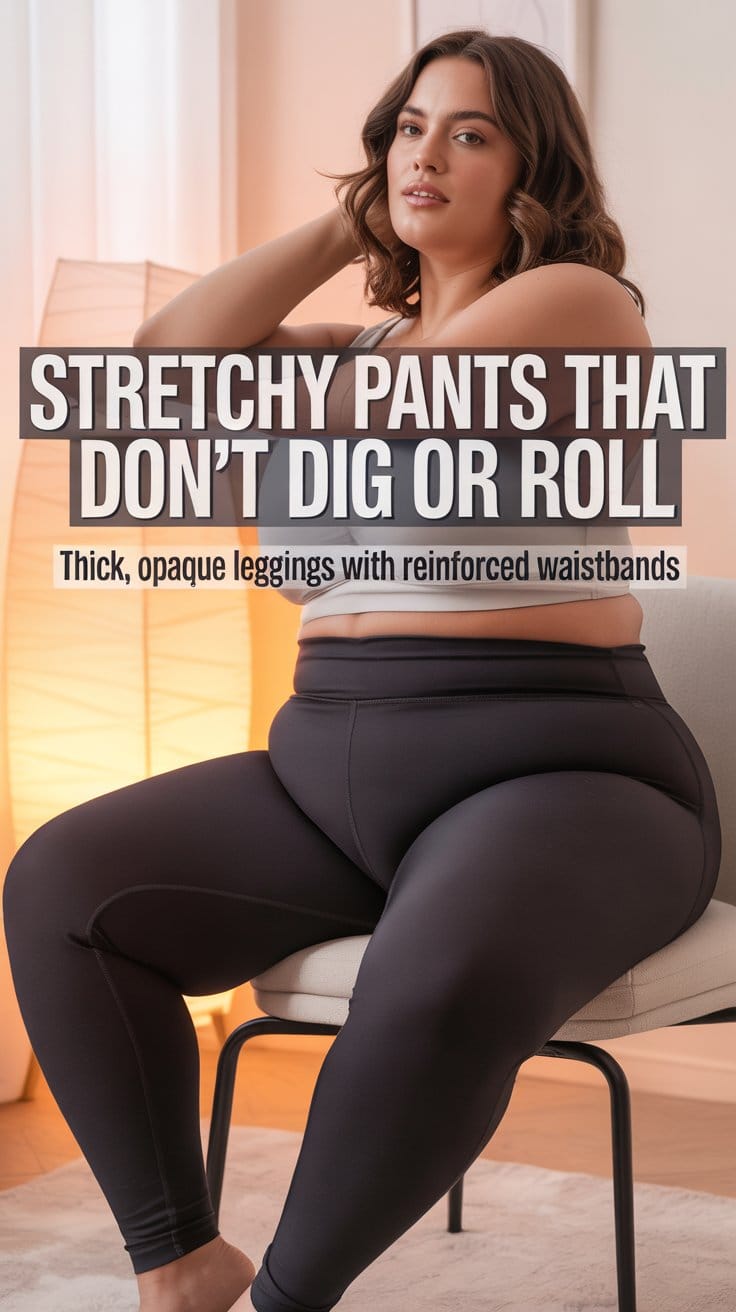
5. Thick, Opaque Leggings with Reinforced Waistbands
Shop the Look:
- Plus size thick opaque leggings wide reinforced waistband
- Reinforced waistband leggings plus size no slip stretch
- Opaque thick leggings curvy caregiver rebound fabric
- Wide waist thick leggings plus size no sag stay put
Leggings are comfortable only when the waistband stays in place.
Why they’re comfortable
Wide, reinforced waistbands distribute pressure upward instead of cutting into the stomach. Thick fabric prevents sagging and slipping.
Key features
- wide waistband (not thin elastic)
- opaque fabric
- stretch that rebounds
What to avoid
- shiny, slippery fabrics
- thin waistbands
- aggressive compression
Caregiver rule
If you feel them every time you move, they’re not the right leggings.
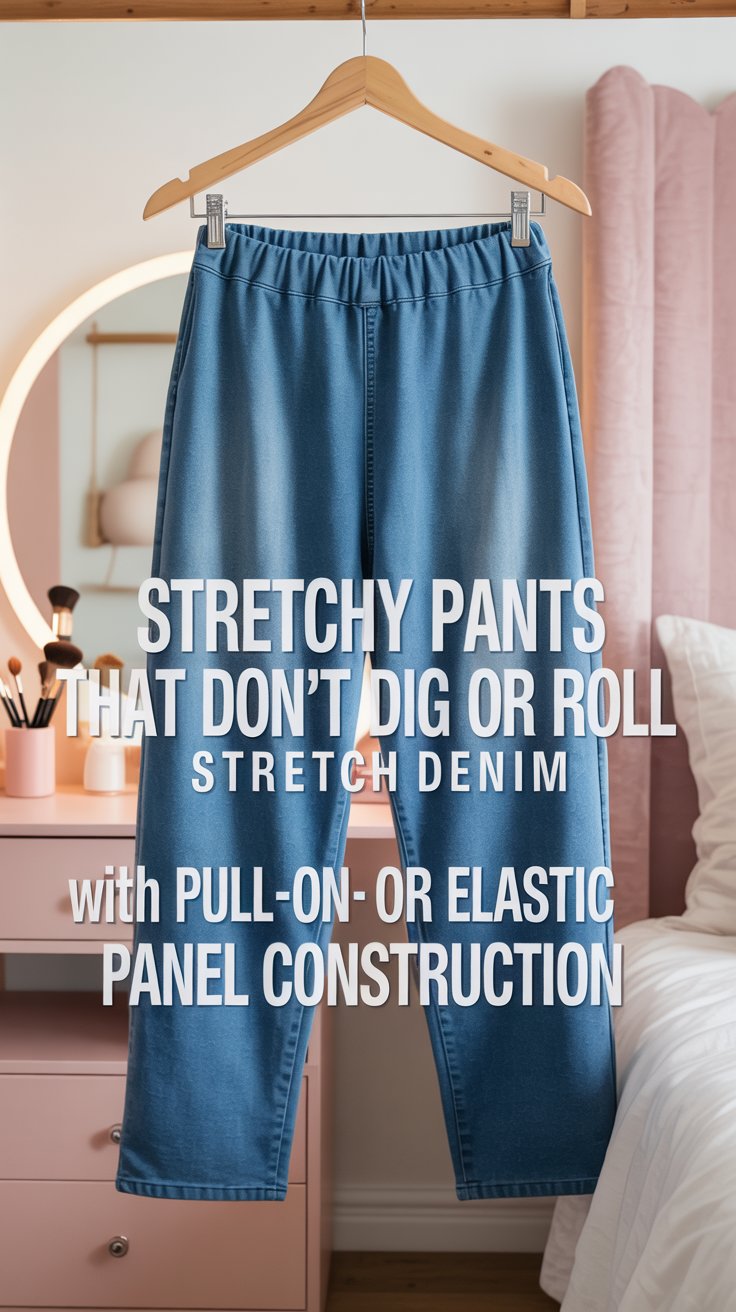
6. Stretch Denim with Pull-On or Elastic Panel Construction
Shop the Look:
- Plus size stretch denim pull on elastic panel
- Pull on jeggings denim plus size mid rise soft
- Elastic panel stretch jeans curvy caregiver no button
- High rise stretch denim pants plus size relaxed fit
Denim can be comfortable when the waistband is redesigned.
Why it’s comfortable
Elastic panels or pull-on designs remove rigid pressure points while preserving the feel of structured pants.
Comfort checklist
- at least 2–4% elastane
- mid-rise or relaxed high-rise
- soft interior finish
What to avoid
- traditional button closures
- stiff waistbands
- heavy denim with no give
Caregiver benefit
These are for days when you want structure without discomfort.
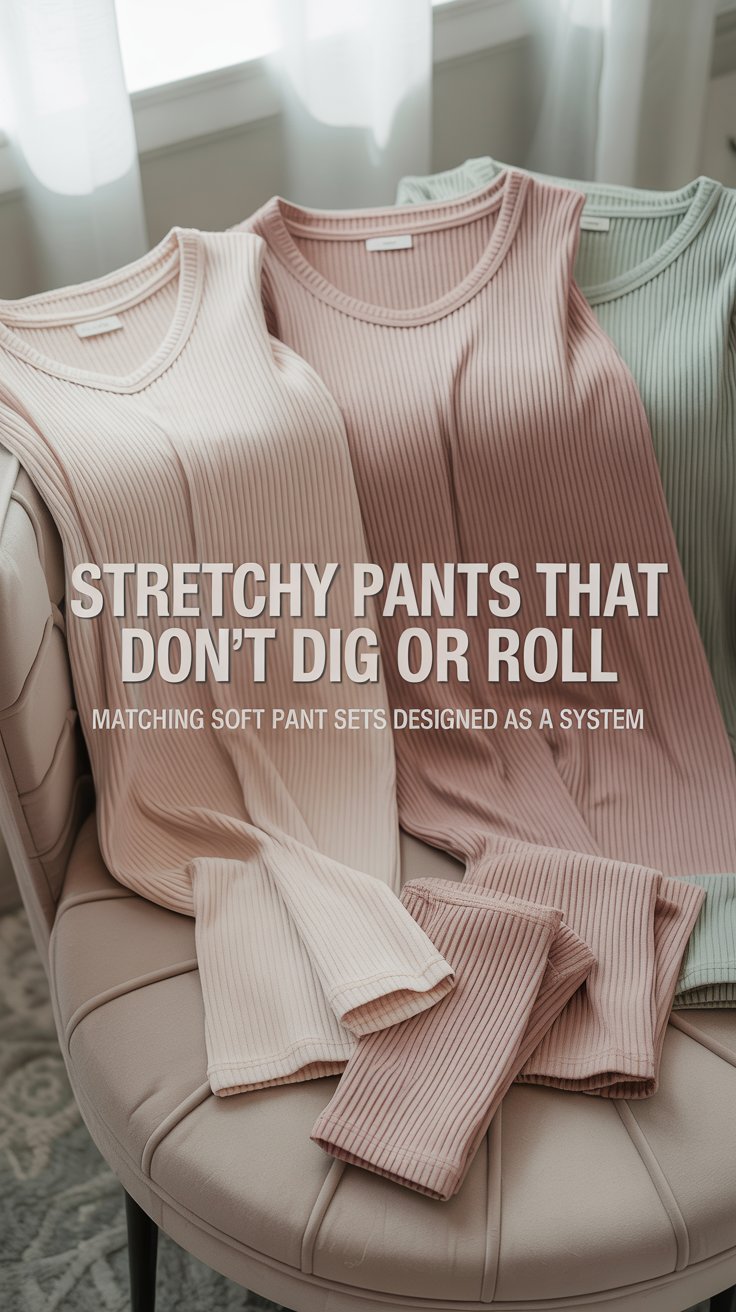
7. Matching Soft Pant Sets Designed as a System
Shop the Look:
- Plus size matching soft pant sets modal jersey knit
- Coordinating knit pant sets plus size ribbed recovery
- Soft pant set curvy caregiver proportional waist
- Matching lounge sets pants plus size no fold waistb
Matching sets eliminate fit imbalance.
Why they’re comfortable
When pants are designed as part of a set, the waistband, rise, and leg width are proportioned to work together.
Fabric guidance
- modal blends
- jersey knits
- ribbed fabrics with recovery
What to avoid
- ultra-thin lounge fabrics
- waistbands that fold over
- sets that stretch out by evening
Caregiver benefit
Predictable comfort with no guesswork.
Why Waistband Engineering Matters Most
Most discomfort comes from waistband construction, not size.
Comfortable caregiver pants:
- spread pressure evenly
- stay flat when seated
- move without resistance
- don’t tighten over time
Uncomfortable waistbands create constant micro-stress, which caregivers don’t need more of.
How to Test Comfort Before Committing
Use this quick test:
- Sit for 10 minutes
- Stand without adjusting
- Bend forward
- Walk
If discomfort appears at any point, the pants will fail during caregiving.
What to Stop Accepting
You don’t need to keep pants that:
- dig into your stomach
- roll or twist
- require frequent adjustment
- only feel comfortable when standing
Comfort is functional. It’s not indulgent.
How These Picks Support Caregiving Energy
Comfortable pants reduce:
- muscle tension
- mental distraction
- physical fatigue
That energy savings matters when your day is long and unpredictable.
These plus-size caregiver fashion picks are about conserving energy — not spending it managing clothing.
Final Word
Good pants don’t draw attention to themselves.
They don’t dig.
They don’t roll.
They don’t ask for tolerance.
They simply support your body and stay out of the way.
These plus-size caregiver fashion picks exist for one reason: to make your day physically easier. When clothing stops fighting you, you have more energy for everything else.
That’s not fashion.
That’s function.