This post contains affiliate links. As an Amazon Associate, I earn from qualifying purchases at no extra cost to you.
Caregiver quiet time is misleading. Just because the room is quiet doesn’t mean your brain is. You finally sit down and suddenly your thoughts clock in for overtime. You replay conversations. You plan tomorrow. You notice every sound. You’re technically alone, but still very much “on.”
That’s why silence alone doesn’t work. What does work are caregiver quiet time ideas that give your brain a soft landing. Not stimulation. Not productivity. Just something gentle enough to hold your attention so your nervous system can finally unclench.
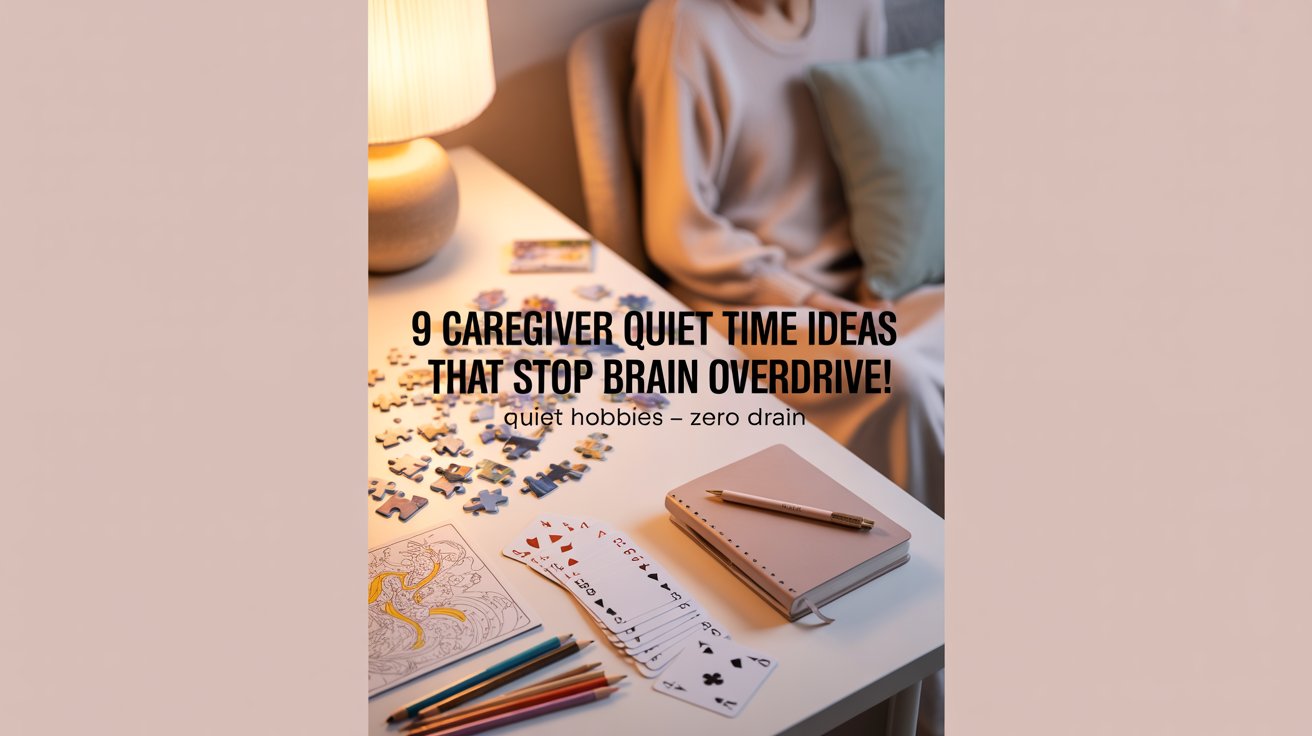
These are quiet hobbies for nights when you’re tired, overstimulated, and not interested in becoming a better version of yourself before bed.
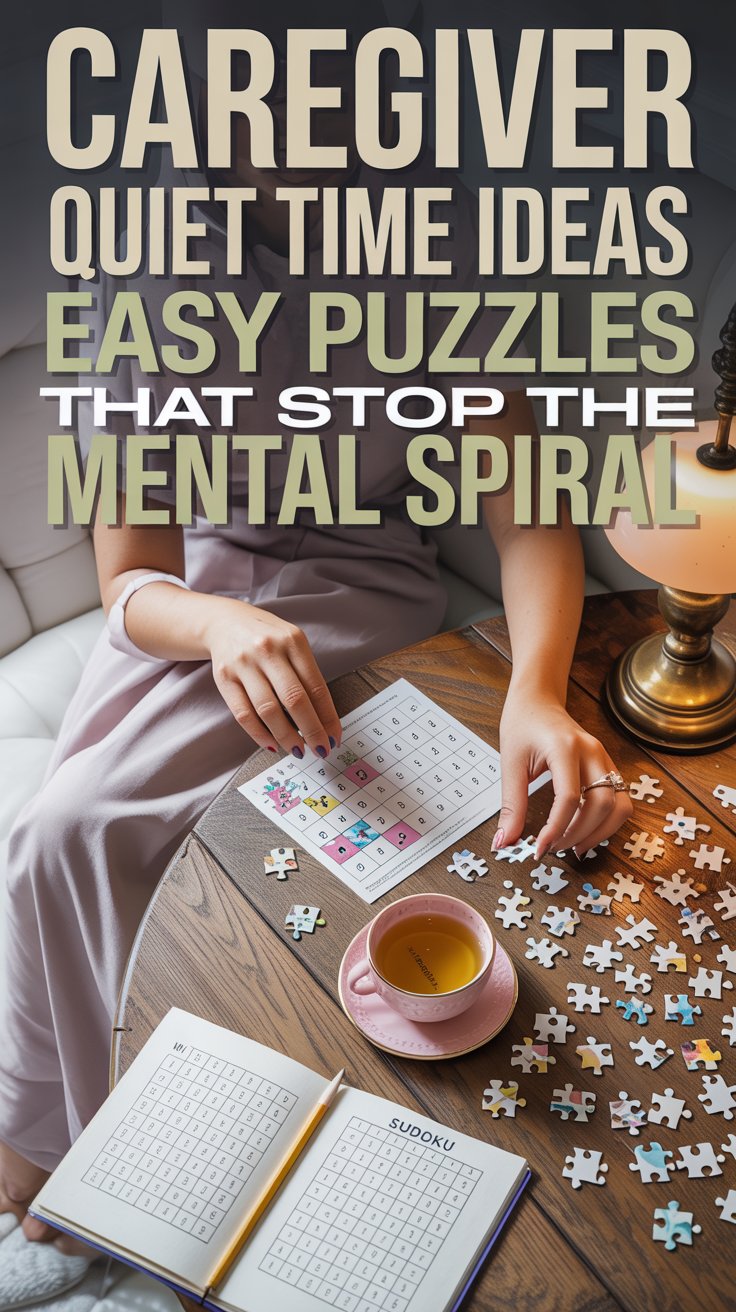
1. Easy Puzzles That Stop the Mental Spiral
Shop the Look:
- Easy jigsaw puzzles 100-300 pieces adult simple caregiver
- Word search books large print low stress quiet time
- Simple sudoku books easy level no timer caregiver
- Matching card games adult easy puzzles quiet hobby
We’re talking jigsaw puzzles, word searches, matching games, or very easy Sudoku. Nothing timed. Nothing competitive.
Why this works
Caregiving keeps your brain scanning all day. Simple puzzles give it one job instead of twenty. That’s calming.
How to do it without effort
- Choose easy mode only
- Sit comfortably
- Stop the second it feels annoying
You’re not trying to finish anything. You’re interrupting mental noise.
Sassy truth
If the puzzle feels hard, it’s the wrong puzzle. This is not training for the Olympics.
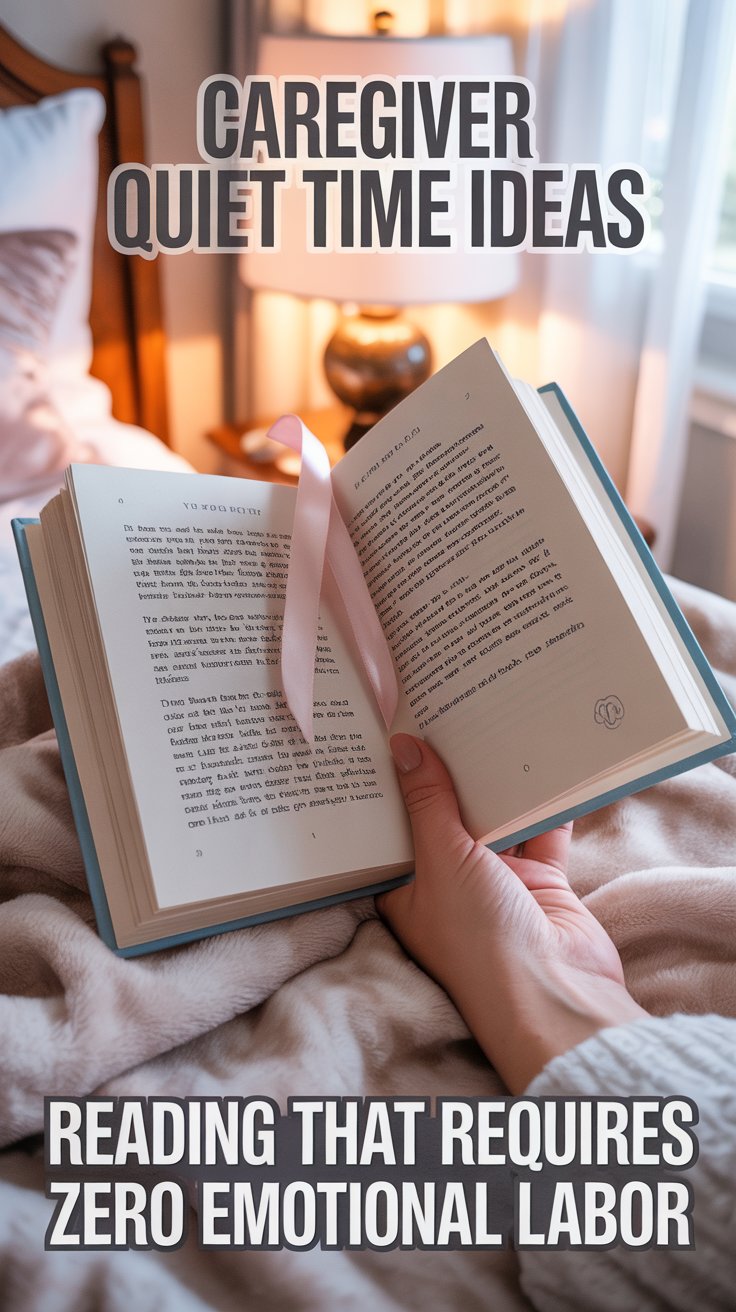
2. Reading That Requires Zero Emotional Labor
Shop the Look:
- Cozy mystery books paperback light fiction caregiver
- Short essay collections easy read no emotional labor
- Reread favorite novels light fiction quiet time
- Large print cozy books low effort reading caregiver
This is not the time for self-help, trauma memoirs, or anything that makes you feel deeply.
Why this works
Reading gives your brain a storyline so it doesn’t create one. The key is choosing books that don’t ask anything from you emotionally.
What actually works
- Cozy mysteries
- Light fiction
- Short essays
- Books you’ve already read
How to keep it quiet
- Read a few pages, not chapters
- No pressure to remember details
- Stop whenever your eyes get tired
This is not intellectual growth. This is mental babysitting.
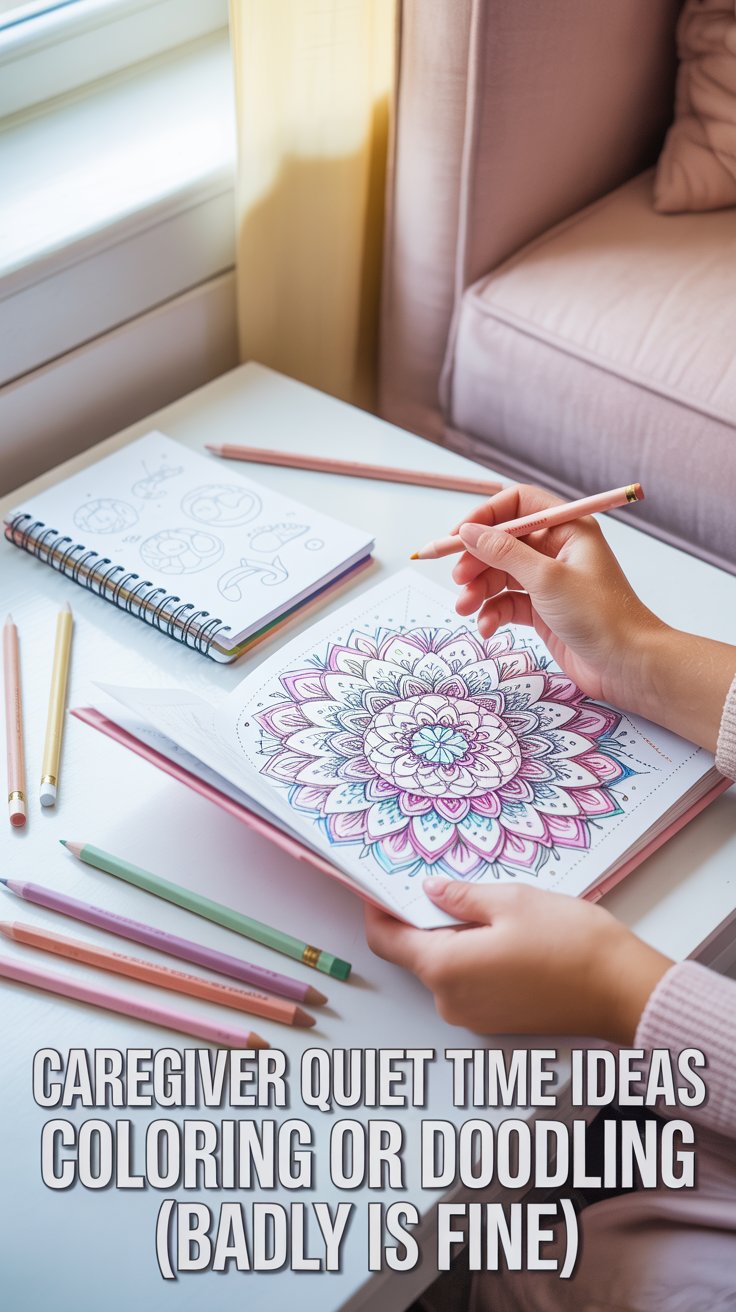
3. Coloring or Doodling (Badly Is Fine)
Shop the Look:
- Adult coloring books simple patterns no perfection
- Doodle pads easy scribble low stress caregiver
- Coloring markers pencils basic set quiet hobby
- One page coloring sheets adult forgiving designs
Adult coloring still works because it’s repetitive, visual, and forgiving.
Why this works
It occupies your hands and eyes while letting your thoughts slow down naturally.
Low-effort version
- One page only
- Whatever colors are nearby
- No “finishing the page” rule
Comforting reminder
Ugly coloring is still effective coloring.
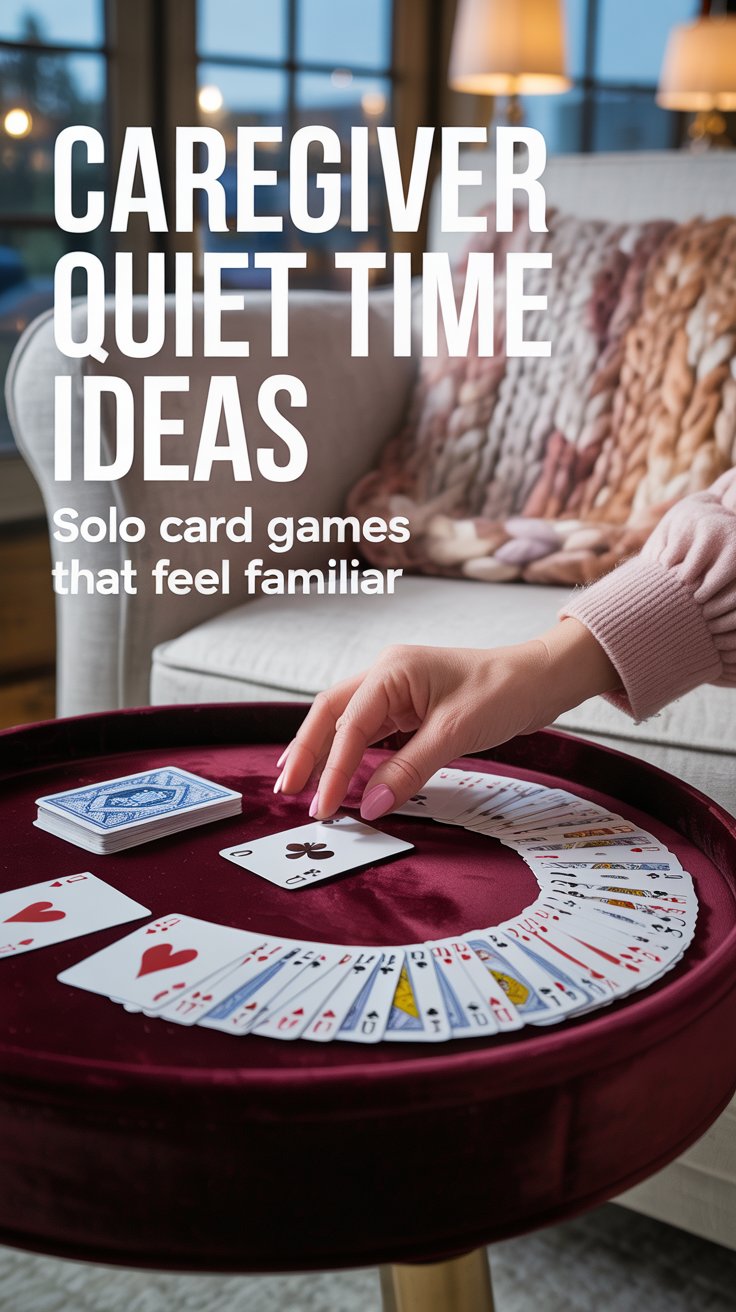
4. Solo Card Games That Feel Familiar
Shop the Look:
- Playing cards standard solitaire deck durable caregiver
- FreeCell solitaire cards physical easy quiet time
- Spider solitaire card game set low frustration
- Portable card games solo familiar patterns adult
Solitaire, FreeCell, Spider Solitaire — physical cards or apps.
Why this works
Card games are predictable. Familiar patterns calm the nervous system because there’s nothing new to learn.
How to keep it relaxing
- Play one round
- Stop before frustration
- No restarting endlessly
Why caregivers like this
It feels structured without being demanding. Your brain gets a break without shutting off completely.
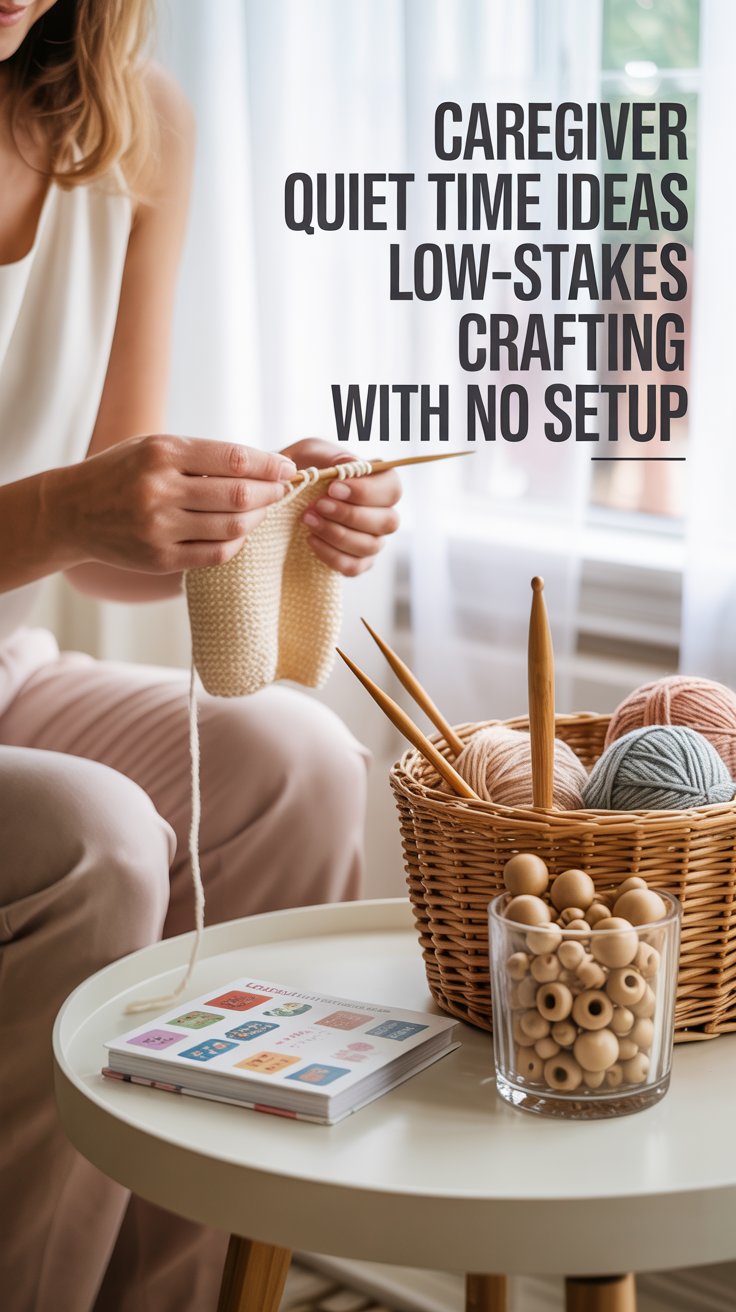
5. Low-Stakes Crafting with No Setup
Shop the Look:
- Simple knitting kit beginner stitches one skein
- Sticker books adult low effort no mess caregiver
- Large bead kits easy stringing quiet hobby
- Crochet single stitch set portable no count
This is not DIY night. This is hands busy, brain quiet time.
Why this works
Gentle hand movement grounds your body without pulling mental energy.
What actually works
- Knitting simple stitches
- Crocheting without counting
- Sticker books
- Large-piece beading
Rules that matter
- Everything fits in one container
- Cleanup under two minutes
- No perfection
If it becomes work, it’s not quiet time anymore.
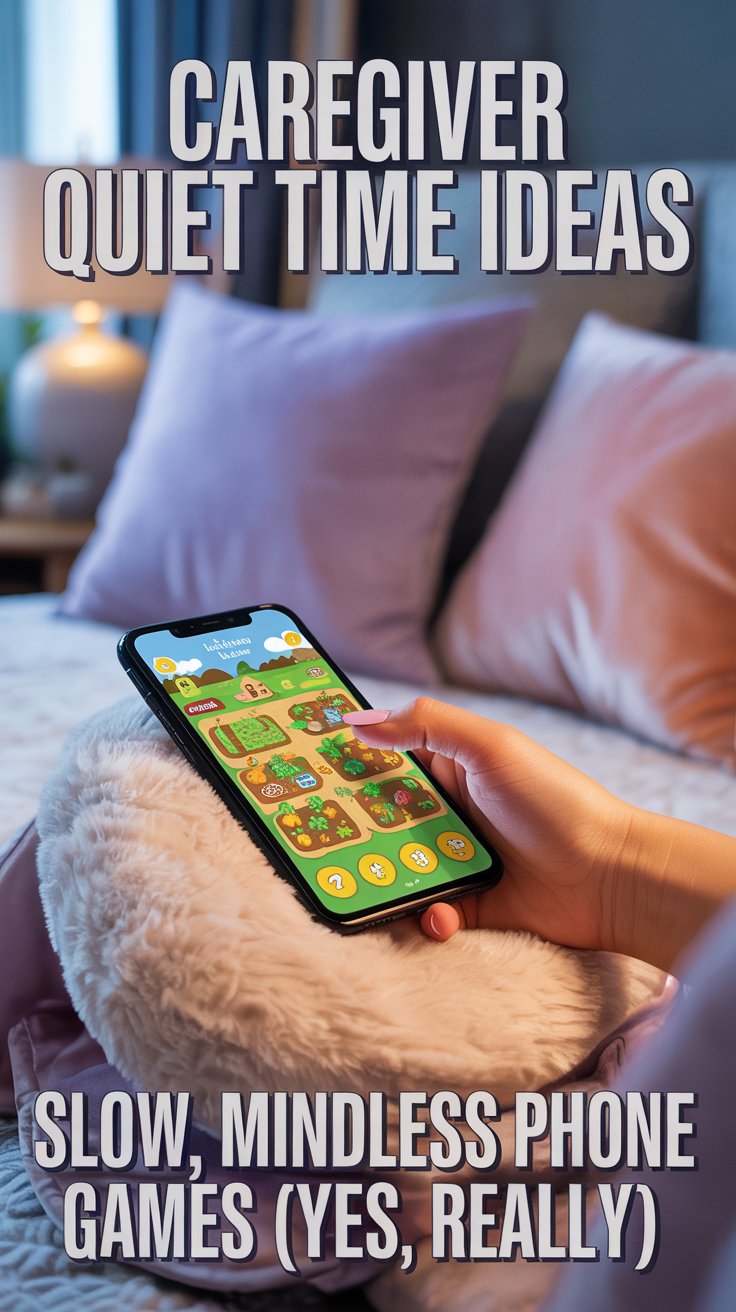
6. Slow, Mindless Phone Games (Yes, Really)
Shop the Look:
- Tablet stand phone holder adjustable quiet gaming
- Matching puzzle game apps gift card low stakes
- Farm town builder game accessories caregiver relax
- No timer puzzle apps blue light filter screen
Not all screen time is evil. Some of it is regulating.
Why this works
Slow games give your brain something neutral to focus on without emotional or cognitive load.
Good options
- Matching games
- Farm or town-building games
- Puzzle apps with no timer
Avoid
- Fast-paced games
- Competitive scoring
- Anything that spikes adrenaline
This is intentional distraction, not doom scrolling.
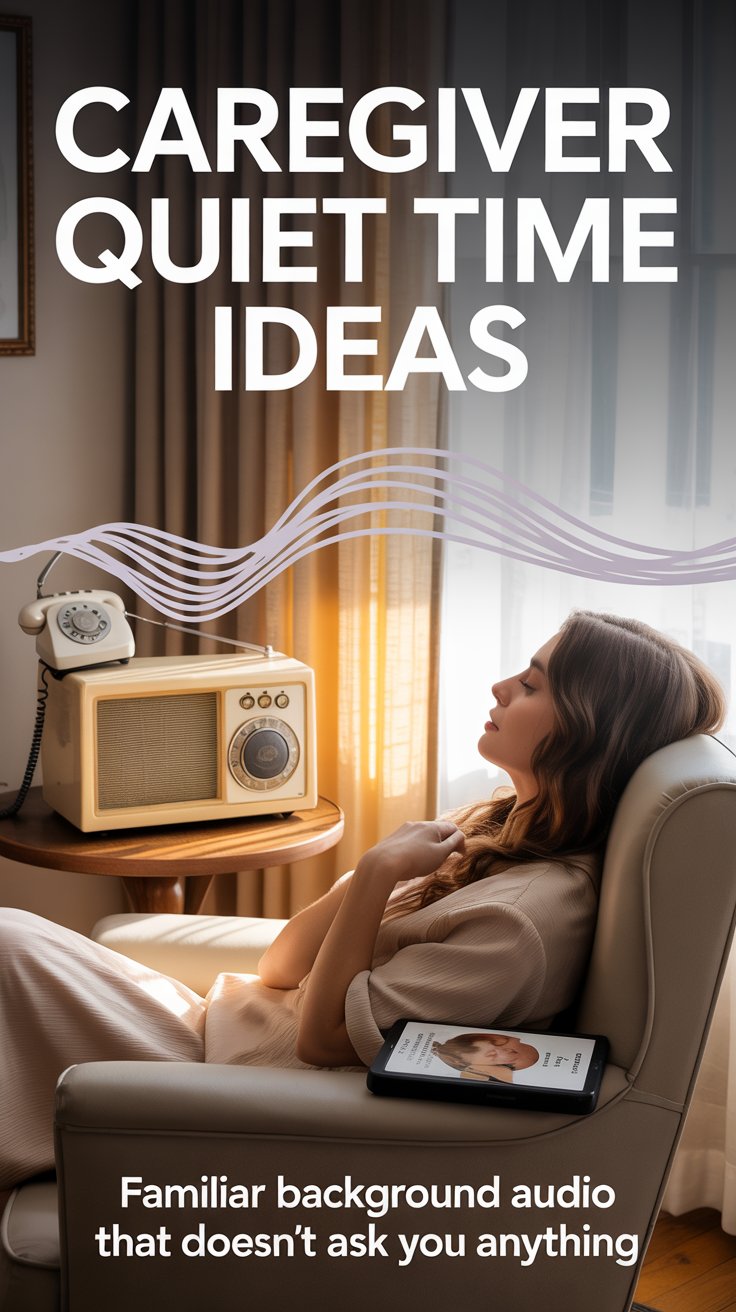
7. Familiar Background Audio That Doesn’t Ask You Anything
Shop the Look:
- Wireless speaker low volume nostalgic music player
- Audiobook player preloaded comfort stories caregiver
- Comfort TV show DVDs familiar episodes quiet time
- Bluetooth speaker small background audio no headphones
Silence can feel loud when you’re exhausted. Familiar sound is often better.
Why this works
Your brain relaxes when it doesn’t have to process new information.
What to use
- Comfort shows you’ve already seen
- Audiobooks you’ve heard before
- Nostalgic music
How to keep it quiet
- Low volume
- Let it fade into the background
- No headphones if they feel isolating
This is atmosphere, not entertainment.
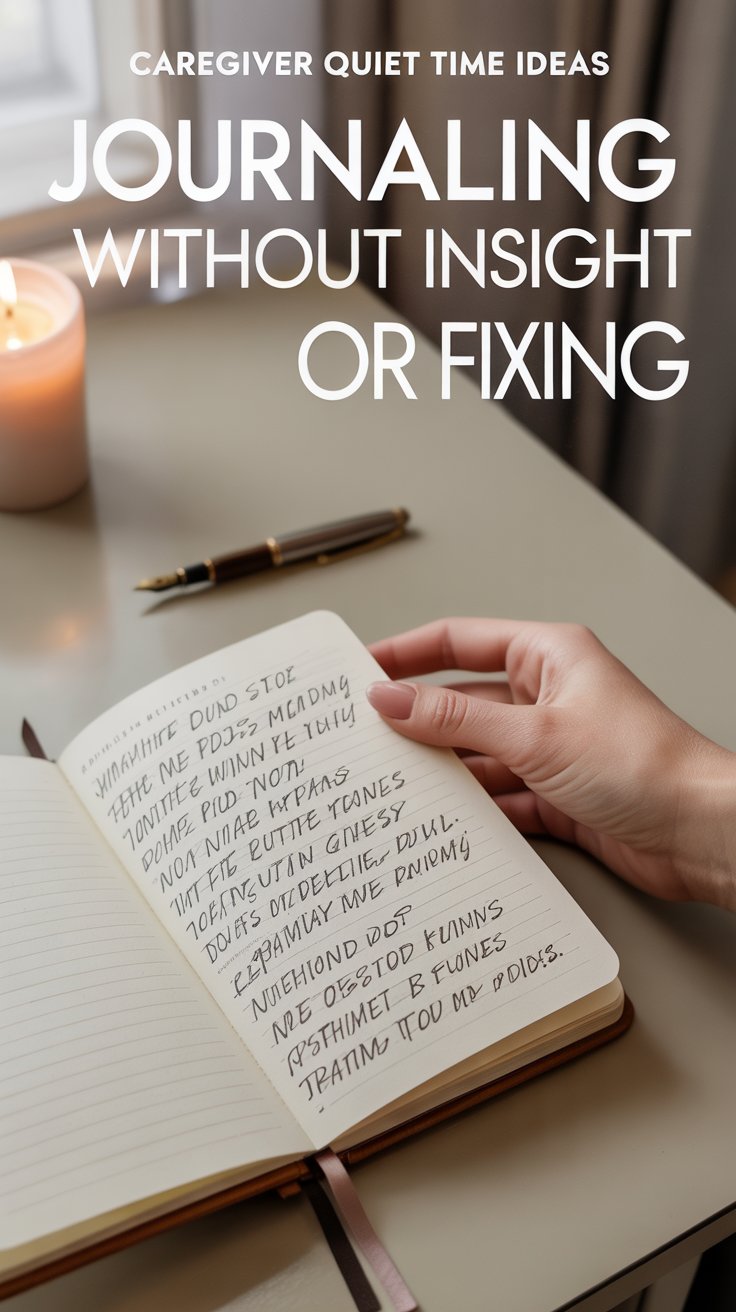
8. Journaling Without Insight or Fixing
Shop the Look:
- Plain journal notebook unlined dump thoughts caregiver
- Promptless journal large print easy write quiet time
- Gel pens smooth no pressure journaling set
- Spiral notebook simple unload brain low effort
This is not emotional processing. This is unloading.
Why this works
Caregivers hold a lot internally. Writing it down gives your brain permission to rest.
How to do it
- Write whatever comes up
- No rereading
- No solving problems
Close the notebook when you’re done.
Important
You don’t need to grow from this. You just need space.
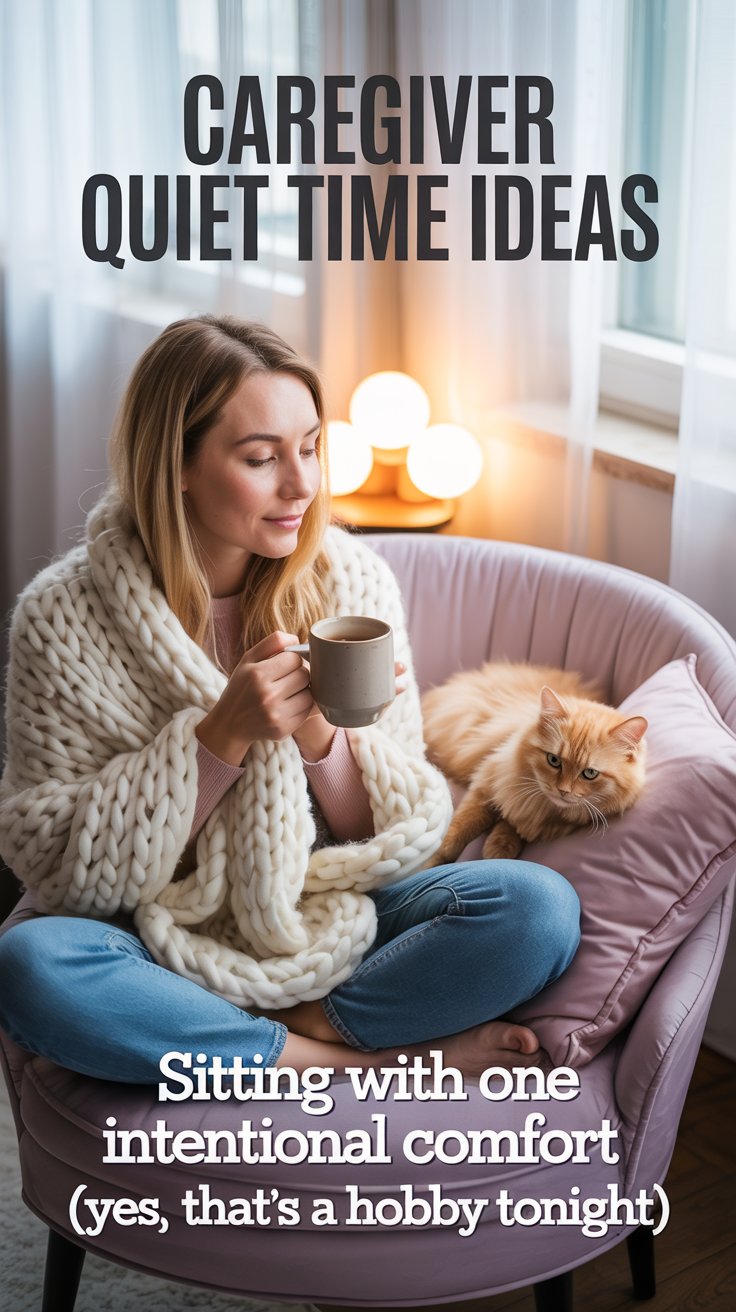
9. Sitting with One Intentional Comfort (Yes, That’s a Hobby Tonight)
Shop the Look:
- Warm fleece blanket soft weighted light caregiver
- Herbal tea bags calming mocktail quiet time
- Soft neck pillow comfortable sit relax no task
- Dimmer lamp soft lighting intentional comfort hobby
Sometimes the quiet hobby is choosing comfort and stopping there.
Why this works
Your nervous system needs safety more than stimulation.
Choose one
- Warm blanket
- Pet next to you
- Cup of tea, water, or a mocktail
- Soft lighting
Sit. Don’t multitask. Five minutes counts.
Sassy permission
Doing “nothing” on purpose is still doing something.
Why Quiet Hobbies Work When Rest Doesn’t
Rest asks your body to stop. Quiet hobbies give it a gentle off-ramp.
That’s why caregiver quiet time ideas work better than:
- meditation (too much focus)
- sleep (pressure-filled)
- self-care routines (too demanding)
Quiet hobbies let your brain slow down without forcing it.
How to Choose the Right Quiet Hobby Each Night
Ask one question:
“Do I want zero thinking or a little thinking?”
- Zero thinking: coloring, familiar audio, sitting quietly
- A little thinking: puzzles, card games, light reading
Let energy decide. Not guilt. Not productivity.
What to Skip on Low-Energy Nights
Even quiet hobbies fail if they involve:
- learning something new
- decision-making
- emotional investment
- long setup or cleanup
If it feels heavy, it’s not for tonight.
Final Word
Caregivers don’t need silence.
They need soft focus.
The right quiet hobby gives your mind something gentle to rest on so the rest of you can finally exhale.
These caregiver quiet time ideas aren’t about fixing yourself or becoming calmer. They’re about giving your nervous system a break from being on alert.
Tonight doesn’t need to be meaningful.
It just needs to be yours.