This website contains affiliate links. As an Amazon Associate, I earn from qualifying purchases.
Let’s be honest: when you’re a caregiver, “rest” doesn’t mean what it used to. It’s not bubble baths, journaling, or becoming a better version of yourself by Tuesday. Most days, you’re so depleted that even thinking about relaxing feels exhausting. That’s why a lot of self-care advice quietly fails caregivers.
These caregiver rest ideas are not routines. They’re not habits. They don’t require motivation, prep, or follow-through. They’re designed for the moments when your body is tired, your brain won’t shut up, and your tolerance for effort is gone.
This is rest for people who are done.
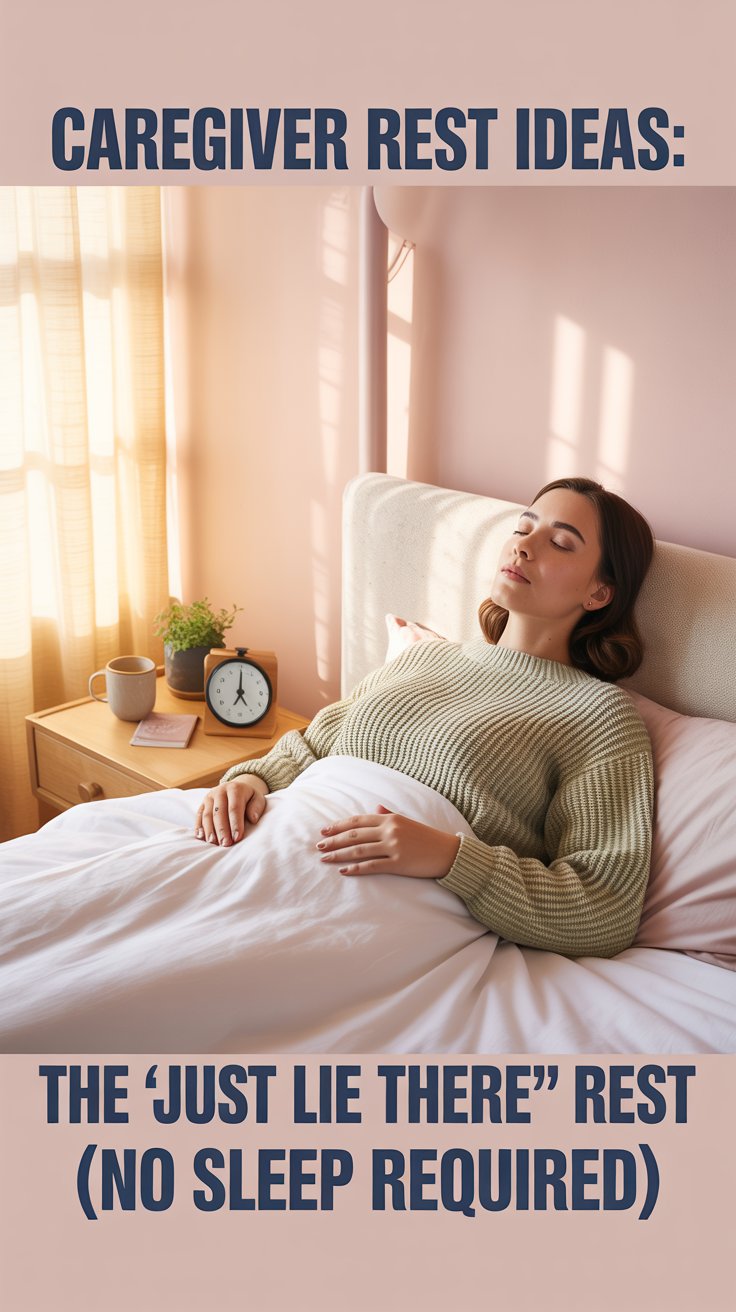
1. The “Just Lie There” Rest (No Sleep Required)
One of the most helpful caregiver rest ideas is also the least glamorous: lying down without trying to sleep, meditate, or fix anything.
Caregivers often avoid lying down because it feels “unproductive” or because sleep pressure creates anxiety. This removes the expectation completely.
How to do it
- Lie on the bed, couch, or even the floor
- Eyes open or closed
- No phone, no podcast, no plan
Set a timer for 10–20 minutes if that helps your brain relax.
Why it works
Your nervous system recovers simply from being horizontal. Blood pressure lowers. Muscles unclench. You get physical relief without the mental stress of “trying to rest.”
Caregiver truth
If you accidentally fall asleep, fine. If you don’t, it still worked.
Shop the Look:
- Bed couch floor mat comfortable lie down rest caregiver
- 10-20 minute timer silent horizontal rest no sleep
- Body pillow horizontal position low effort caregiver
- No phone distraction cover lie there rest exhausted
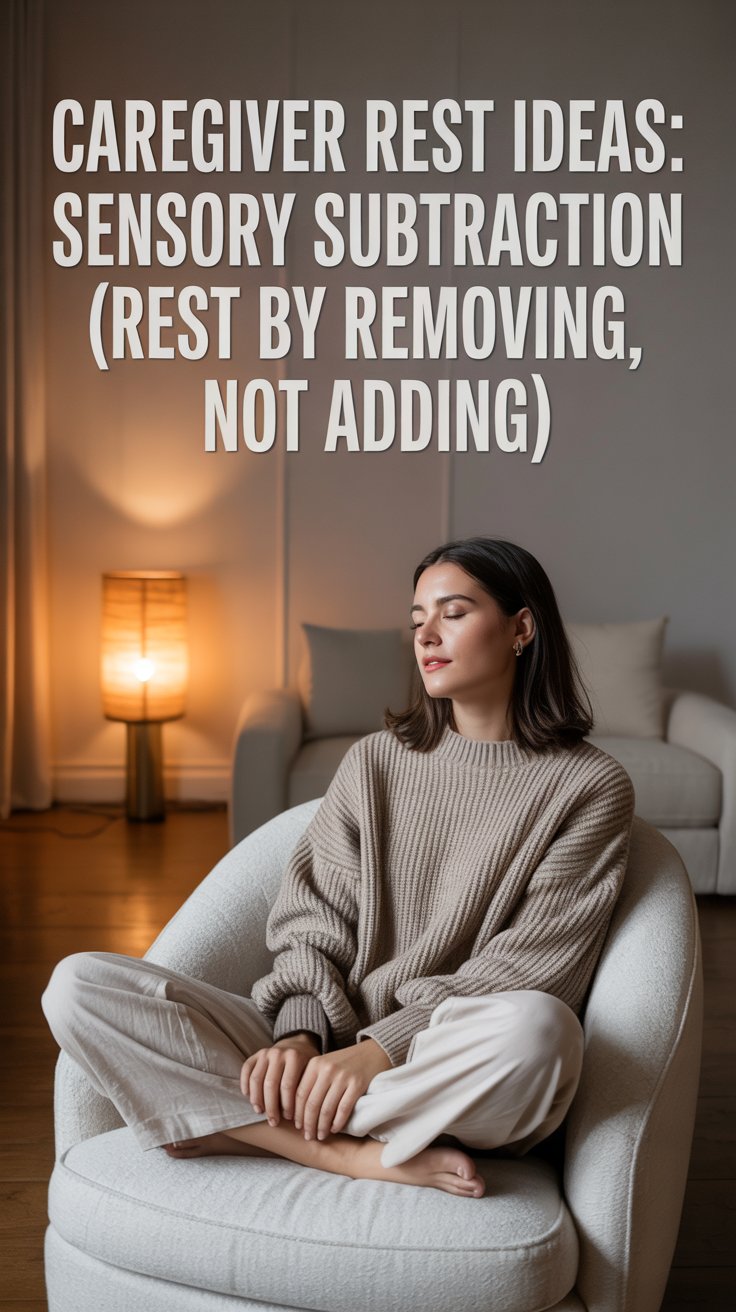
2. Sensory Subtraction (Rest by Removing, Not Adding)
Most people try to rest by adding things: music, candles, content, activities. For exhausted caregivers, that’s often too much.
This rest idea is about less, not more.
What to remove
- Bright lights
- Background noise
- Tight clothing
- Screens
What to do instead
Dim the lights. Sit or lie down. Do nothing else.
Why it works
When you’re depleted, your nervous system is hypersensitive. Reducing input lowers stress faster than adding “relaxing” stimuli.
Spicy reminder
If “relaxing music” annoys you today, turn it off. That’s your cue.
Shop the Look:
- Dimmer switch lights sensory subtraction low input caregiver
- Earplugs noise reduction background sound remove rest
- Loose clothing pajamas tight clothes off low energy
- Screen blocker phone cover sensory less caregiver rest
3. Warmth-Based Rest (The Lazy Way to Calm Your Body)
Warmth is one of the most underrated caregiver rest ideas because it works passively. You don’t have to focus. Your body does the work.
Easy options
- Heating pad on your back or stomach
- Heavy blanket
- Warm shower with no agenda
No spa vibes. No rituals. Just warmth.
Why it works
Heat relaxes muscles, lowers cortisol, and signals safety to the nervous system. It’s especially helpful when your body feels tense but you’re too tired to stretch.
Caregiver bonus
You can do this while zoning out. That’s allowed.

Shop the Look:
- Heating pad back stomach warmth passive rest caregiver
- Heavy blanket weighted warmth no ritual low effort
- Warm shower head lazy calm body exhausted caregiver
- Electric blanket low voltage muscle relax warmth rest
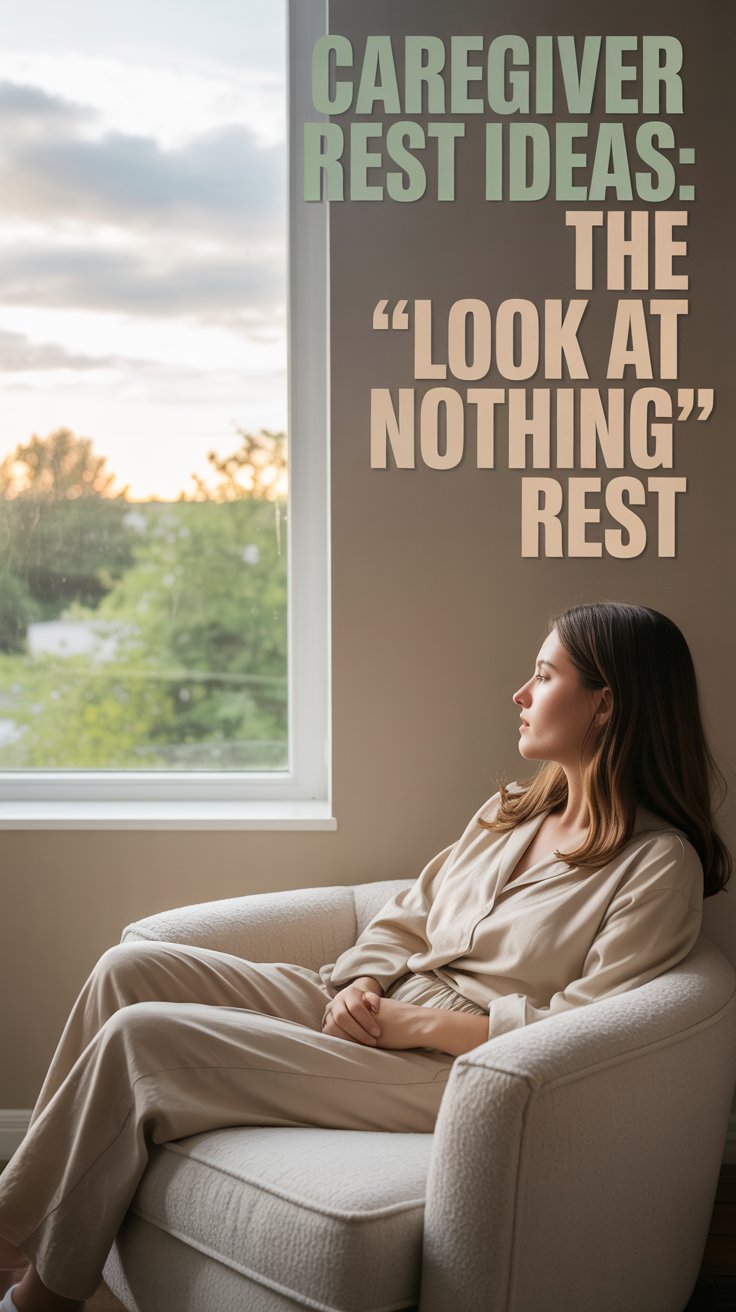
4. The “Look at Nothing” Rest
Your brain processes visual input constantly. Caregivers are always scanning, watching, anticipating. This rest idea gives your eyes—and your brain—a break.
How to do it
- Sit by a window
- Look at the sky, trees, or a blank wall
- No scrolling, no TV
Even 5 minutes counts.
Why it works
Visual stillness reduces cognitive load. Your brain stops tracking, comparing, and reacting.
If your brain wanders
Let it. That’s not failure—that’s decompression.
Shop the Look:
- Window seat cushion look sky trees blank wall rest
- 5 minute timer visual stillness cognitive load caregiver
- Neutral wall art blank gaze decompression low energy
- Outdoor view chair eyes brain break no scrolling
5. Breath Rest for People Who Hate Breathing Exercises
A lot of caregivers roll their eyes at breathing techniques—and honestly, fair. When you’re exhausted, counting breaths can feel like homework.
This version removes effort.
How to do it
- Sit or lie comfortably
- Put a hand on your chest or stomach
- Notice your breath without changing it
That’s it.
Why it works
Awareness alone slows breathing over time and activates the parasympathetic nervous system.
Important note
If breathing exercises irritate you today, stop. The irritation is information, not a failure.

Shop the Look:
- Hand placement pillow chest stomach breath notice caregiver
- Comfort seat lie breath awareness no change low effort
- Parasympathetic rest guide simple no counting exhausted
- Body position cushion natural breath slow caregiver
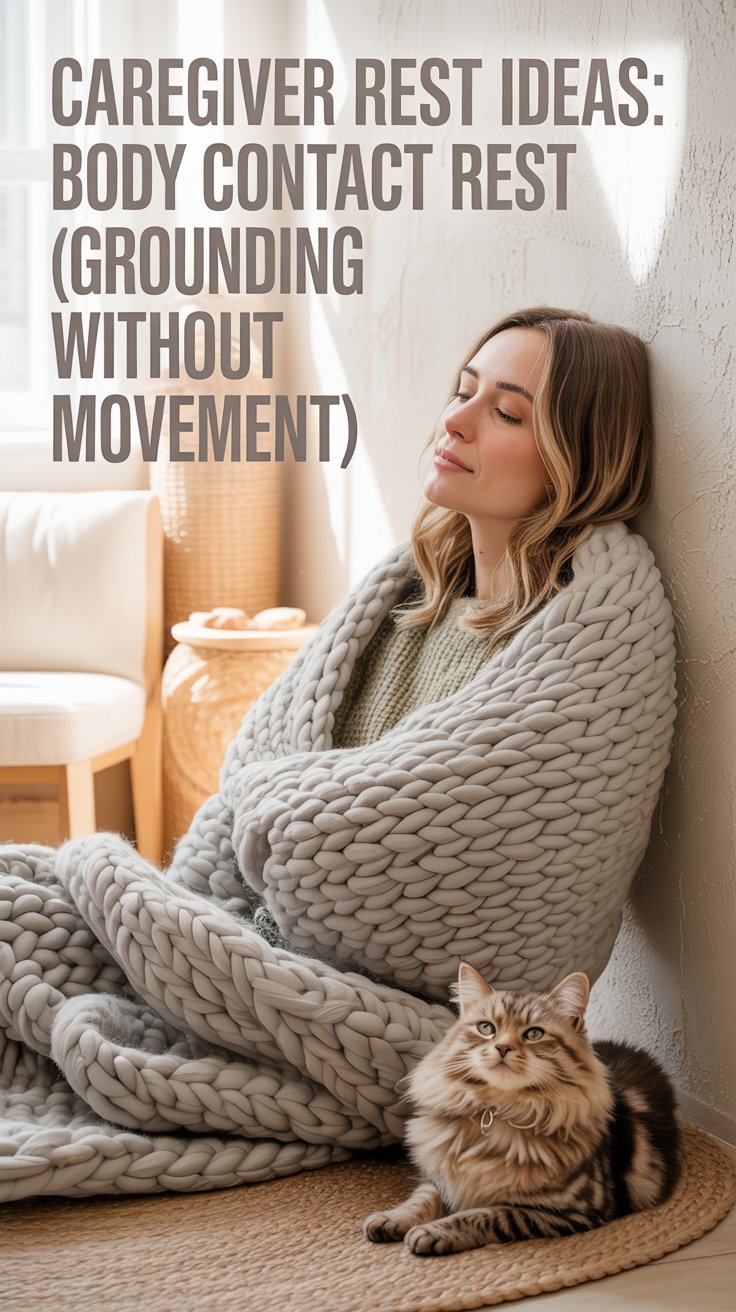
6. Body Contact Rest (Grounding Without Movement)
Caregiving involves constant emotional output. Sometimes your body needs grounding more than quiet.
This rest idea uses still contact, not activity.
Options
- Sit with a pet
- Wrap yourself in a weighted blanket
- Lean your back against a wall or headboard
No talking. No multitasking.
Why it works
Pressure and contact provide proprioceptive input, which calms an overloaded nervous system.
Caregiver reality
This is especially helpful after emotionally heavy interactions.
Shop the Look:
- Weighted blanket body pressure grounding no movement caregiver
- Pet cuddle pillow contact rest emotional heavy
- Wall lean backrest headboard pressure calm nervous
- Proprioceptive vest still contact low energy rest
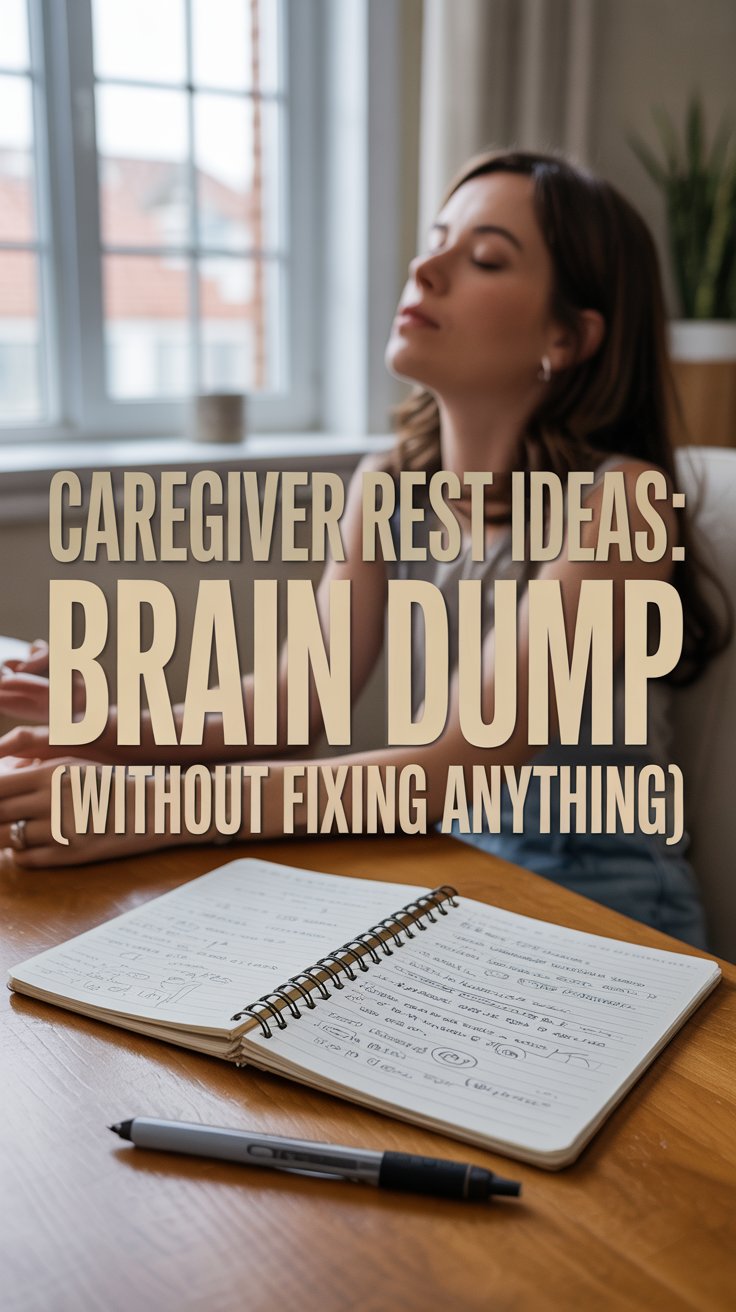
7. Brain Dump Rest (Without Fixing Anything)
Caregivers don’t just get tired physically—they get mentally jammed. Lists, worries, reminders, what-ifs. This rest idea clears space without solving problems.
How to do it
- Write everything in your head on paper
- No organizing
- No action steps
Close the notebook when you’re done.
Why it works
Your brain relaxes when it knows information is stored somewhere safe.
Spicy truth
You’re not required to act on anything you write down.
Shop the Look:
- Plain notebook brain dump no organize caregiver rest
- Unlined journal write everything no action steps
- Gel pens smooth brain unload mental jam exhausted
- Spiral notepad dump worries close notebook rest
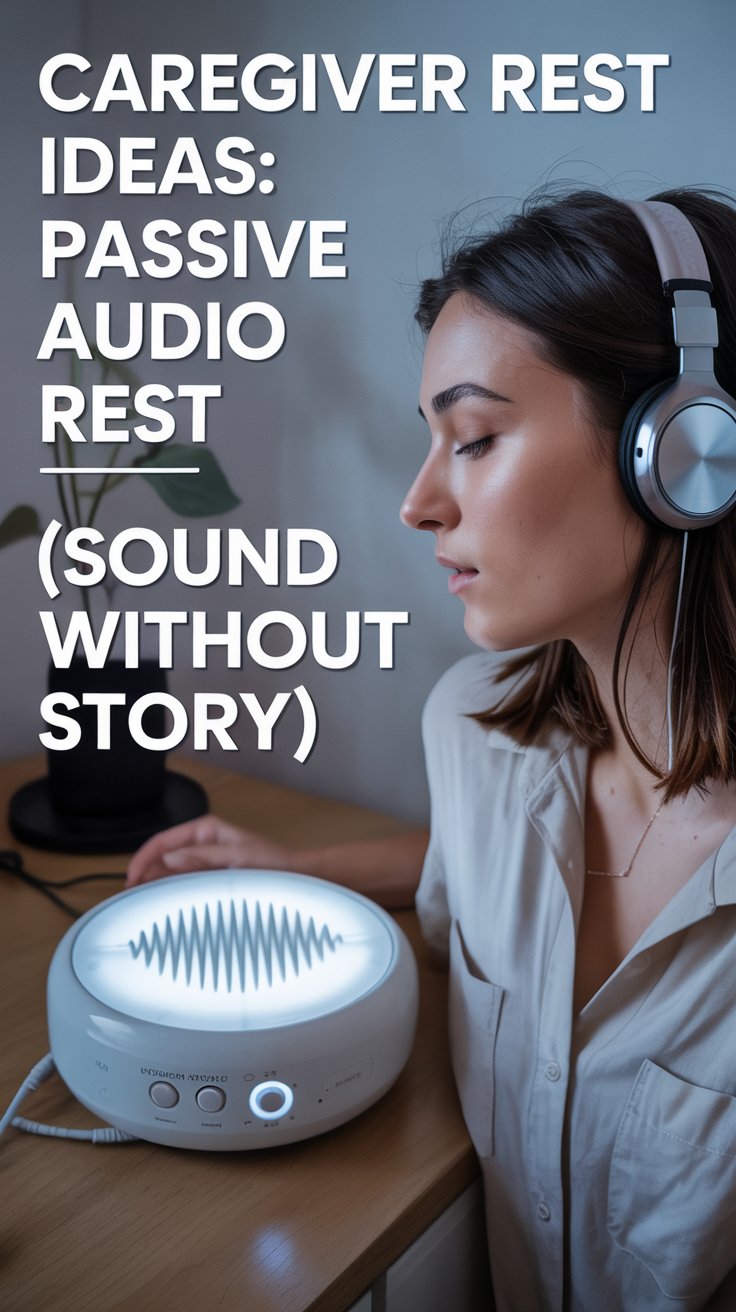
8. Passive Audio Rest (Sound Without Story)
Stories demand attention. Lyrics pull emotion. When energy is low, those things can be draining.
Instead, use sound without narrative.
Good options
- White noise
- Rain or ocean sounds
- Low instrumental music
Volume low. No headphones if possible.
Why it works
Consistent sound masks stimulation and supports nervous system settling without pulling your focus.
Caregiver tip
If you find yourself “listening,” it’s too engaging. Switch it.
Shop the Look:
- White noise machine low volume no narrative caregiver
- Rain ocean sounds speaker passive audio rest
- Low instrumental music player no headphones settling
- Sound machine mask stimulation nervous system calm
9. Permission-Based Rest (Doing Nothing Without Earning It)
This might be the hardest caregiver rest idea—and the most necessary.
You rest without finishing anything first.
No reward system. No justification.
Sit. Lie down. Stare. Exist.
Why it works
Burnout thrives on constant usefulness. Permission-based rest interrupts that cycle.
Repeat this
Rest is not something you earn by suffering enough.
Shop the Look:
- Rest permission sign no justification caregiver boundary
- Do nothing chair lounge burnout interrupt low effort
- Affirmation card rest not earned maintenance only
- Blank stare cushion exist without reward exhausted
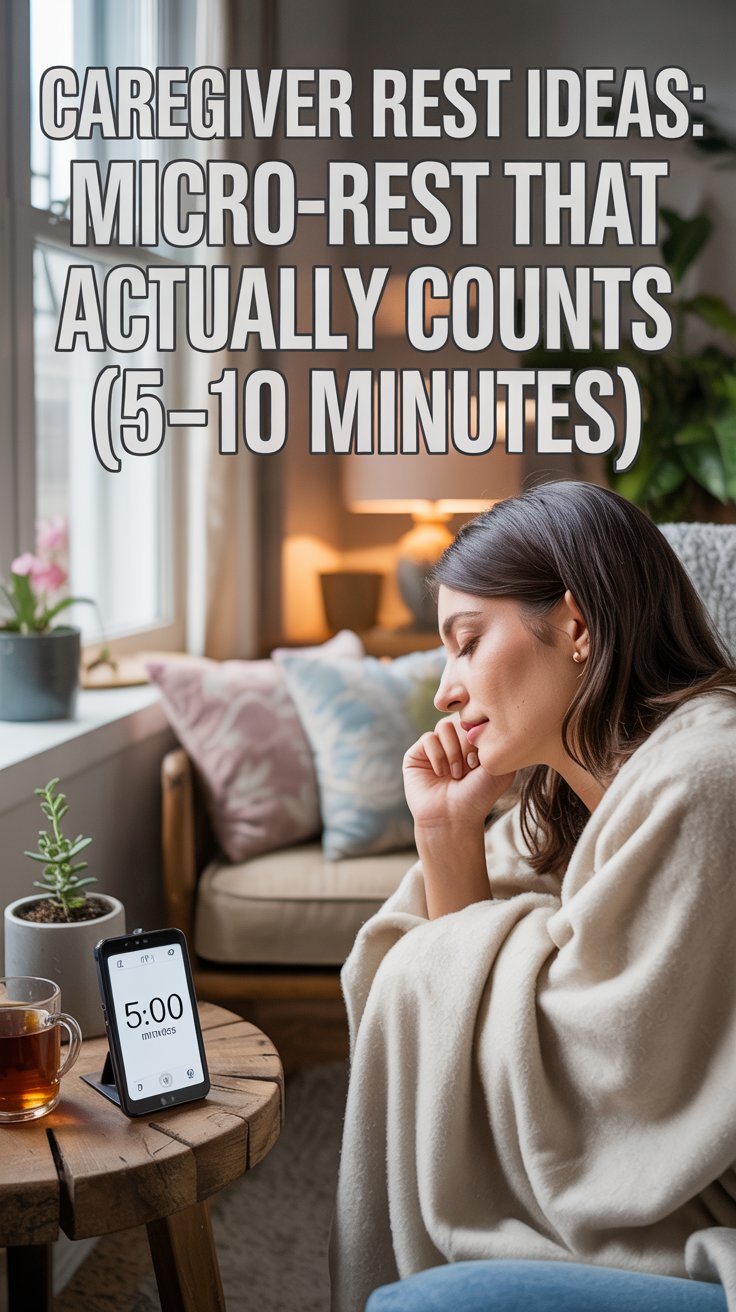
10. Micro-Rest That Actually Counts (5–10 Minutes)
Caregivers often wait for “real rest time” and never get it. Micro-rest works when it’s intentional.
How to do it
- Set a 5–10 minute timer
- Choose one rest idea from this list
- Stop when the timer ends
No guilt if it feels short.
Why it works
Even brief rest lowers stress hormones and prevents full nervous system collapse.
Caregiver reminder
Small rest is still rest. Waiting for perfect conditions is a trap.
Shop the Look:
- 5-10 minute timer micro rest intentional caregiver
- Small rest kit one idea timer no guilt low energy
- Stress hormone reducer brief rest portable exhausted
- Pocket timer nervous system collapse prevent micro
What Makes These Caregiver Rest Ideas Different
These aren’t routines.
They’re not habits.
They don’t require discipline.
They work because they:
- reduce demand
- lower sensory load
- remove decision-making
- respect exhaustion
You don’t need consistency for these to help.
You don’t need to “believe” in them.
You just need to stop pushing for a few minutes.
Final Word
Caregiver exhaustion isn’t a personal failing. It’s the predictable result of long-term responsibility without adequate recovery.
The most effective caregiver rest ideas are the ones that:
- don’t improve you
- don’t fix your life
- don’t ask for effort
They simply give your system a break from being on.
And that’s not indulgent.
That’s maintenance.