This website contains affiliate links. As an Amazon Associate, I earn from qualifying purchases.
Nurse outfits for tired helpers shouldn’t require styling effort, body tolerance, or extra decision-making. When you’re working long shifts, managing emotional labor, and running on limited sleep, your clothes need to function as equipment—not decoration.
Most outfit advice for nurses assumes energy you don’t have. It focuses on appearance first and comfort second. That’s backwards. The outfits below are built around how fatigue actually shows up in the body: swelling, temperature swings, pressure sensitivity, reduced patience for irritation, and limited mental bandwidth.
These six modern outfit strategies are based on movement patterns, fabric behavior over time, and recovery, not aesthetics alone. The 2026 trend shift toward self-preservation, quiet luxury, and functional minimalism finally aligns with what tired helpers actually need.
1. Relaxed-Fit Stretch Scrub Sets That Don’t Fight Your Body
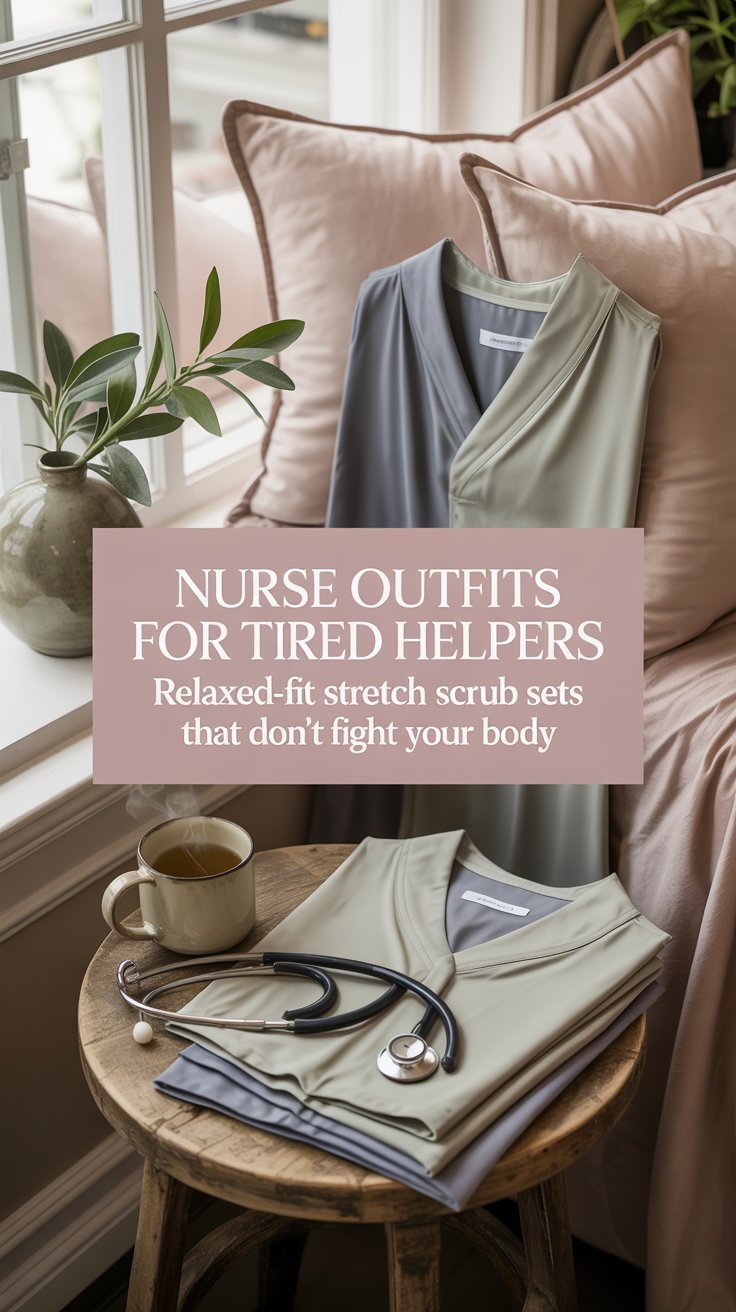
The foundation of modern nurse outfits for tired helpers is a scrub set that moves with fatigue, not against it. Traditional scrubs often rely on rigidity to look professional. That rigidity becomes a problem once your body starts swelling, stiffening, or overheating mid-shift.
A relaxed-fit stretch scrub set reduces pressure points without looking sloppy. The goal is even distribution of tension—no tight seams across the stomach, shoulders, or hips. Four-way stretch fabrics with recovery allow movement without sagging by hour eight.
Color matters more than people admit. Mid-tone neutrals like muted navy, charcoal, or sage reduce visual stress and hide wear. Matte finishes prevent that stiff, clinical feel and photograph better if your workplace requires documentation or video calls.
How to choose correctly
- Look for scrubs with stretch percentages listed (not just “stretchy”)
- Prioritize recovery — fabric should return to shape when pulled
- Choose tops with room through the shoulders and chest
Why this works when you’re tired
Fatigue amplifies discomfort. Even mild compression becomes distracting. A relaxed stretch set lowers sensory input so your energy goes where it’s needed.
Shop the Look:
- Relaxed fit stretch scrub sets nurse 4-way stretch recovery
- Mid-tone neutral scrubs navy charcoal sage matte finish tired nurse
- Stretch scrub tops roomy shoulders chest no pressure points nurse
- Fatigue friendly scrub sets even tension distribution long shift
2. Structured Scrub Joggers That Hold Shape All Shift
Scrub joggers are everywhere, but most of them fail tired helpers because they’re made thin and rely on tight cuffs to look modern. That leads to sagging, rolling waistbands, and constant adjusting.
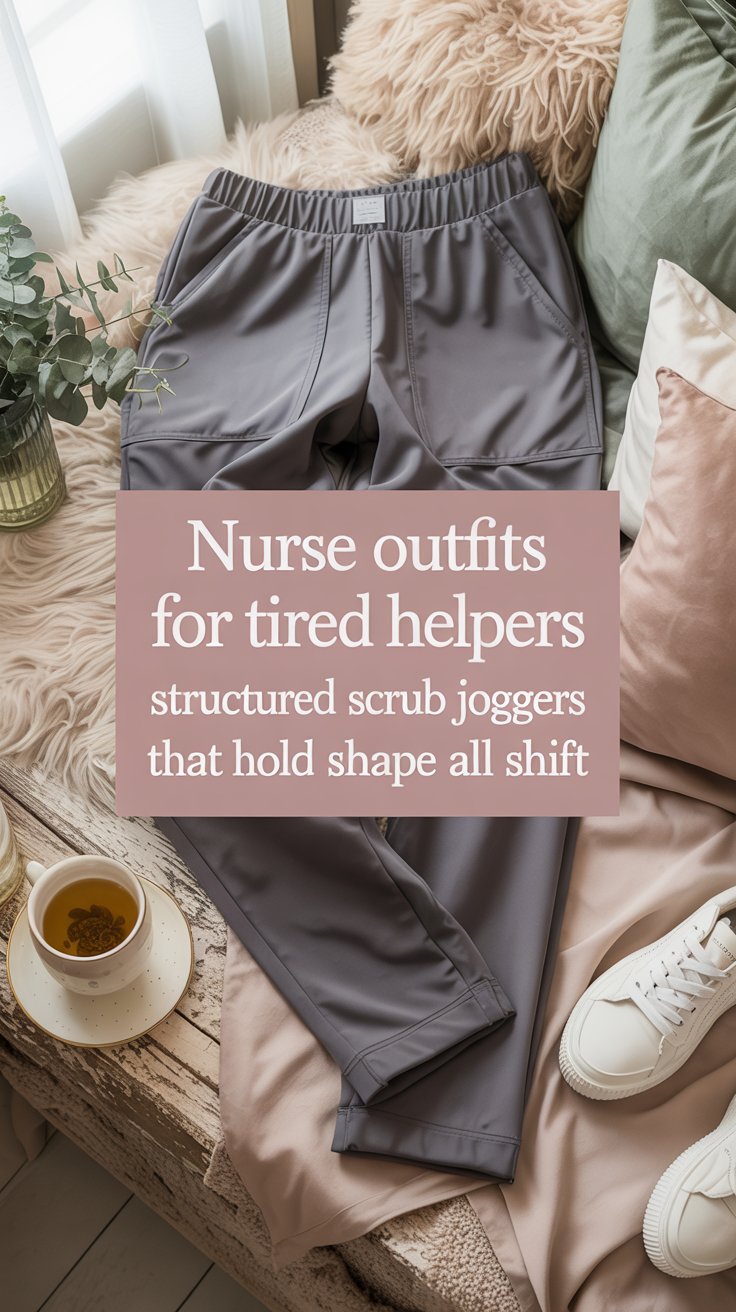
In 2026, better nurse outfits for tired helpers use joggers with structure, not tightness. That means thicker stretch fabric, clean seam lines, and tapered legs that don’t rely on elastic alone.
Joggers with a wide, flat waistband distribute pressure evenly and reduce abdominal fatigue. Tapered legs keep the silhouette clean without restricting circulation. When paired with a slightly longer scrub top, this outfit balances comfort with professionalism.
What to look for
- Wide waistbands (at least 2.5–3 inches)
- Reinforced seams at stress points
- Fabric weight that doesn’t show wear quickly
Why this works when you’re tired
You don’t lose time or focus adjusting your clothes. Stability matters more than softness once fatigue sets in.
Shop the Look:
- Structured scrub joggers wide waistband 2.5-3 inch nurse hold shape
- Tapered leg scrub joggers reinforced seams no sag tired nurse
- Thick stretch fabric scrub pants flat waistband stability shift
- Nurse jogger scrubs no rolling cuffs even pressure long wear
3. Soft Underscrub Layers That Support Without Compression
Tired bodies often crave support—but not tightness. The difference matters. Compression garments designed for athletics are often too aggressive for long nursing shifts.
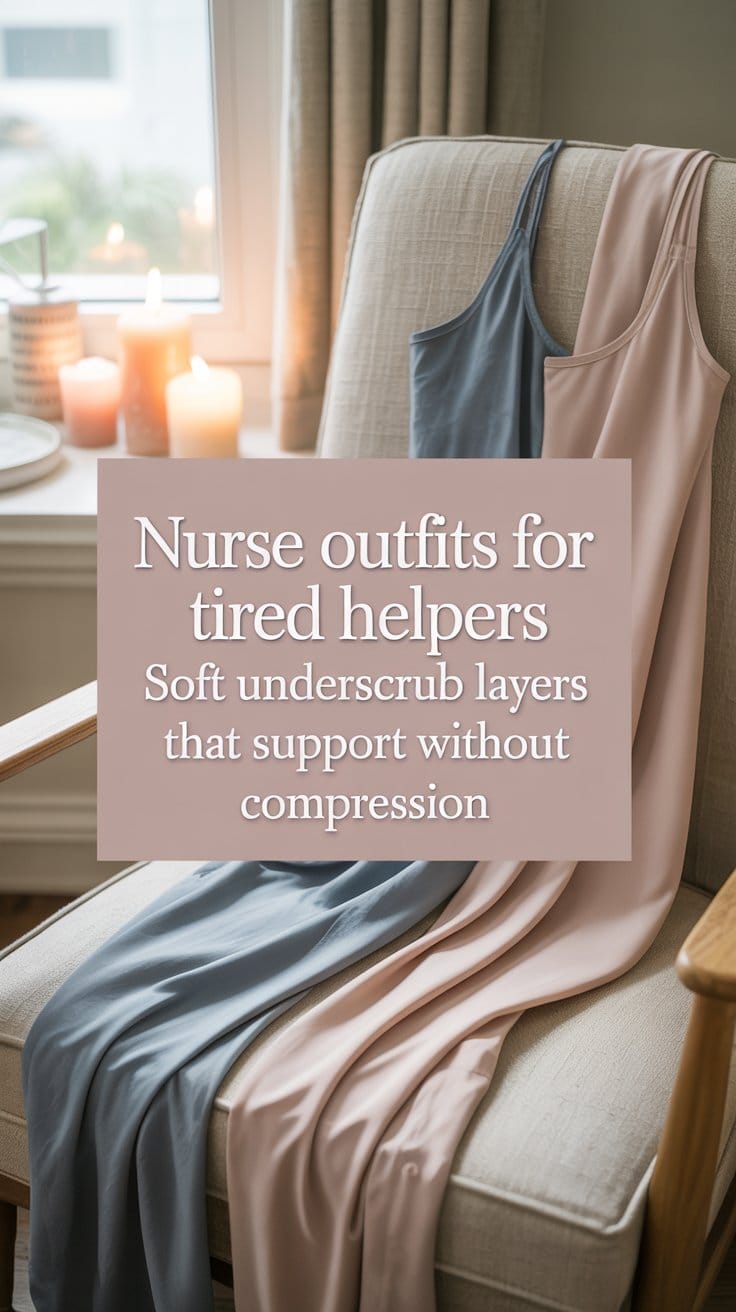
Modern nurse outfits for tired helpers use soft-support underscrubs made from breathable, low-compression fabrics like bamboo or modal blends. These provide gentle stability for the torso and arms without restricting breathing or movement.
Underscrubs also regulate temperature and prevent chafing during long shifts. The key is keeping them lightweight and pairing them with looser scrub tops so heat can escape.
Best use cases
- Long standing periods
- Shifts with repetitive motion
- Environments with inconsistent temperatures
Avoid
- High-compression athletic layers
- Synthetic fabrics that trap heat
Why this works when you’re tired
Light support reduces muscle fatigue without increasing sensory overload.
Shop the Look:
- Soft underscrub layers bamboo modal blend low compression nurse
- Breathable underscrubs temperature regulate no chafing tired shift
- Lightweight support undershirts torso arms gentle stability nurse
- Non-tight underscrub base layers repetitive motion long standing
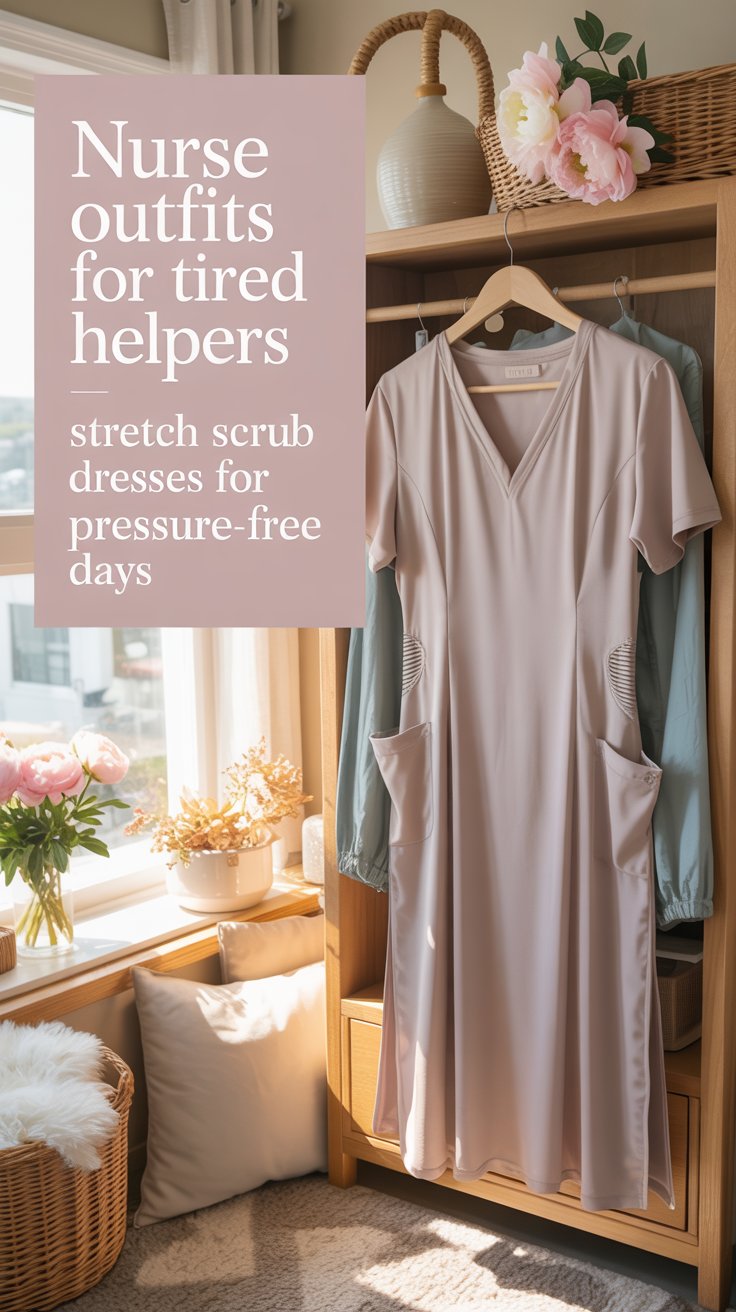
4. Stretch Scrub Dresses for Pressure-Free Days
Scrub dresses are not a novelty—they’re a solution. For tired helpers, removing waistband pressure entirely can significantly reduce discomfort over a long shift.
Modern scrub dresses in 2026 are designed with stretch panels, breathable fabrics, and mobility details like side slits or back vents. A midi-length scrub dress provides coverage, professionalism, and freedom of movement without constant adjustment.
This option works particularly well for nurses who experience bloating, swelling, or abdominal sensitivity during long days.
How to wear them practically
- Choose fabrics with weight and stretch
- Avoid clingy silhouettes
- Pair with leggings only if needed for warmth
Why this works when you’re tired
No waistband means one less pressure point competing for your attention.
Shop the Look:
- Stretch scrub dresses midi length side slits no waistband nurse
- Breathable scrub dress stretch panels back vents tired helper
- Mobility scrub dresses bloating swelling abdominal relief shift
- Pressure free nurse scrub dress weighted fabric professional coverage
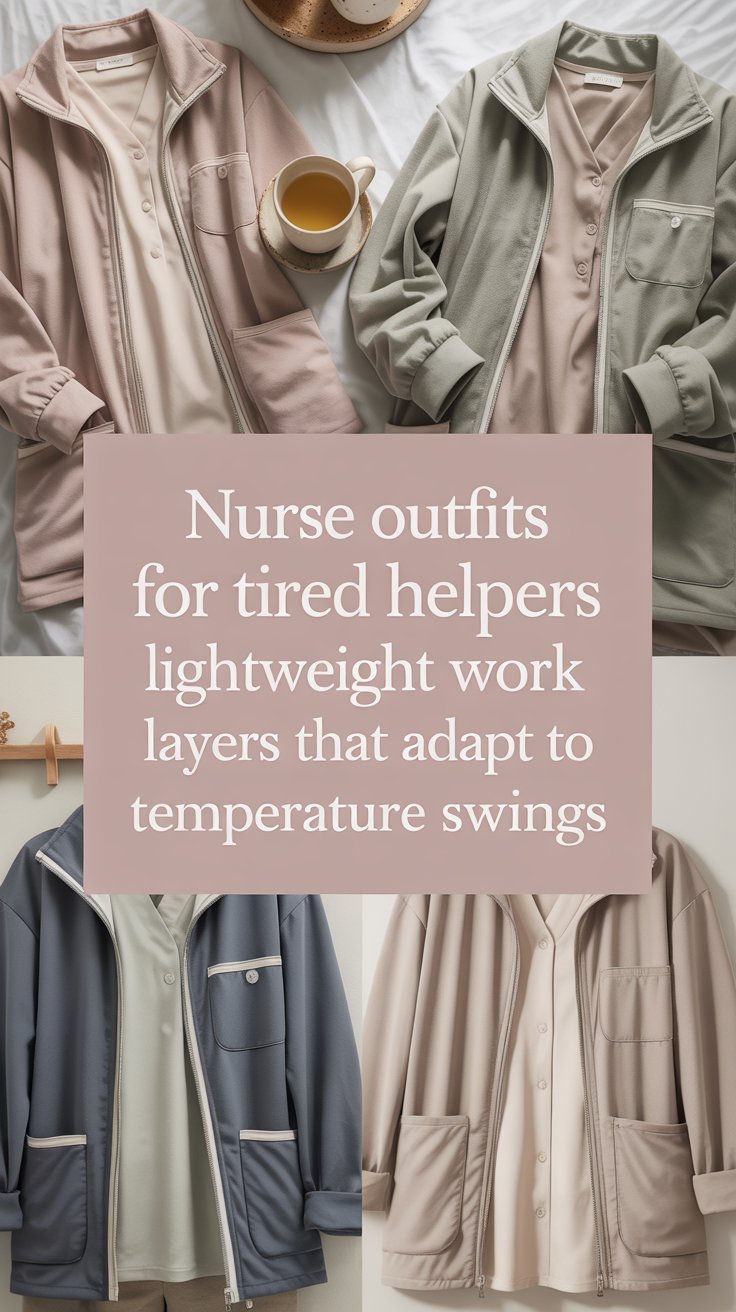
5. Lightweight Work Layers That Adapt to Temperature Swings
Temperature dysregulation is common during long shifts. Heavy jackets and stiff lab coats trap heat and restrict movement, which increases fatigue.
The modern approach for nurse outfits for tired helpers is lightweight, stretchable layers that can be added or removed without disrupting your base outfit.
Scrub jackets, soft zip layers, or knit cardigans made from stretch fleece or ponte blends provide warmth without bulk. The best options move with your arms and don’t bunch when sitting.
Key features
- Stretch in sleeves and shoulders
- Smooth interior fabric
- Minimal hardware or bulky pockets
Why this works when you’re tired
Thermal comfort reduces cognitive load. When your body isn’t fighting temperature discomfort, your focus improves.
Shop the Look:
- Lightweight scrub jackets stretch fleece ponte knit nurse layers
- Temperature adaptive cardigans soft zip no bulk shoulders sleeves
- Breathable work layers minimal hardware smooth interior tired nurse
- Stretch knit scrub cardigans arm movement no bunching shift
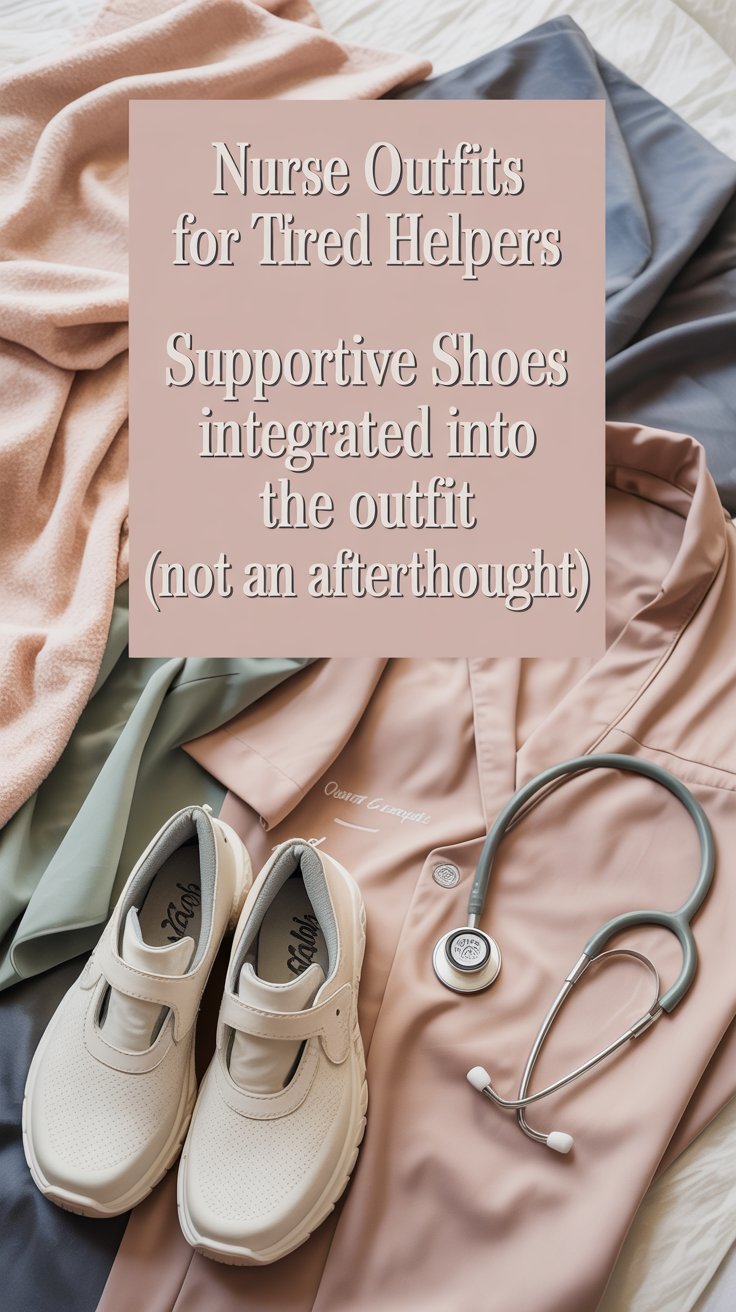
6. Supportive Shoes Integrated Into the Outfit (Not an Afterthought)
Shoes are often treated as separate from the outfit, but for tired helpers, they are the most important component. Foot fatigue cascades upward, affecting posture, back pain, and energy levels.
In 2026, nurse outfits for tired helpers integrate shoes into the overall system. Supportive footwear with cushioned soles, flexible uppers, and neutral styling reduces strain while keeping the outfit cohesive.
Shoes should be replaced before they “look worn.” Compression breakdown happens long before visible damage.
What matters most
- Cushion recovery, not just softness
- Flexibility at the forefoot
- Secure fit without pinching
Shop the Look:
- Supportive nurse shoes cushioned soles flexible uppers neutral
- Fatigue reducing work shoes cushion recovery forefoot secure fit
- Medical clogs compression breakdown no pinch long shift tired
- Nurse sneakers posture back pain relief cohesive scrub outfit
Why this works when you’re tired
Reduced foot strain conserves energy across the entire body.
Final Perspective
Nurse outfits for tired helpers are not about trends, aesthetics, or self-expression during work hours. They are about preserving energy, reducing friction, and preventing discomfort from compounding over time.
The most effective outfits:
- Stretch when your schedule stretches
- Recover when you finally sit down
- Stay stable across long wear
If your clothes require attention, they are costing you energy. The right outfit system quietly removes obstacles so you can focus on the work that actually matters.