This website contains affiliate links. As an Amazon Associate, I earn from qualifying purchases.
This version focuses on what breaks during caregiver schedules and how to prevent it using stretch fabrics and outfit logic.
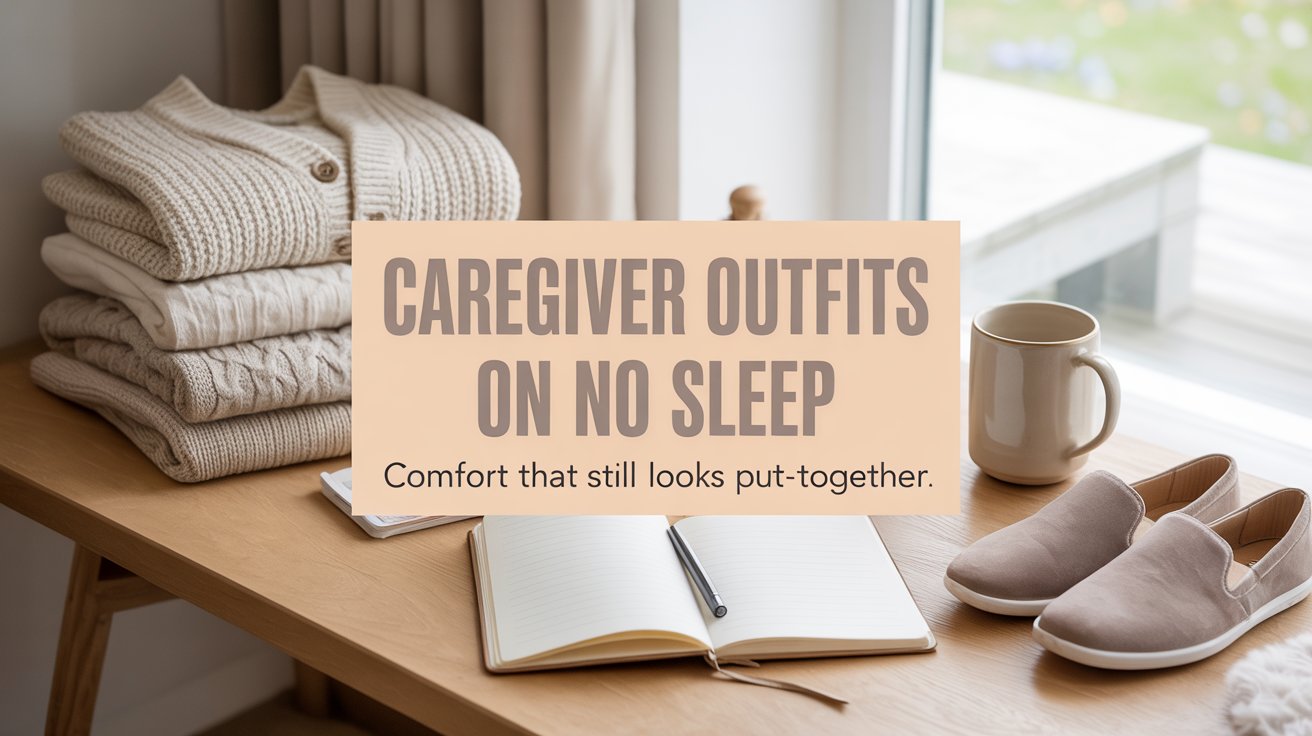
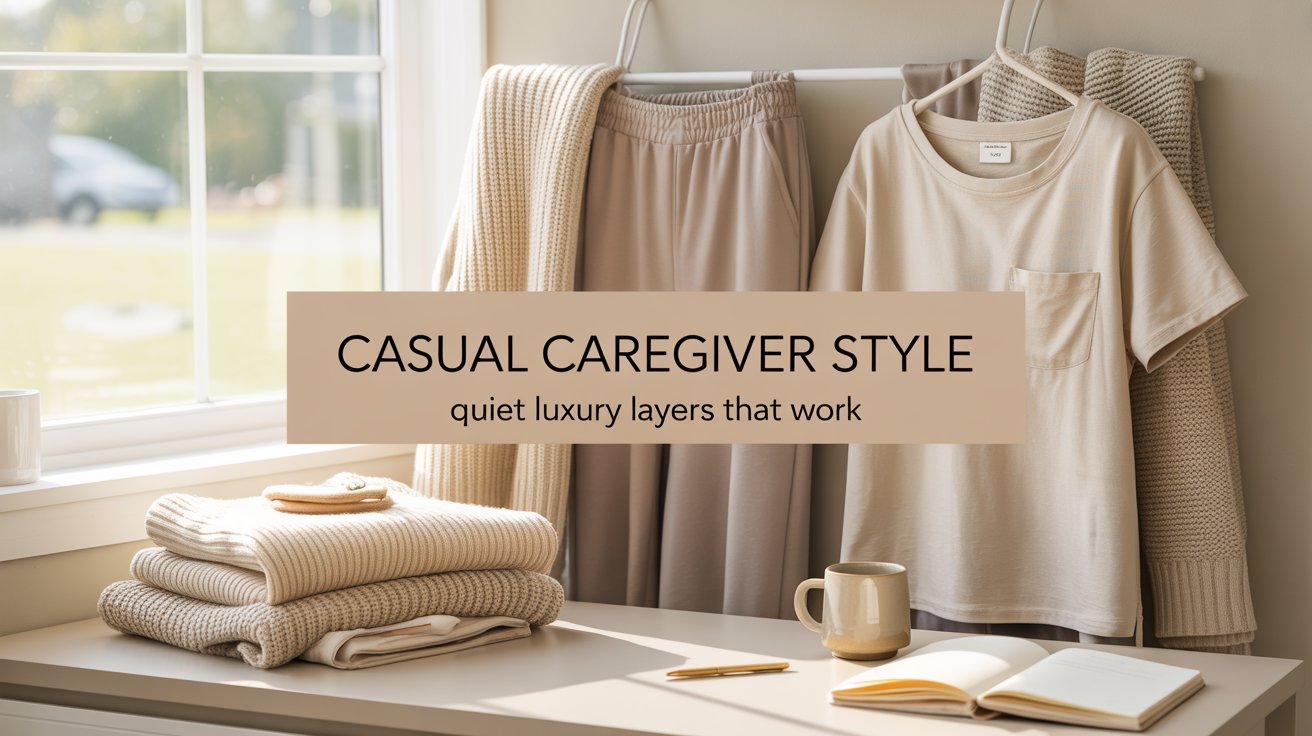
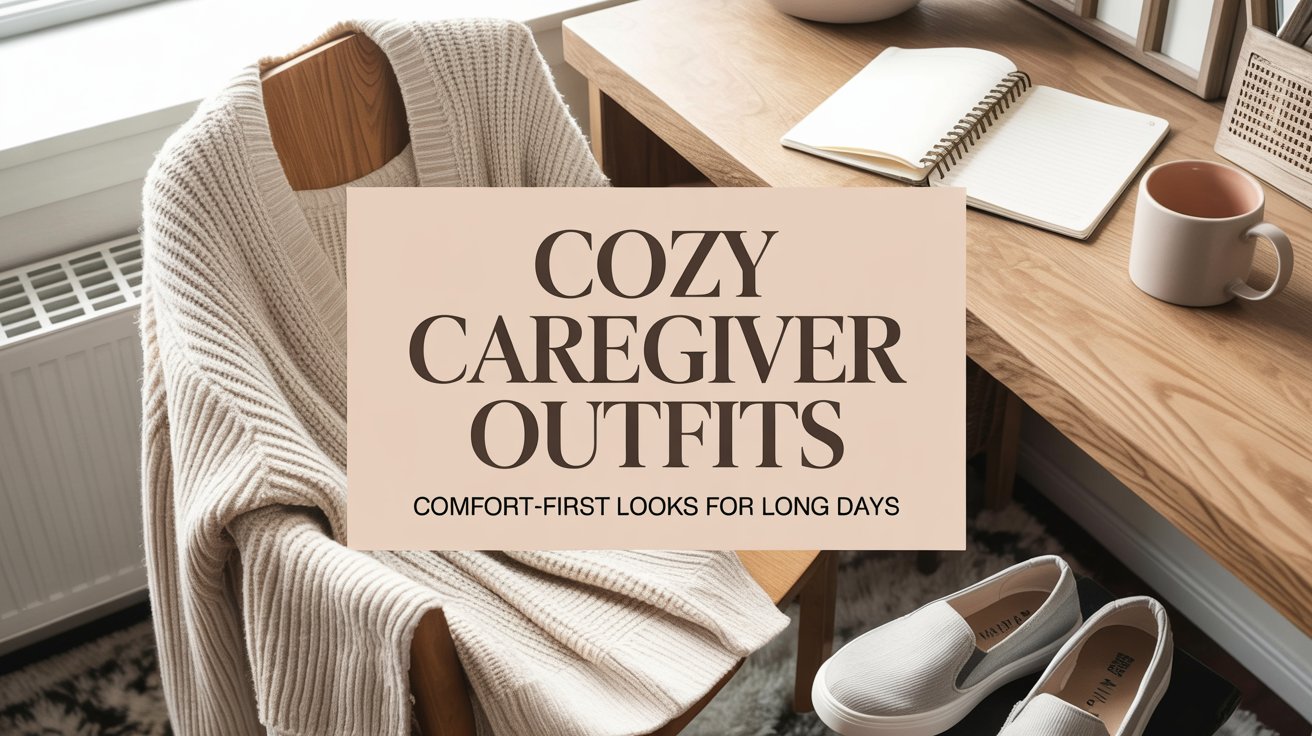
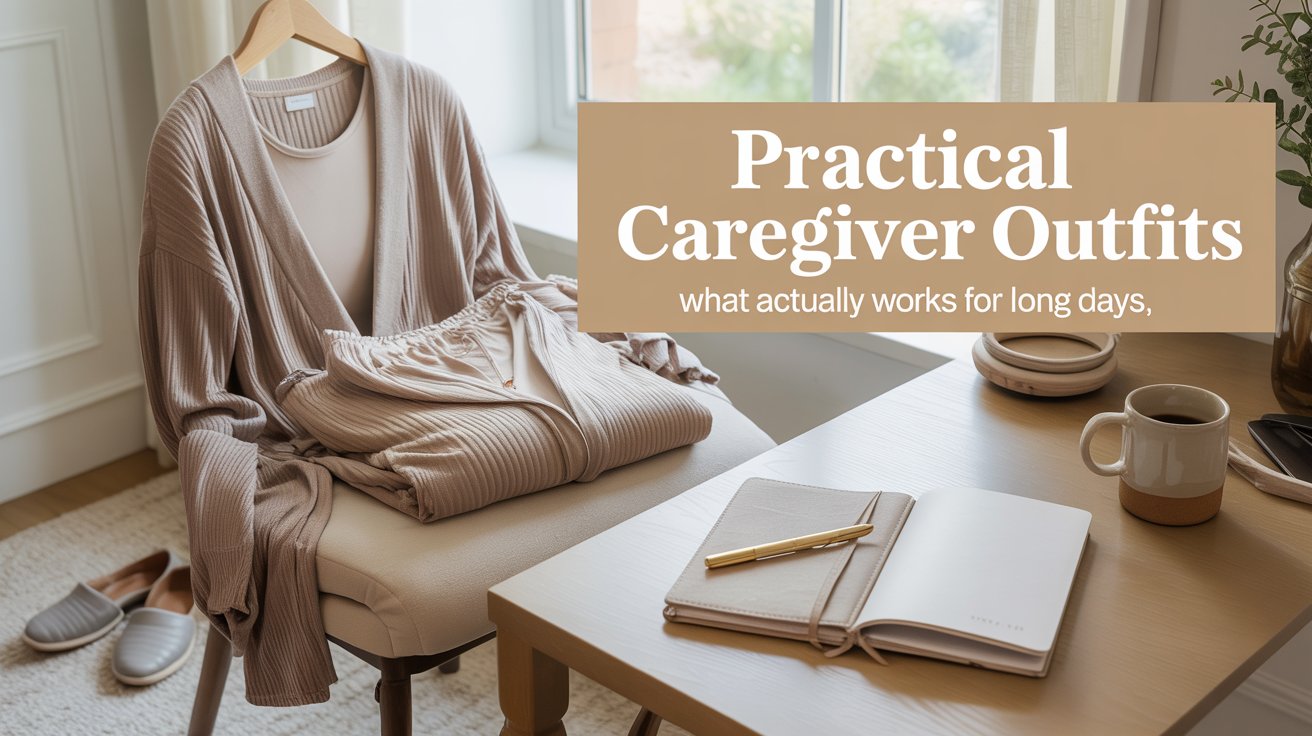
Practical caregiver outfits are not about style trends, aesthetics, or looking impressive. They are about preventing friction during long, unpredictable days. If your clothes distract you, dig into your body, overheat you, or require constant adjustment, they cost you energy you don’t have.
Caregiver schedules are not linear. They involve early starts, long pauses, sudden movement, emotional labor, temperature changes, and extended wear. That means your clothing needs to stretch, recover, breathe, and stay stable over time. Stretch fabrics are not a preference—they are a requirement.
This article breaks outfits down by schedule demand, not fashion category. Each section explains:
- what usually fails
- what works instead
- how to build the outfit intentionally
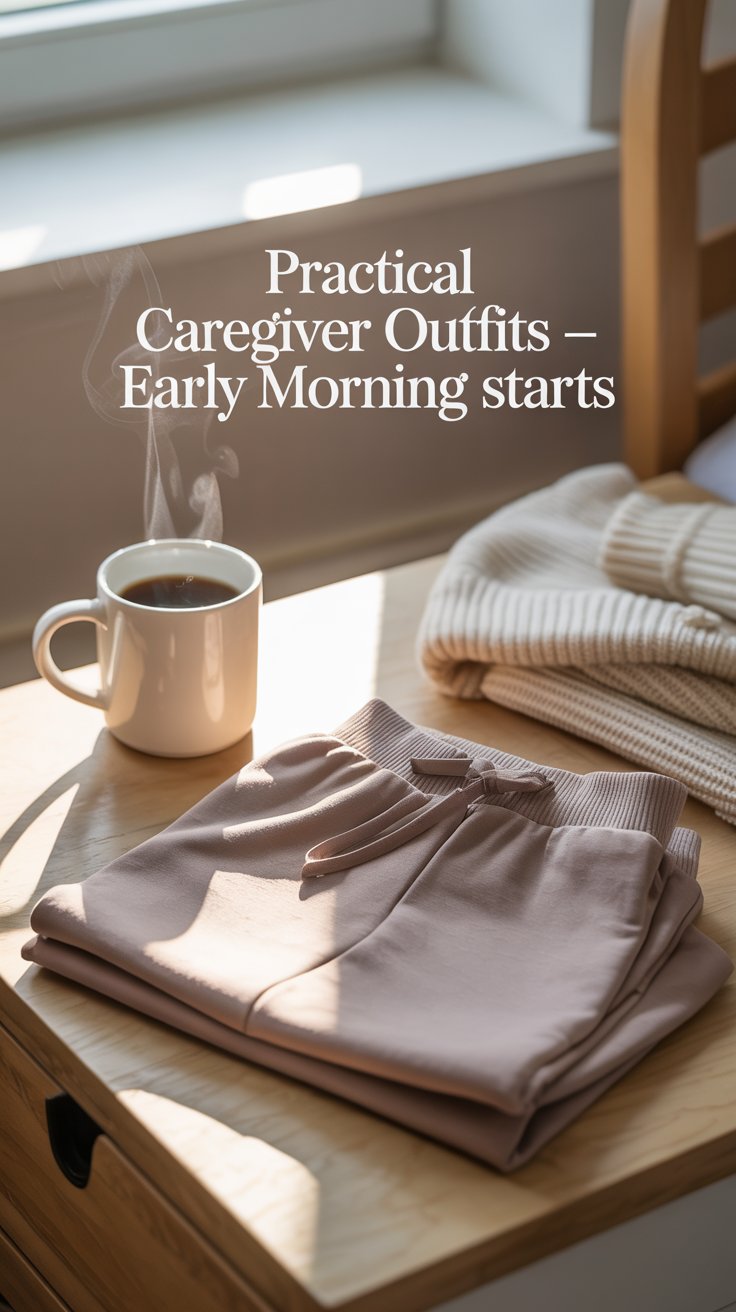
1. Early-Morning Start Outfit (Before Your Body Wakes Up)
Early mornings are when clothing mistakes are most noticeable. Your body is stiff, your energy is low, and tolerance for discomfort is near zero.
What usually fails
- Tight waistbands
- Cold, stiff fabrics
- Structured pants that don’t stretch immediately
What works
- Pull-on pants with stretch
- Soft knit tops that don’t cling
- Lightweight layers you can put on half-asleep
Outfit structure
- Stretch ponte or jersey pull-on pants
- Soft cotton or modal tee
- Open cardigan or lightweight sweater
Why this works
Stretch fabrics accommodate stiffness without resistance. Pull-on waists reduce pressure before circulation fully adjusts. Soft knits warm quickly without trapping heat.
Key rule
If an outfit feels uncomfortable in the first 15 minutes, it will feel worse all day.
Shop the Look:
- Stretch ponte pull-on pants jersey knit soft caregiver morning
- Soft cotton modal tee relaxed fit low energy early start
- Open cardigan lightweight sweater stretch half asleep caregiver
- Pull-on pants no waistband stiff body warm knits caregiver
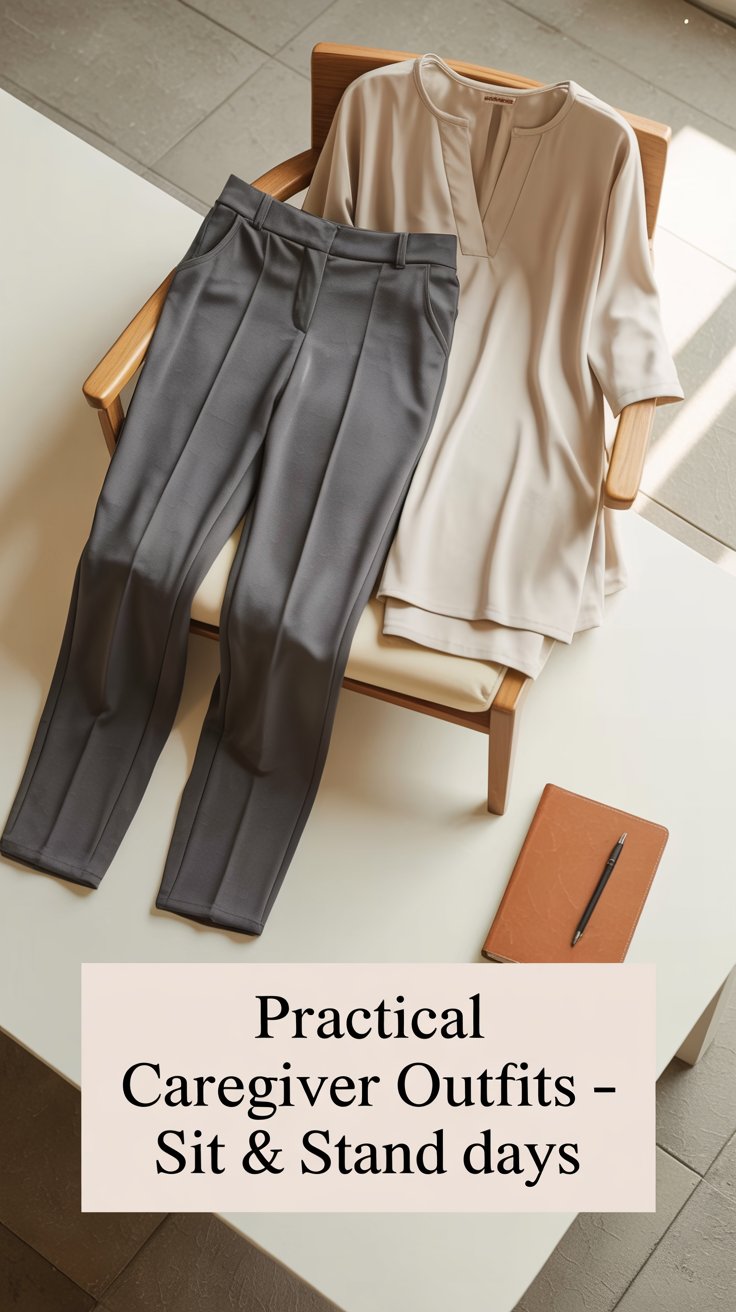
2. Sit-Stand Cycle Outfit (Repeated Position Changes)
Caregiver days often involve alternating between sitting and standing dozens of times. Clothing that works in only one position will fail.
What usually fails
- Rigid seams across the stomach
- Waistbands that roll or dig
- Non-stretch woven pants
What works
- Flat elastic waistbands
- Stretch fabrics that distribute pressure evenly
- Longer tops that don’t shift when standing
Outfit structure
- Stretch trousers or wide-leg pull-on pants
- Relaxed top that skims the body
- Shoes with flexible soles
Why this works
Even pressure prevents irritation. Stretch recovery ensures pants don’t sag after sitting. Longer tops prevent constant adjusting.
Key rule
Your clothes should feel the same when sitting and standing.
Shop the Look:
- Stretch trousers wide-leg pull-on pants flat elastic caregiver
- Relaxed top skims body no shift standing sitting cycle
- Shoes flexible soles stretch pants even pressure caregiver
- Wide waistband pants no roll dig position change caregiver
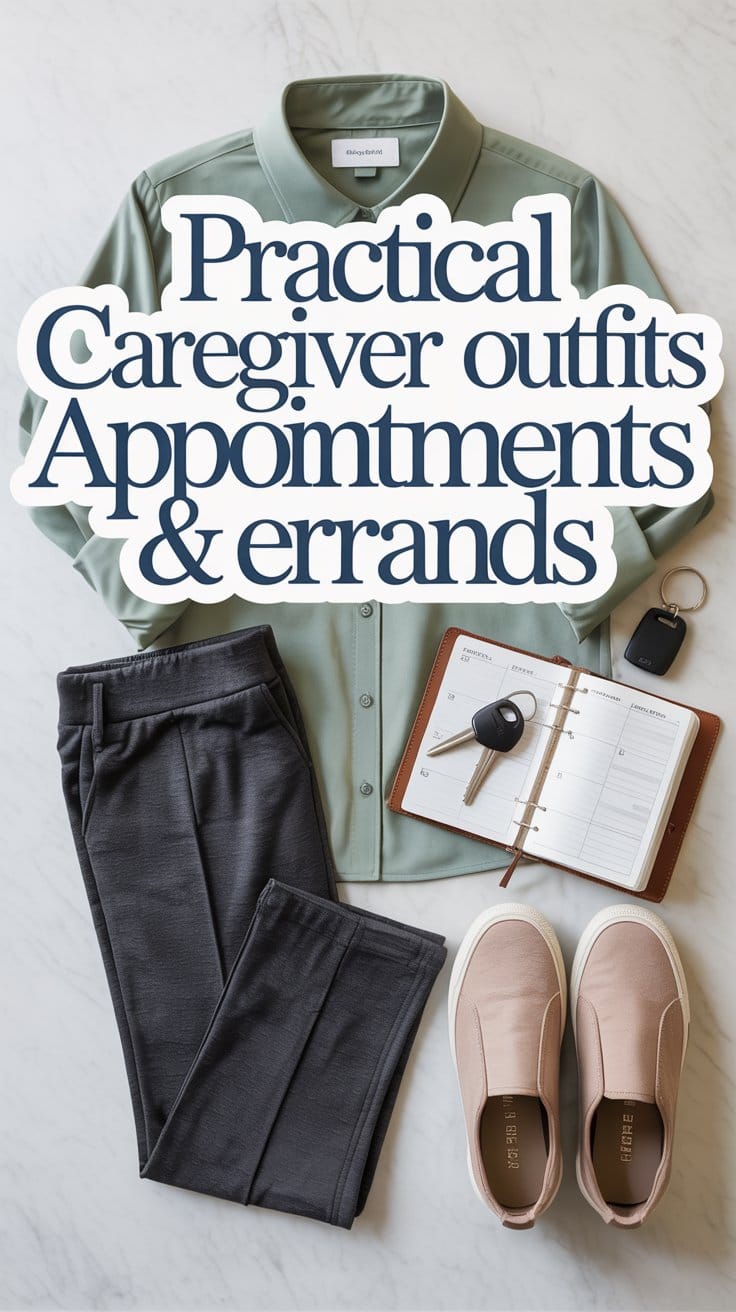
3. Public-Facing Outfit (Appointments, Errands, Visitors)
Some caregiver days involve being seen. The goal is not dressing up—it’s avoiding feeling underdressed while remaining functional.
What usually fails
- Outfits that look polished but restrict movement
- Hard waistbands paired with soft tops
- Shoes that look good but limit walking
What works
- Stretch fabrics that appear structured
- Clean silhouettes with flexible materials
Outfit structure
- Ponte pants or stretch trousers
- Soft button-up or fine-gauge knit
- Supportive flats or slip-on sneakers
Why this works
Ponte and stretch knits visually read as tailored while maintaining flexibility. Button-ups add structure without compression when made from soft fabrics.
Key rule
If you can’t move easily, the outfit is not practical—no matter how polished it looks.
Shop the Look:
- Ponte pants stretch trousers structured look flexible caregiver
- Soft button-up fine-gauge knit clean silhouette public facing
- Supportive flats slip-on sneakers movement no restriction caregiver
- Tailored stretch knits polished functional errands visitors
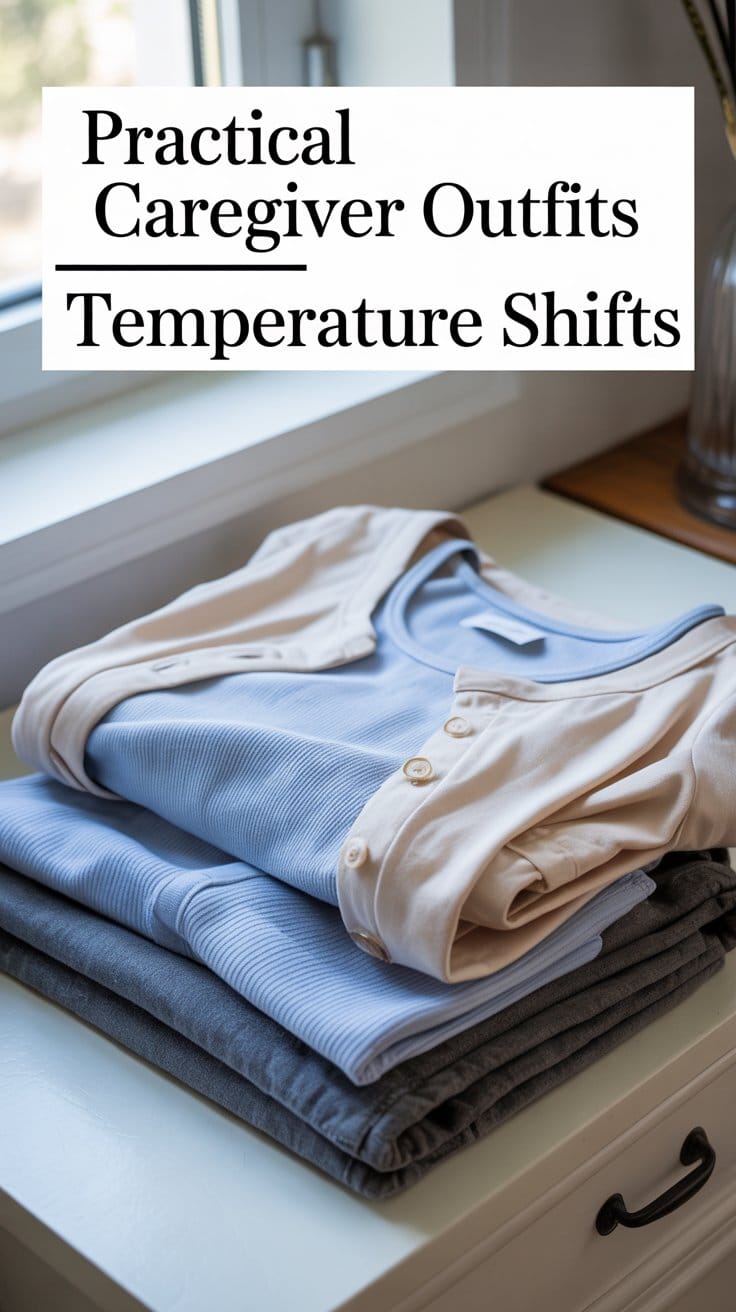
4. Temperature-Shift Outfit (Cold Rooms, Warm Hallways)
Temperature inconsistency is common in caregiving environments. Clothing must adapt without requiring full outfit changes.
What usually fails
- Heavy fabrics that trap heat
- Single-layer outfits with no flexibility
- Non-breathable materials
What works
- Breathable stretch base layers
- Lightweight removable layers
Outfit structure
- Stretch tank or tee
- Soft cardigan or button-up
- Stretch pants that breathe
Why this works
Layering allows micro-adjustments. Breathable stretch fabrics regulate temperature instead of amplifying discomfort.
Key rule
Your outfit should adjust to the environment, not force your body to adapt.
Shop the Look:
- Stretch tank tee breathable base layer temperature swing caregiver
- Soft cardigan button-up removable lightweight layers shift
- Stretch pants breathe airflow no trap heat caregiver
- Breathable stretch layers micro-adjust cold warm rooms
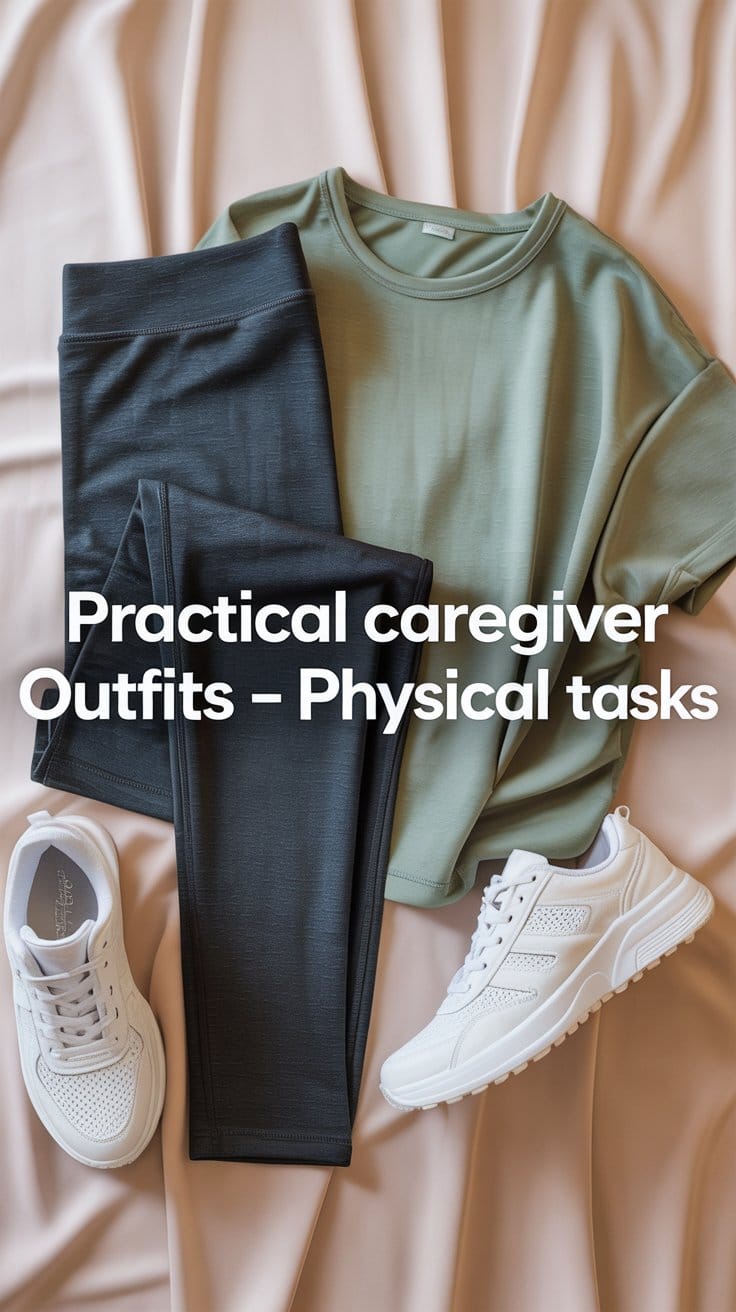
5. Physically Active Task Outfit (Bending, Lifting, Reaching)
This is where clothing fails most often. Stretch alone is not enough—recovery matters.
What usually fails
- Thin leggings that shift or become transparent
- Tight sleeves that restrict shoulder movement
- Fabrics that trap heat during exertion
What works
- Thick stretch fabrics with opacity
- Relaxed tops with shoulder room
- Materials that release heat
Outfit structure
- High-quality stretch leggings or joggers
- Loose-cut top or tunic
- Breathable fabric blends
Why this works
Recovery prevents sagging and shifting. Shoulder room prevents tension buildup. Breathable materials reduce fatigue.
Key rule
If you have to adjust your clothes mid-task, they are not functional.
Shop the Look:
- High-quality stretch leggings joggers thick opacity caregiver
- Loose-cut top tunic shoulder room breathable blends active
- Recovery stretch fabrics no shift mid-task lifting reaching
- Breathable joggers no sag exertion bending caregiver task
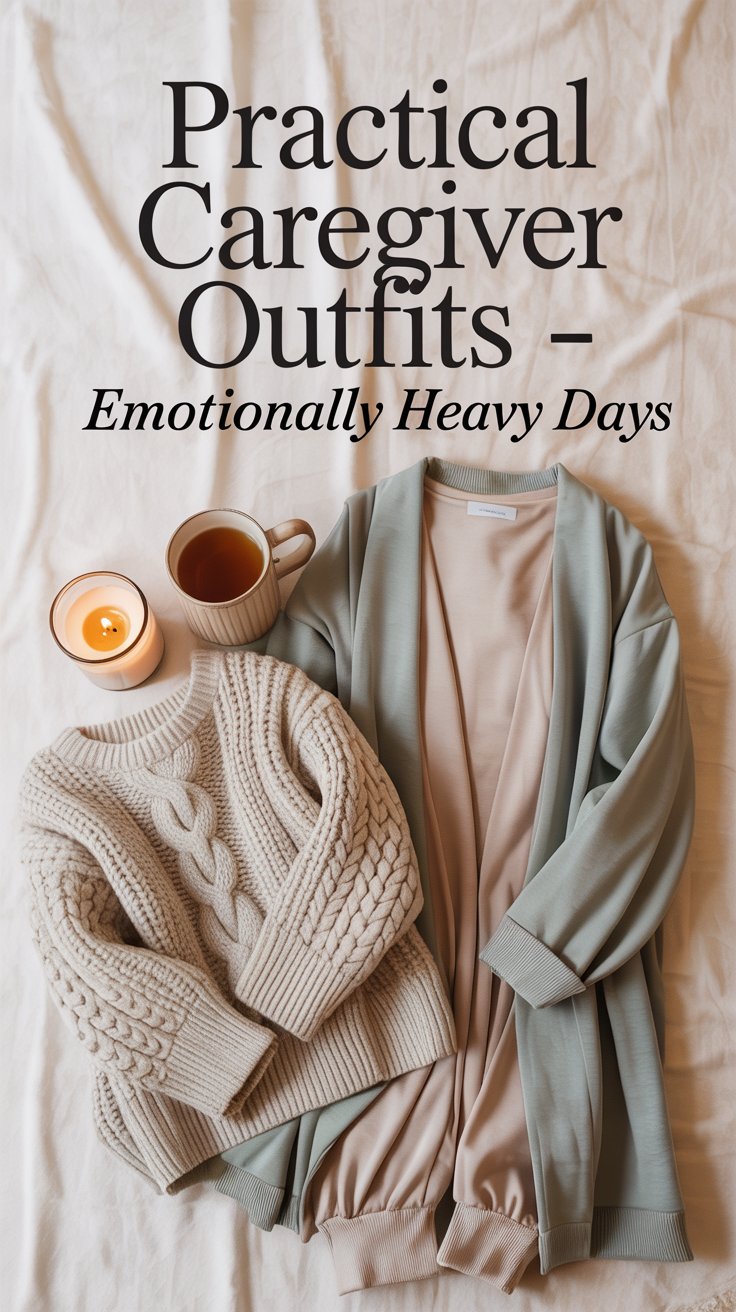
6. Emotionally Heavy Day Outfit (Low Tolerance for Irritation)
Some days are not physically demanding but emotionally draining. Clothing sensitivity increases under emotional stress.
What usually fails
- Scratchy fabrics
- Tight necklines
- Compression where you don’t need it
What works
- Soft, low-pressure clothing
- Coverage without restriction
Outfit structure
- Stretch knit pants
- Soft top with open neckline
- Longline layer for comfort
Why this works
Softness reduces sensory input. Coverage provides psychological comfort without constriction.
Key rule
On emotionally heavy days, comfort is not optional—it is support.
Shop the Look:
- Stretch knit pants soft low-pressure emotional heavy caregiver
- Soft top open neckline no scratchy sensory comfort day
- Longline layer coverage restriction psychological support caregiver
- No compression knits irritation free emotionally draining shift
7. Midday Fatigue Outfit (When Clothes Start to Irritate)
Even good outfits can fail after several hours. This is where fabric quality and construction matter most.
What usually fails
- Narrow elastic waistbands
- Fabrics that cling when warm
- Seams placed at pressure points
What works
- Wide, flat elastic
- Stretch fabrics with airflow
- Seam placement that avoids friction
Outfit structure
- Wide-band stretch pants
- Skimming top with drape
Why this works
Even pressure and airflow prevent the “I can’t wait to change clothes” moment.
Key rule
The best outfits still feel acceptable at hour eight.
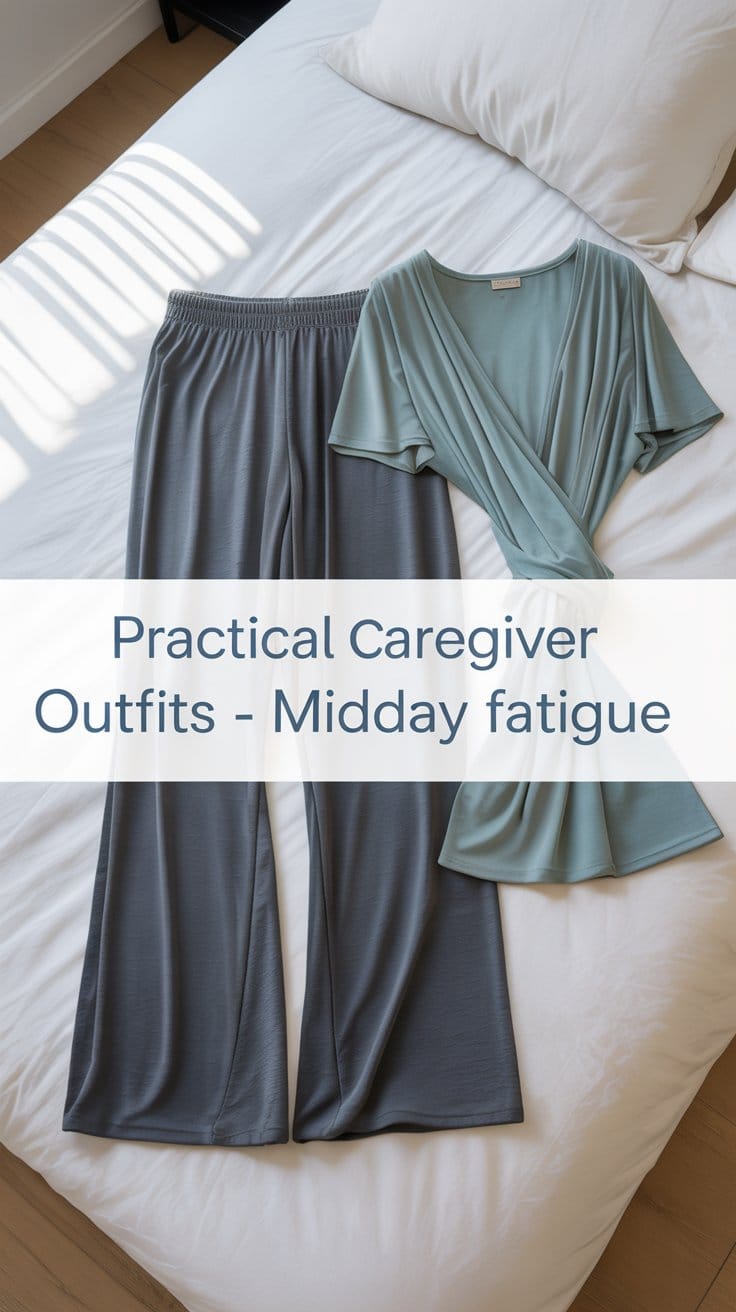
Shop the Look:
- Wide-band stretch pants flat elastic no narrow fatigue caregiver
- Skimming top drape airflow seam avoid friction midday
- Stretch pants hour eight comfortable no cling warm caregiver
- Wide elastic no pressure points long wear irritation prevent
8. Late-Day Flex Outfit (Schedules That Run Long)
Caregiver days rarely end when expected. Clothing must remain functional into the evening.
What usually fails
- Outfits designed for short wear
- Shoes that fatigue feet
- Fabrics that lose shape
What works
- Repeatable outfit formulas
- Stretch fabrics that recover
Outfit structure
- Stretch base outfit
- One adaptable layer
- Shoes you can stay in
Why this works
Consistency reduces mental and physical strain when plans change.
Key rule
If an outfit only works for part of the day, it’s incomplete.
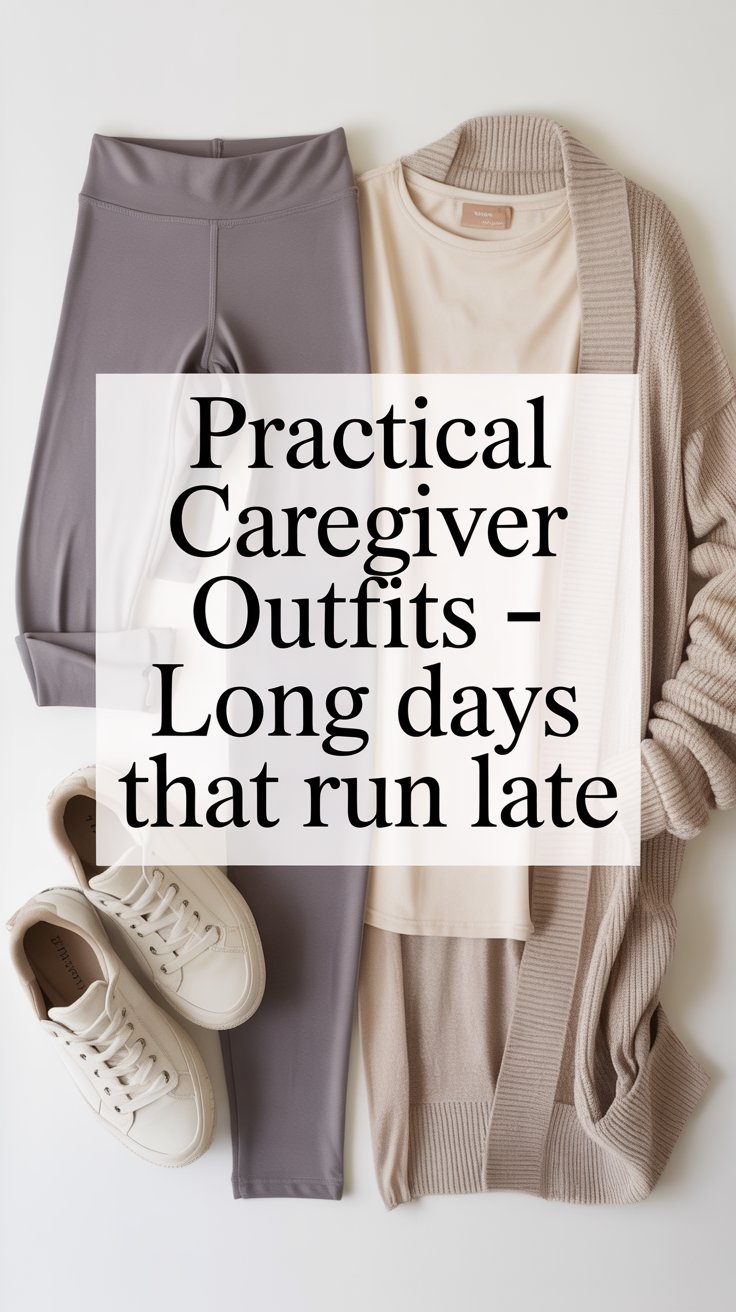
Shop the Look:
- Stretch base outfit repeatable formula evening flex caregiver
- Adaptable layer one piece shape recovery long schedule
- Shoes stay in all day no fatigue late shift caregiver
- Stretch fabrics no lose shape plans change extended wear
9. The Weekly Uniform (Decision Reduction System)
The most practical caregiver outfit strategy is repetition.
What usually fails
- Daily outfit reinvention
- Too many options
- Inconsistent comfort levels
What works
- 2–3 reliable outfit formulas
- Stretch fabrics across all pieces
Example formulas
- Stretch tee + pull-on pants + cardigan
- Tank + joggers + soft layer
- Stretch dress + lightweight jacket
Why this works
Reducing decisions preserves energy. Familiar outfits reduce stress.
Key rule
If you would wear it again without hesitation, keep it in rotation.
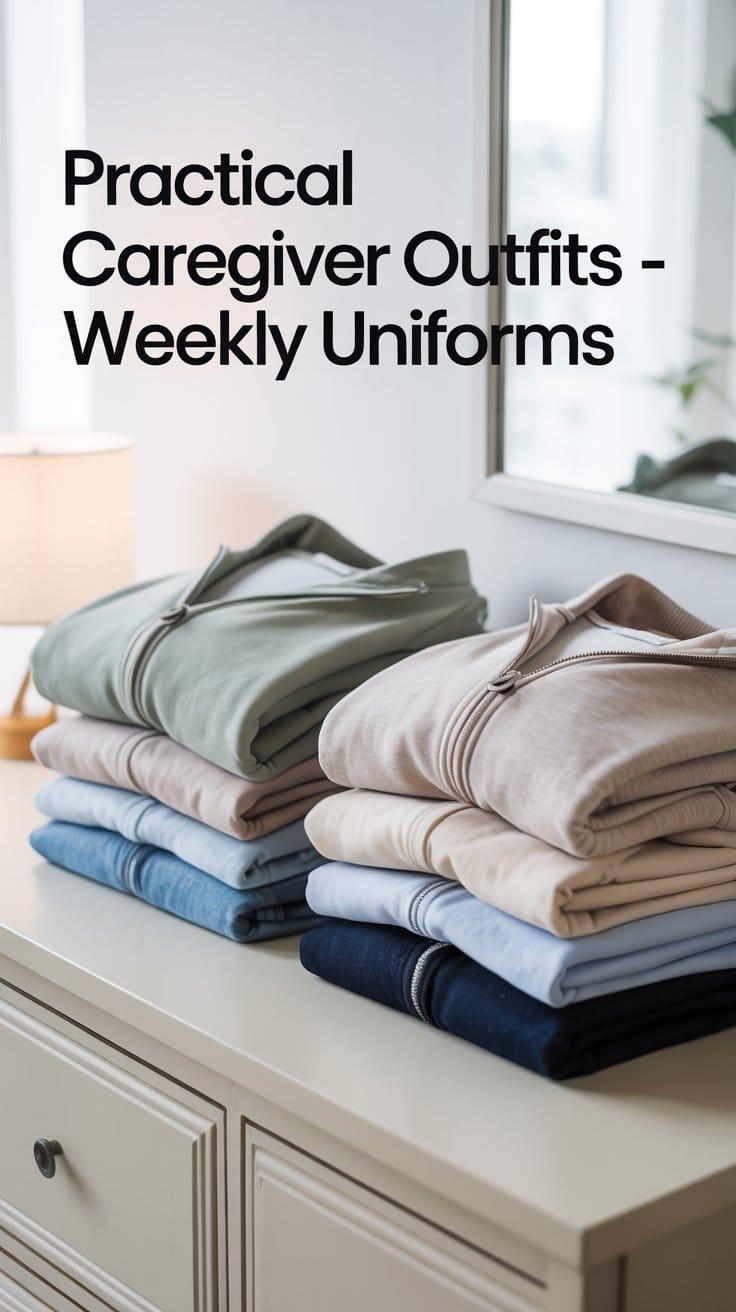
Shop the Look:
- Stretch tee pull-on pants cardigan weekly uniform caregiver
- Tank joggers soft layer rotation formula decision reduce
- Stretch dress lightweight jacket reliable outfits caregiver
- 2-3 outfit formulas stretch all pieces energy preserve
Final Takeaway
Practical caregiver outfits are about preventing problems before they start. Stretch fabrics, thoughtful construction, and schedule-based outfit logic reduce discomfort, distraction, and fatigue.
Your clothes should support long wear, frequent movement, and emotional load. If they don’t, they’re not practical—no matter how comfortable they seem at first.
The goal is not style.
The goal is fewer interruptions to your day.