This website contains affiliate links. As an Amazon Associate, I earn from qualifying purchases.
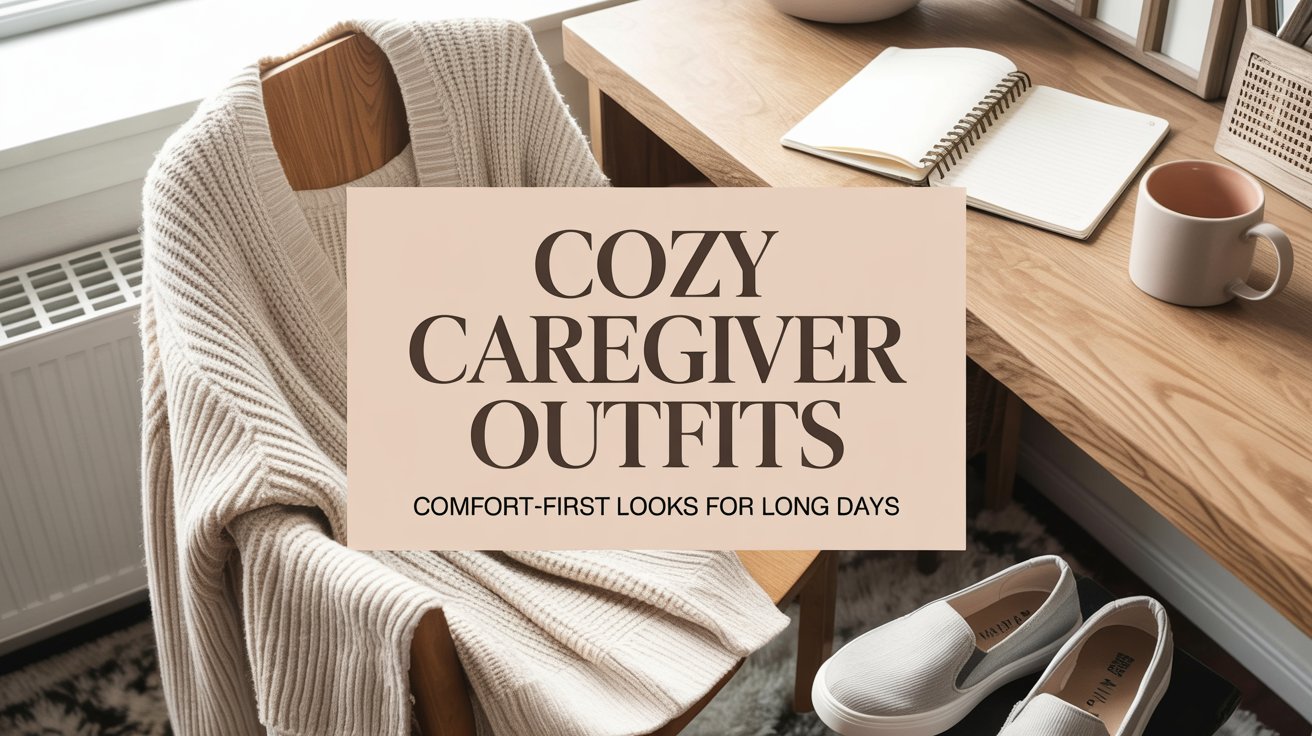
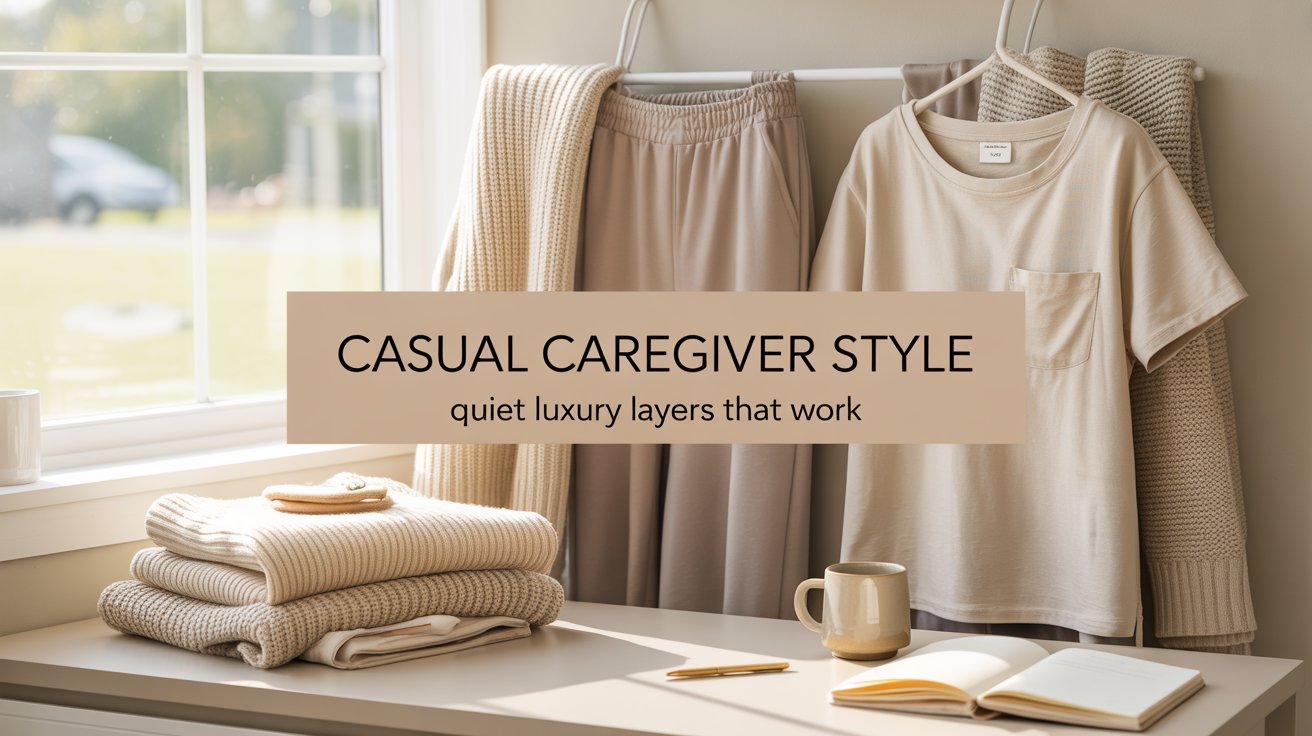
Casual caregiver style isn’t about chasing trends or dressing like you’re heading to a runway. It’s about looking calm, intentional, and pulled together—even when your day is long, your schedule is unpredictable, and your energy is limited. Quiet luxury fits perfectly into caregiver life because it values comfort, quality, and ease over logos, flash, or fuss.
Think soft fabrics, neutral tones, and layers that work hard without asking anything from you. The kind of outfits that don’t wrinkle your mood, dig into your waist, or require constant adjusting. The goal? Clothes that make your life feel smoother—not more complicated.
Let’s break down exactly how to build casual caregiver style using quiet luxury layers that actually work in real life.
This approach to casual caregiver style focuses on quiet luxury layers that feel soft, breathable, and wearable all day.
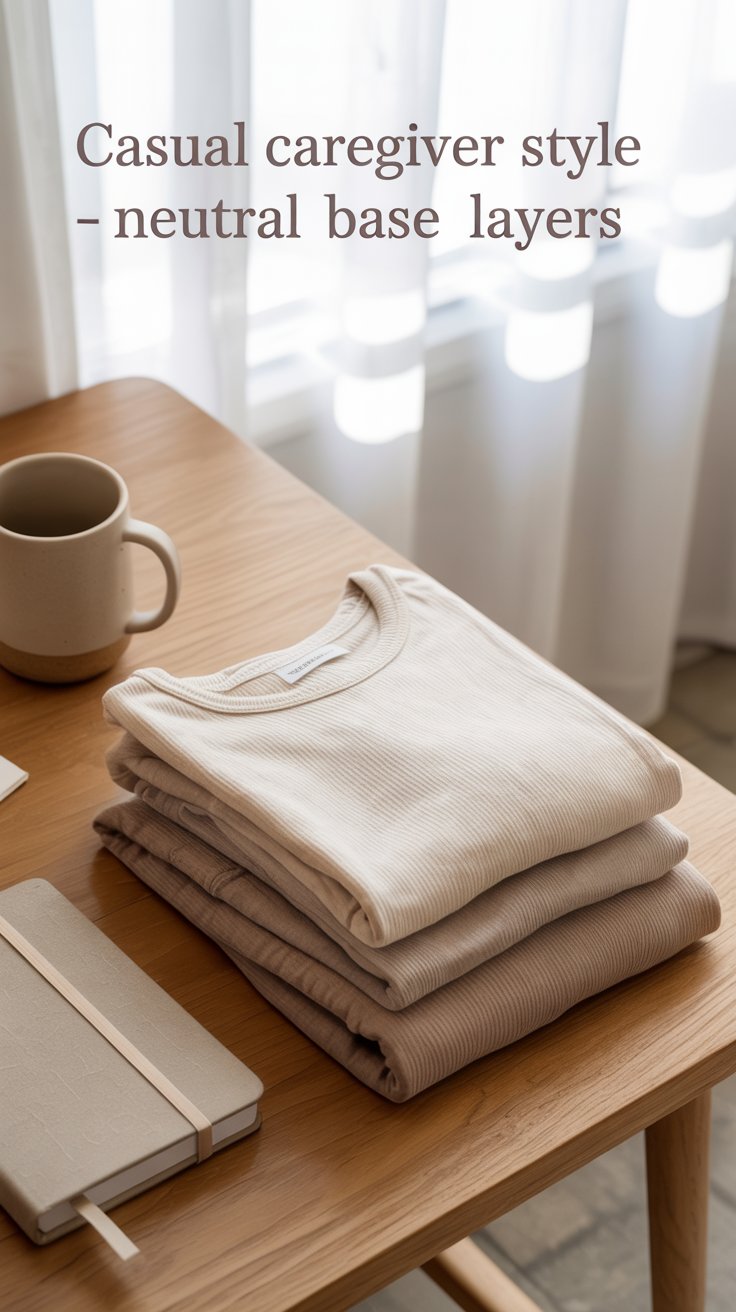
1. Start with a Calm, Neutral Base (This Is the Foundation)
Quiet luxury always starts with a neutral base. And no, neutral does not mean boring—it means versatile, calming, and forgiving.
For caregiver life, neutrals reduce visual clutter and decision fatigue. When everything in your closet works together, you don’t waste mental energy coordinating outfits.
What works best:
- Soft white, cream, oat
- Taupe, mushroom, stone
- Soft gray, warm beige
- Muted olive or navy (as neutrals, not accents)
Why this matters for caregivers:
Neutral outfits look intentional even when thrown together quickly. They also hide wear better and age more gracefully than trend colors.
Best tip:
If you’re exhausted, your outfit should feel quiet—not loud.
Shop the Look:
- Neutral base layer tops soft white cream oat taupe caregiver quiet luxury
- Mushroom stone soft gray warm beige tees neutral caregiver style
- Muted olive navy neutral pants versatile calming forgiving caregiver
- Quiet luxury neutral outfits hide wear age gracefully exhausted caregiver
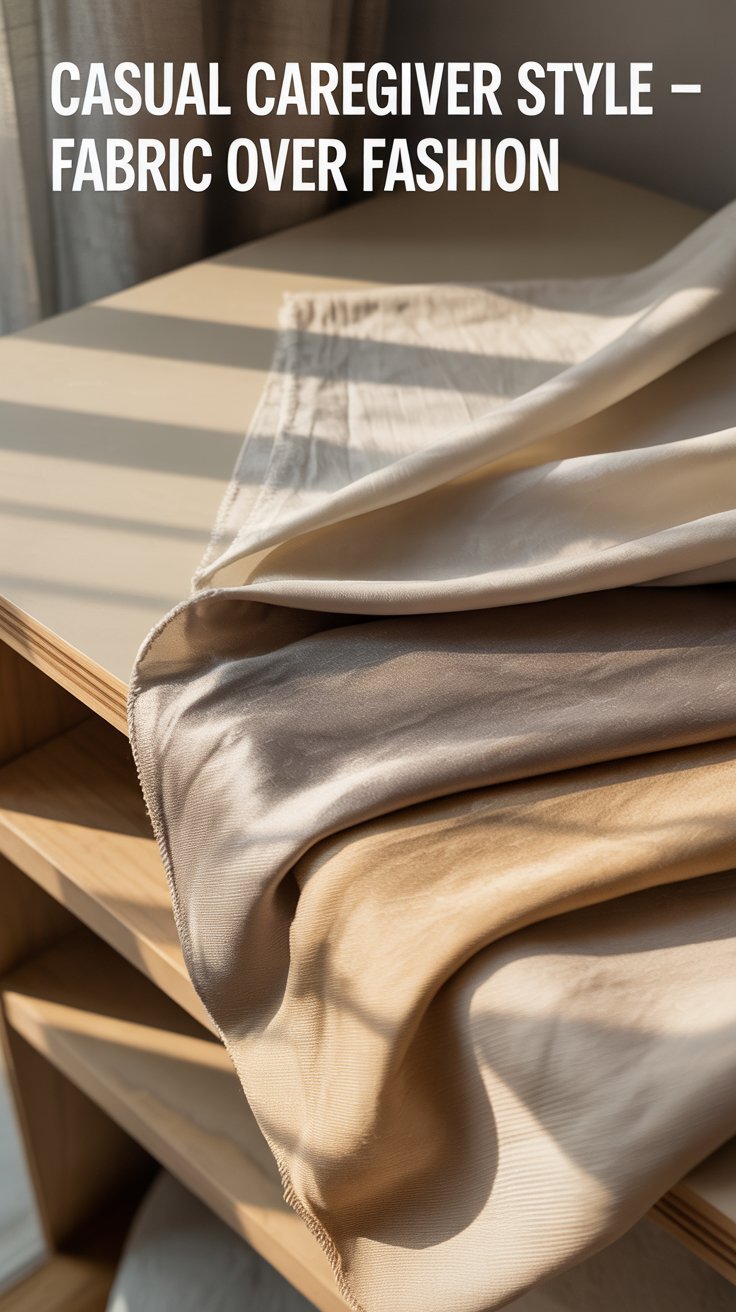
2. Prioritize Fabric Over Fashion (Always)
Quiet luxury is less about what the item is and more about how it feels. For caregivers, fabric choice is everything.
You want materials that:
- Breathe
- Stretch gently
- Don’t cling when you sit
- Don’t itch, scratch, or trap heat
Go-to fabrics for casual caregiver style:
- Cotton blends
- Modal
- Bamboo
- Tencel
- Lightweight knits
- Soft ponte
Avoid (when possible):
- Stiff denim
- Heavy synthetics
- Scratchy wool
- Anything that feels restrictive by hour three
Caregiver truth:
If a fabric annoys you even slightly, it will become unbearable by the end of the day.
Shop the Look:
- Cotton blends modal bamboo tencel tops breathable stretch caregiver
- Lightweight knits soft ponte pants no cling itch trap heat quiet luxury
- Caregiver fabrics breathe stretch sit comfortably all day neutral base
- Soft fabric priority no stiff denim heavy synthetics scratchy wool caregiver
3. Build Around Layering Pieces That Do the Work
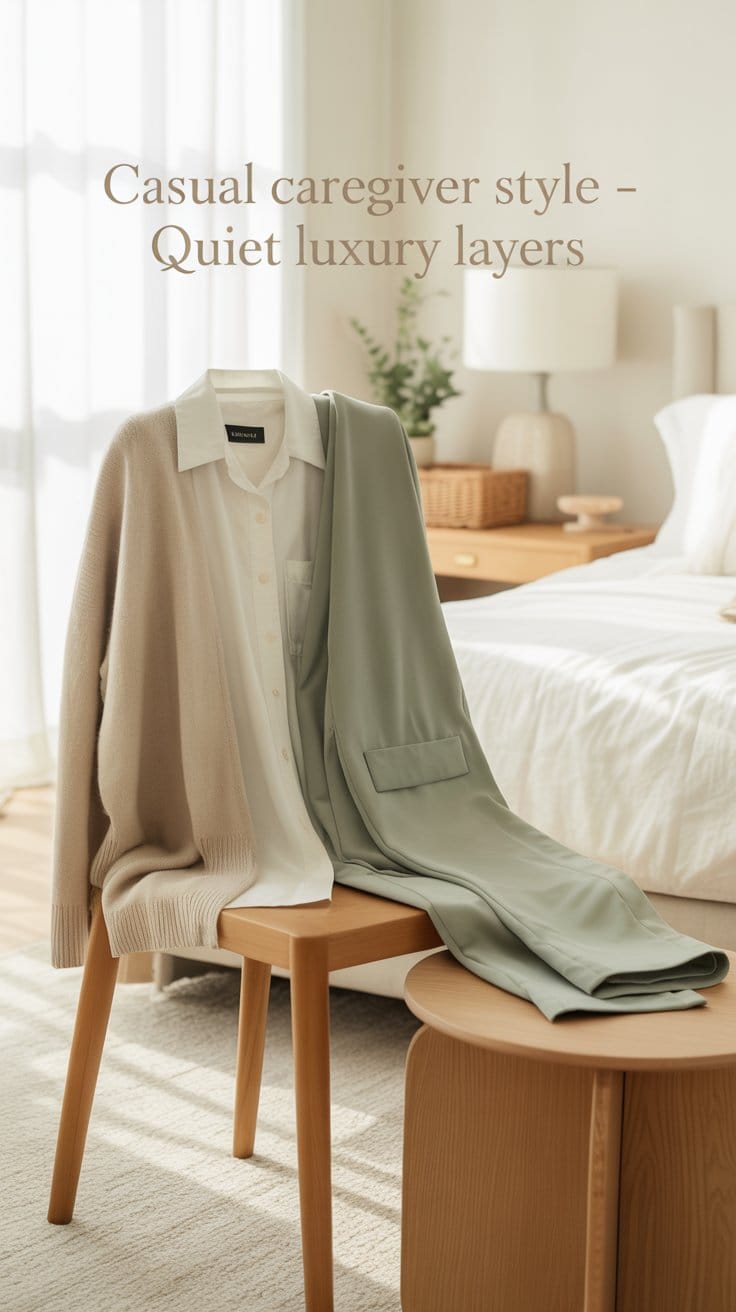
Quiet luxury layers are simple pieces that elevate whatever’s underneath without effort. These are the items that make casual caregiver style look intentional.
High-impact layers to keep on hand:
- Soft cardigans
- Lightweight button-ups
- Longline knit sweaters
- Relaxed blazers (unstructured)
- Soft wrap sweaters
These layers instantly make basic outfits look thoughtful—even when you’re running on fumes.
How to style them easily:
- Leave them open
- Push up the sleeves
- Stick to one color family
Why caregivers need layers:
Temperature changes, long days, unpredictable environments. Layers adapt so you don’t have to.
Shop the Look:
- Soft cardigans lightweight button-ups quiet luxury layers caregiver
- Longline knit sweaters relaxed blazers unstructured elevate basic caregiver
- Soft wrap sweaters open sleeves one color family temperature adapt caregiver
- High impact layers thoughtful exhausted running fumes casual style
4. Choose Bottoms That Respect Your Body (Especially Sitting)
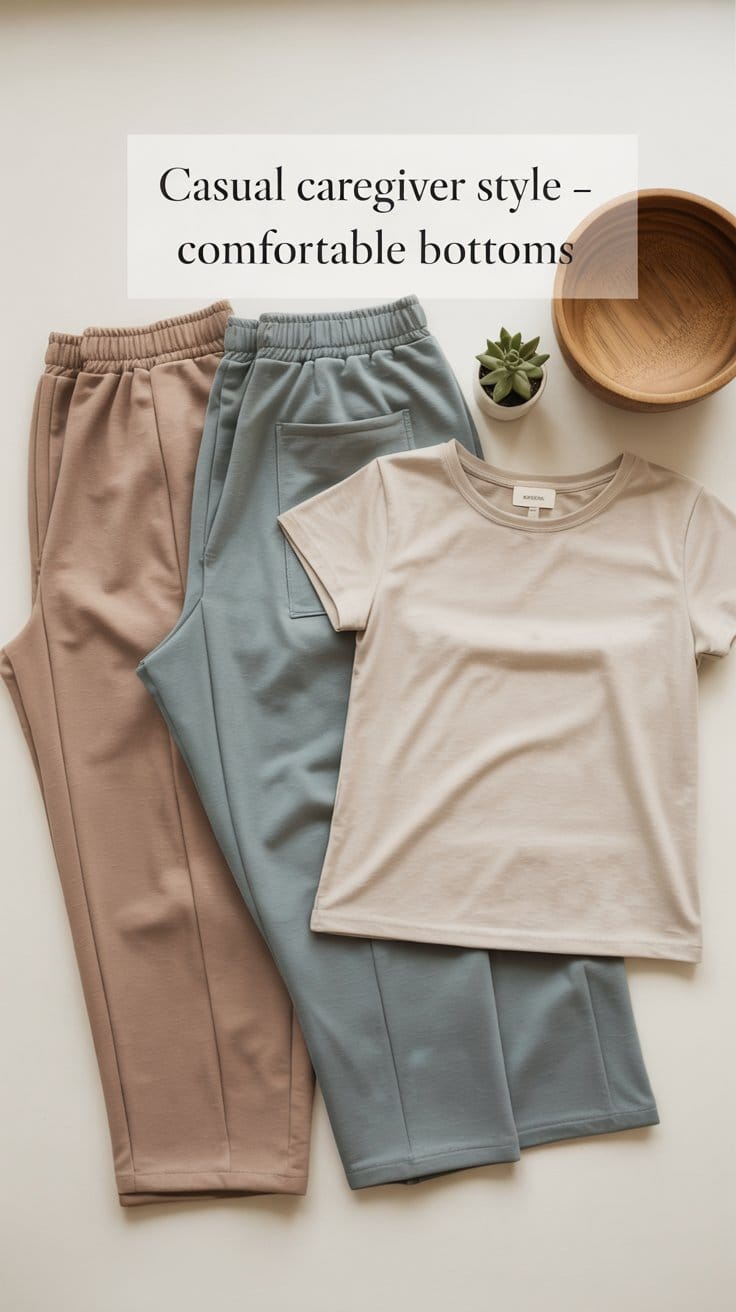
Casual caregiver style lives or dies by the bottoms you choose. If your pants dig, pinch, roll, or restrict—nothing else matters.
Quiet luxury bottoms should feel soft, stable, and forgiving.
Best options:
- Pull-on trousers
- Wide-leg soft pants
- Straight-leg ponte pants
- Relaxed joggers (clean seams)
- Elastic-waist trousers with drape
What to look for:
- Flat elastic waistbands
- No hard seams across the stomach
- Stretch that returns to shape
Caregiver reality:
You sit. You stand. You sit again. Your clothes should cooperate.
Shop the Look:
- Pull-on trousers wide-leg soft pants caregiver quiet luxury bottoms
- Straight-leg ponte pants relaxed joggers clean seams elastic waist
- Flat elastic waistbands no hard seams stomach stretch shape return caregiver
- Soft stable forgiving bottoms sit stand cooperate long day caregiver
5. Keep Tops Simple but Intentional
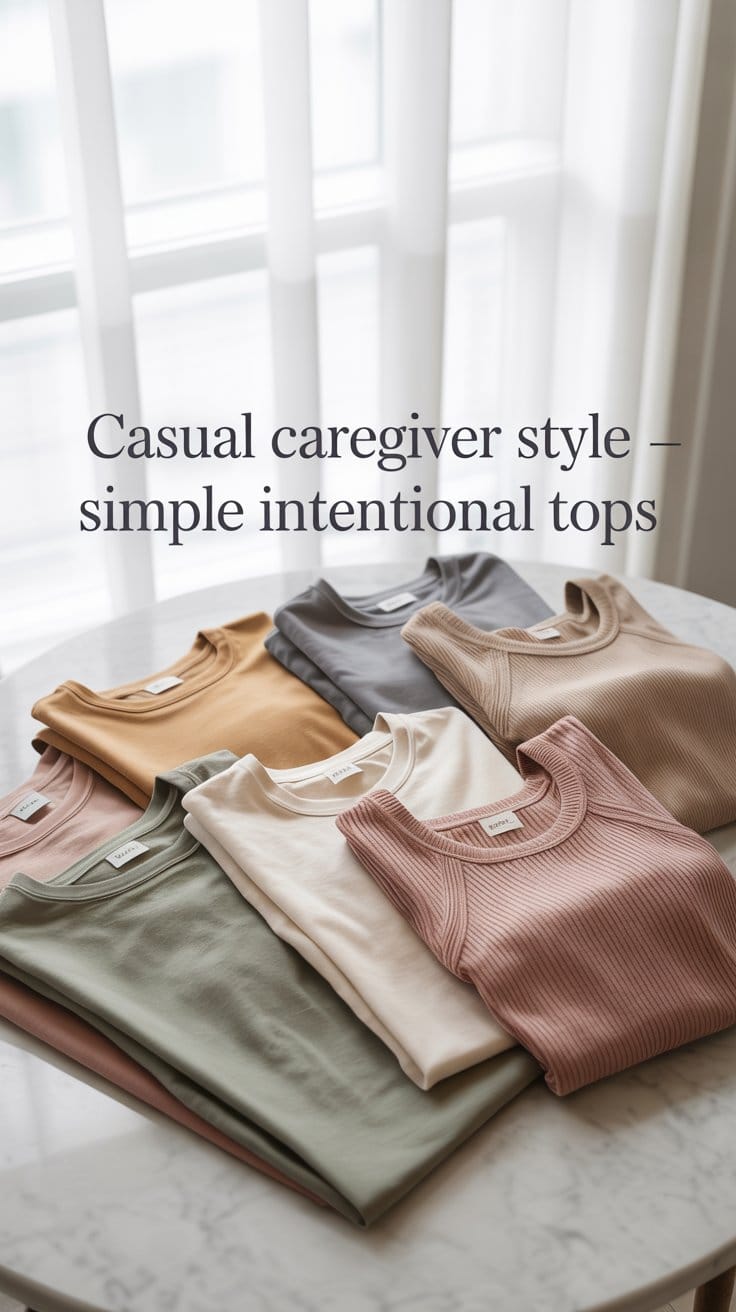
Quiet luxury tops don’t shout. They whisper. And that’s exactly what makes them powerful.
For casual caregiver style, tops should:
- Skim the body (not cling)
- Allow movement
- Layer easily
- Feel soft on the skin
Staple tops to rotate:
- Soft tees (thicker fabric)
- Relaxed tanks
- Fine-gauge knits
- Longline tunics
- Lightweight mock necks
Style trick:
Stick to simple silhouettes, then let texture do the work.
Shop the Look:
- Soft tees thicker fabric relaxed tanks skim body caregiver quiet luxury
- Fine-gauge knits longline tunics lightweight mock necks movement layer
- Simple silhouettes texture work soft skin casual caregiver tops
- Intentional tops no shout whisper powerful skim allow easy layer
6. Use Proportion to Look Polished Without Effort
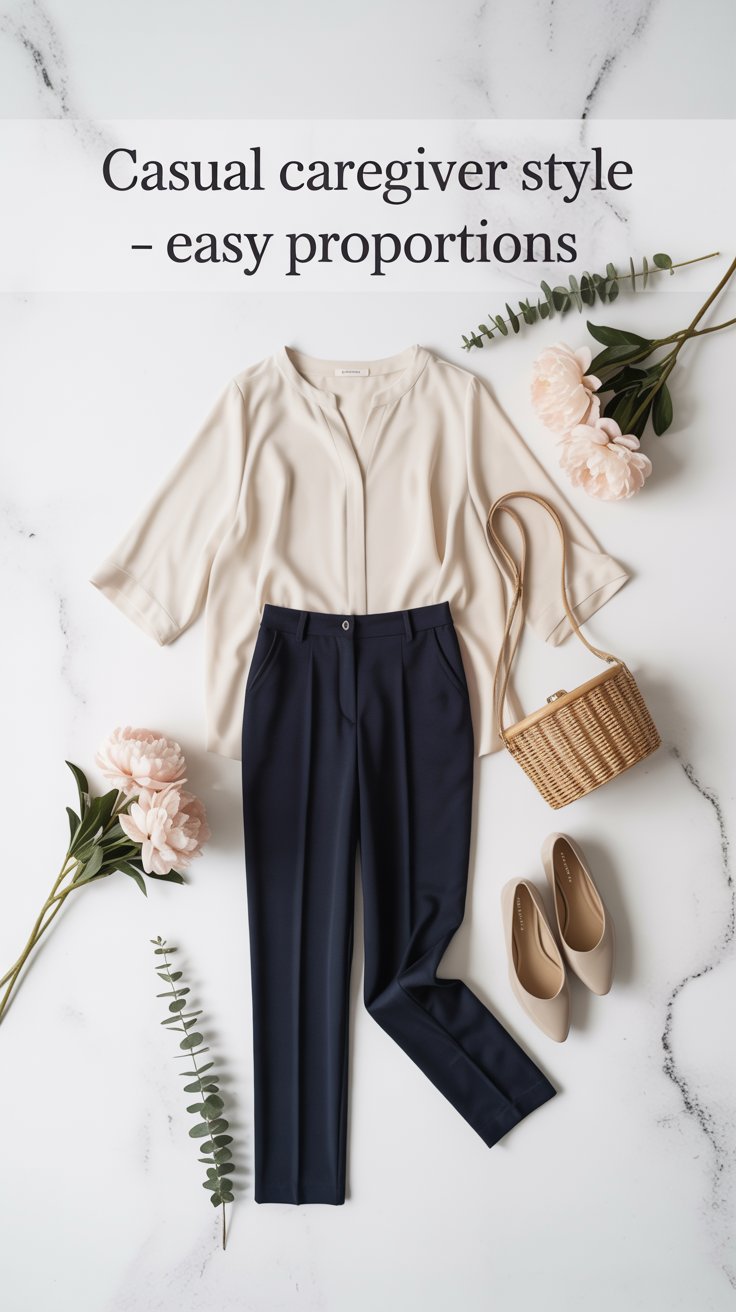
Here’s a secret: most “put-together” outfits succeed because of proportion—not styling tricks.
Easy proportion rules:
- Loose top → structured or straight bottom
- Relaxed bottom → slightly fitted top
- Long layer → simpler base underneath
This balance makes outfits look intentional even when comfort is the priority.
Why this helps caregivers:
You don’t need accessories, trends, or styling stress—just balance.
Shop the Look:
- Loose top structured straight bottom proportion balance caregiver style
- Relaxed bottom fitted top long layer simple base polished effortless
- Proportion rules no accessories trends styling stress comfort priority
- Put-together outfits balance intentional caregiver quiet luxury
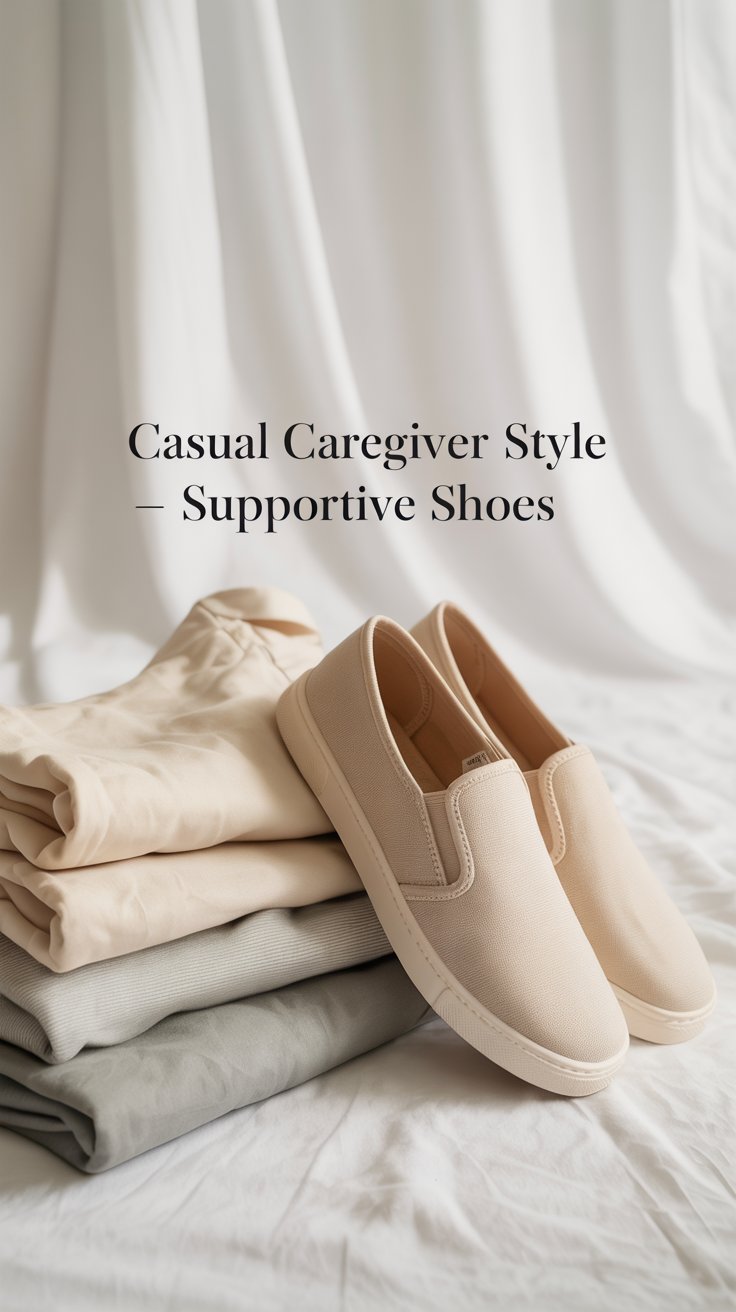
7. Shoes Matter More Than You Think
Quiet luxury shoes for caregivers are understated, supportive, and versatile. They don’t scream for attention—but they finish the outfit.
Best shoe styles:
- Slip-on sneakers
- Soft loafers
- Cushioned flats
- Supportive slides
- Minimal ankle boots
Stick to neutrals:
White, beige, taupe, black, or soft brown.
Caregiver truth:
If your shoes hurt, your whole day feels harder.
Shop the Look:
- Slip-on sneakers soft loafers cushioned flats supportive caregiver shoes
- Supportive slides minimal ankle boots neutral white beige taupe black
- Quiet luxury shoes understated versatile finish outfit no hurt day
- Caregiver supportive shoes soft brown neutral long day comfort
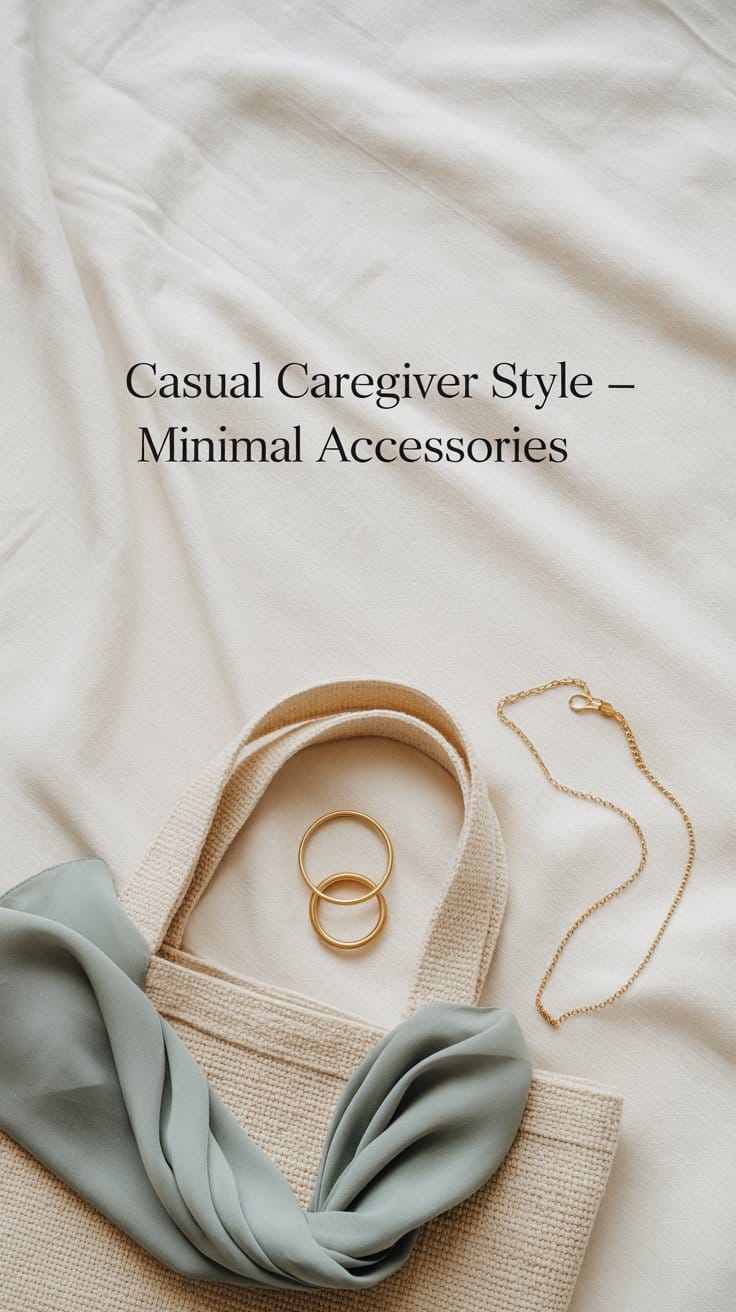
8. Keep Accessories Minimal (But Thoughtful)
Quiet luxury doesn’t layer on accessories—it chooses a few good ones.
Go-to accessories:
- Simple tote bag
- Soft scarf
- Minimal jewelry (small hoops, studs)
- Neutral belt (optional)
Rule of thumb:
If you have to think about it, skip it.
Shop the Look:
- Simple tote bag soft scarf minimal jewelry small hoops studs caregiver
- Neutral belt optional quiet luxury accessories thoughtful no think skip
- Minimal accessories layer good ones casual caregiver style easy
- Quiet luxury no layer accessories few rule thumb skip think
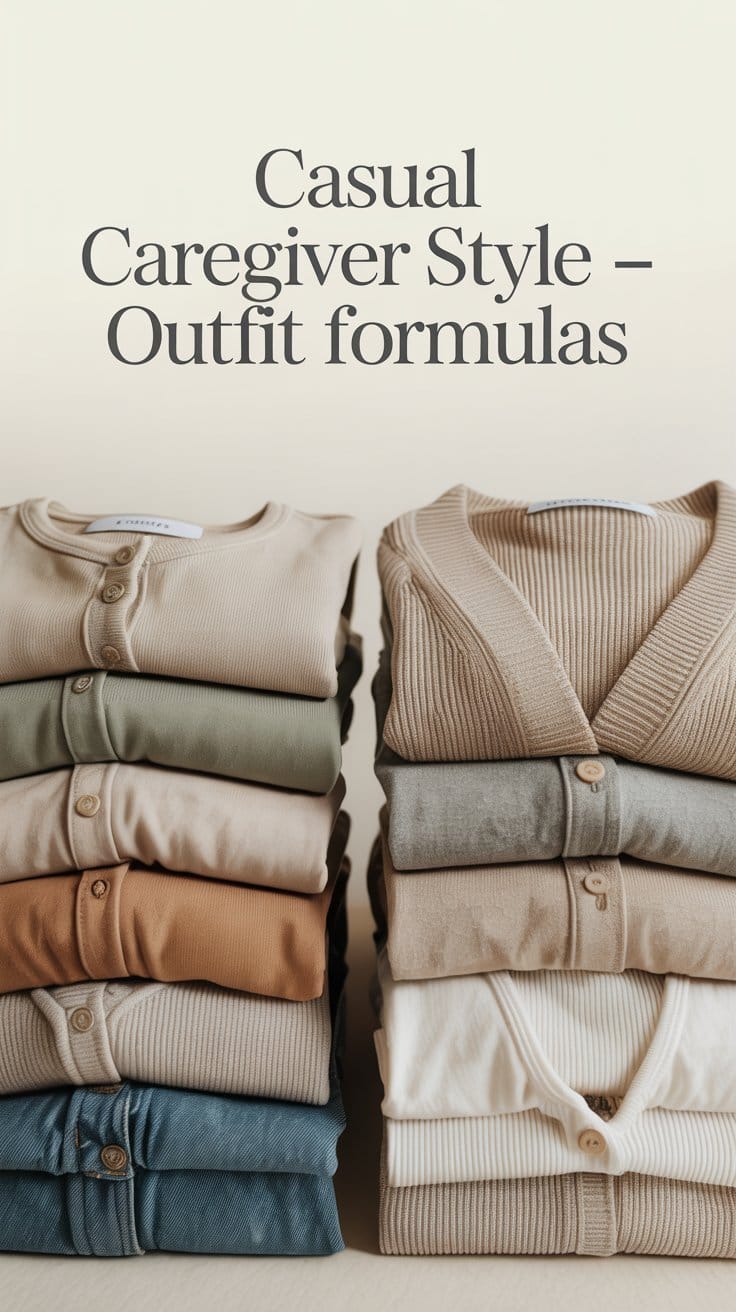
9. Build Outfit “Formulas” for Hard Days
The easiest way to maintain casual caregiver style is to stop reinventing the wheel.
Create 3–5 outfit formulas you can repeat:
Example formulas:
- Soft tee + pull-on pants + cardigan
- Tank + wide-leg pants + button-up
- Knit top + joggers + longline layer
- Midi dress + soft sweater
When you’re tired, formulas save you.
Shop the Look:
- Soft tee pull-on pants cardigan outfit formula caregiver quiet luxury
- Tank wide-leg pants button-up knit top joggers longline layer repeat
- Midi dress soft sweater 3-5 formulas tired save energy caregiver
- Outfit formulas hard days stop reinvent wheel casual style easy
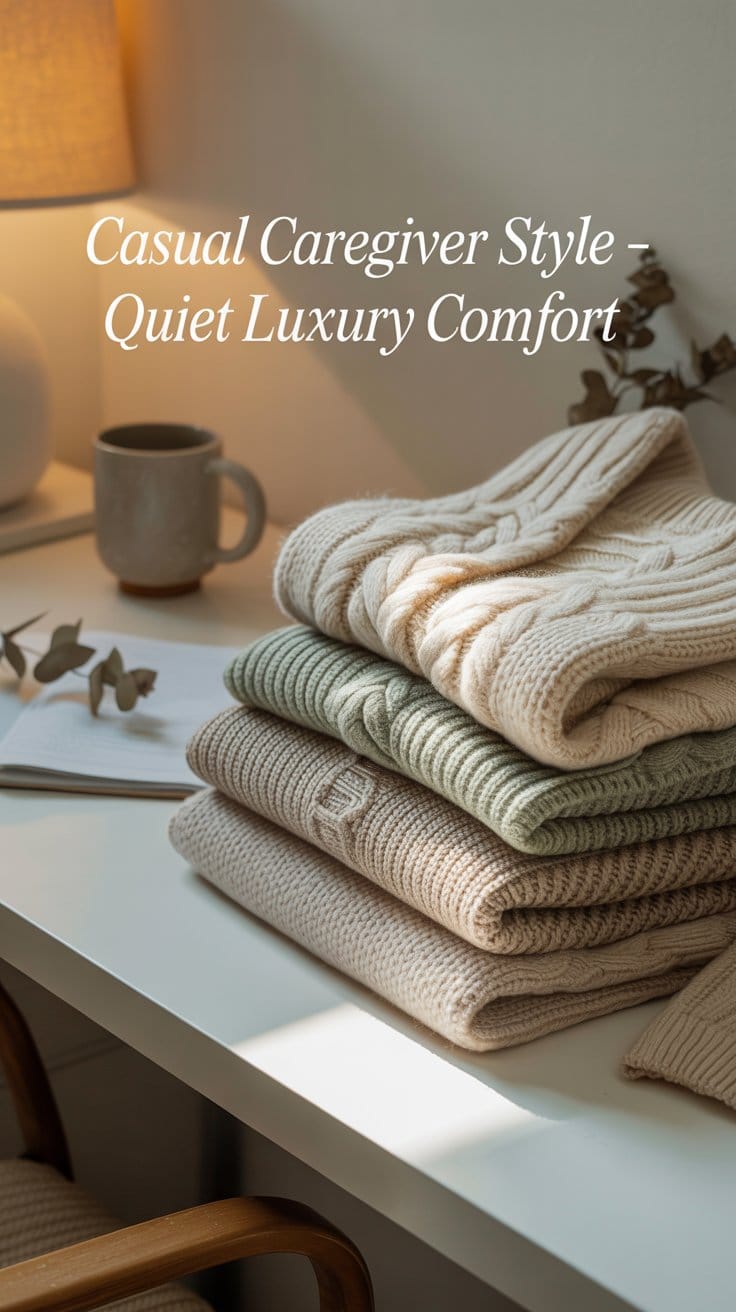
10. Quiet Luxury Is About How You Feel, Not How You Look
This is the most important part.
Quiet luxury works for caregivers because it aligns with self-preservation. It values comfort, dignity, and ease. It doesn’t demand energy you don’t have.
Casual caregiver style with quiet luxury layers lets you show up without performing, without apologizing, and without sacrificing yourself to discomfort.
You’re allowed to dress in a way that supports you.
Shop the Look:
- Quiet luxury layers self-preservation comfort dignity ease caregiver
- Casual caregiver style no perform apologize sacrifice discomfort pieces
- Soft breathable wearable all day quiet luxury supports body reality
- Clothes respect time body long days manageable no fight caregiver
Final Thought
Caregivers don’t need more pressure to “look good.” You need clothes that respect your time, your body, and your reality.
Quiet luxury isn’t about wealth or trends—it’s about choosing pieces that make your day easier. When your clothes stop fighting you, everything else feels just a little more manageable.
And on long days, that matters more than style rules ever will.